Osun 2027: Can Adeleke Turn His Victory Into a Lasting Political Legacy?
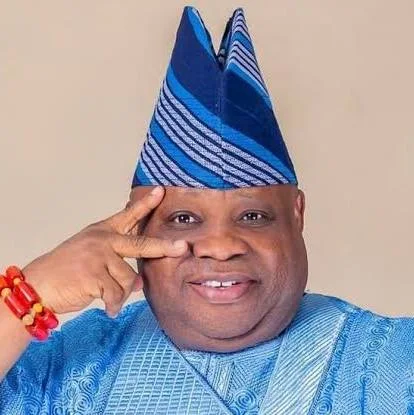
Osun’s message was louder than the margin. When the Independent National Electoral Commission declared Ademola Adeleke winner of the heated governorship contest, it did more than end an election night drama. It reset the political conversation in a state where voters have shown they are willing to punish incumbents, reward momentum, and ignore old assumptions about party machinery.
Adeleke’s victory over then-governor Gboyega Oyetola was significant because it was not simply a popularity contest. It became a test of voter confidence in the ballot, the strength of opposition organising, and the appetite for a government that could convert campaign energy into measurable results. Now, as Osun looks toward the next governorship cycle and the wider 2027 political season, the sharper question is unavoidable: was Adeleke’s mandate a durable endorsement, or an early warning shot?
A Mandate Built on More Than Celebrity
Adeleke entered the Osun race with an unusual political brand. To supporters, he represented accessibility, emotional connection, and a break from stiff elite politics. To critics, he was too theatrical, too dependent on name recognition, and too light on policy depth. The voters, however, made a more practical calculation.
Osun had lived through years of intense party competition, fiscal pressure, arguments over salaries and pensions, and frustration over local development. In that context, Adeleke’s appeal was not only about his dancing persona or the legacy of the Adeleke family. It was about protest, fatigue, and the belief that power could still change hands through the vote.
That matters. In many Nigerian states, incumbency remains a formidable weapon: control of visibility, local structures, patronage networks, and administrative influence. Adeleke’s win showed that a disciplined opposition campaign, when paired with voter dissatisfaction, can overcome those advantages. It also reminded political parties that grassroots mobilisation still counts more than Abuja endorsements or social media noise.
The figures told their own story. Adeleke defeated Oyetola by a clear but not overwhelming margin, enough to claim legitimacy but not enough to erase political division. That is why the mandate carries both power and pressure. Osun voters did not issue a blank cheque. They issued a contract.
The Trust Question After a Litigated Victory
The Osun race did not end at the polling units. It moved into the courts, where the dispute over the result and allegations around over-voting became a national story. The tribunal initially ruled against Adeleke, but the Court of Appeal reversed that decision, and the Supreme Court ultimately affirmed him as governor.
That legal journey is central to understanding the politics of his tenure. For supporters, the final judgment validated the will of the electorate. For opponents, it preserved a sense of grievance that can be revived in the next campaign. For voters, it reinforced a familiar Nigerian pattern: election day may produce a result, but the courtroom often decides how secure that result feels.
This is where voter trust becomes the real issue. Osun was one of the contests in which election technology, especially the Bimodal Voter Accreditation System, became part of the political narrative. Nigerians have become more attentive to accreditation figures, result transmission, polling-unit records, and how quickly parties can audit the process. That attention is healthy, but it also raises expectations.
By the next Osun governorship election, voters will not only ask who has the better message. They will ask whether the process can withstand pressure. Any perception of manipulation, delayed transparency, or selective enforcement could feed cynicism. Conversely, a cleaner, faster, better-explained process would strengthen confidence far beyond Osun.
For INEC, Osun remains part of a larger credibility test. For parties, it is a reminder that legal strategy is now inseparable from campaign strategy. A party that fails to protect its votes at the polling unit may struggle to rescue them in court.
What the Opposition Must Learn
For the All Progressives Congress in Osun, the lesson is uncomfortable but necessary: incumbency was not enough. The party lost despite running with the advantages of control and name recognition. To return to power, it must decide whether it wants to relitigate the last election or rebuild for the next one.
A campaign built only on grievance is unlikely to be sufficient. Voters who removed an incumbent once can do so again, but they need a reason. The APC will have to present a sharper alternative on jobs, infrastructure, education, health care, and public finance. It must also repair local fractures and reconnect with communities where the PDP made gains.
The opposition’s strongest argument may be performance-based: Did Adeleke meet the expectations that carried him into office? Are local roads better? Are salaries and pensions being handled transparently? Has the state’s debt profile improved? Are appointments seen as inclusive or merely partisan? These are the questions that can move undecided voters.
But the APC also faces a national complication. The road to 2027 will be shaped by President Bola Tinubu’s performance, economic hardship, fuel-price politics, inflation, and the mood of households. Osun voters will not evaluate their governor in isolation. They will judge state governance against national pain, and both major parties will try to shift blame.
That could make Osun a political weather vane. If Adeleke remains popular, the PDP will present the state as proof that opposition politics can still win in the South-West. If discontent grows, the APC will frame Osun as a recoverable state and a test case for regional consolidation before 2027.
Governance Is Now the Campaign
The danger for Adeleke is assuming that victory itself is the story. It is not. The story now is delivery.
Second-term campaigns are rarely powered by romance. They are fought over receipts. A governor seeking renewed legitimacy must point to projects that voters can see, services they can feel, and decisions that suggest seriousness. In Osun, that means progress on roads, schools, health facilities, water access, civil-service welfare, youth employment, and local government administration.
Concrete examples matter. A rehabilitated road that cuts travel time for traders will speak louder than a billboard. A functioning primary health centre will do more for public trust than a press statement. Prompt payment of salaries and pensions can shape household opinion faster than party rallies. Transparent procurement and clear reporting on state finances can blunt opposition claims of waste.
Adeleke’s challenge is also reputational. He must keep the warmth that made him politically attractive while proving that his administration is not driven by spectacle. The next campaign will test whether his brand has matured from movement politics into governing competence.
There is another layer: internal party management. Winning coalitions are often easier to build than to satisfy. If patronage battles, factional disputes, or local resentments deepen inside the PDP, they could weaken the governor before the opposition lands its hardest punches. A disciplined ruling party can sell achievements. A divided one spends too much time explaining itself.
Conclusion: Osun’s Warning to Everyone
Adeleke’s Osun victory remains one of the clearest reminders that Nigerian voters can still disrupt expectations. But the same voters who delivered his mandate can also revise their judgment.
For Adeleke, the second-term question is simple: turn trust into performance. For the APC, the task is to convert opposition into a credible alternative, not just a complaint. For INEC and the wider political system, Osun is another warning that legitimacy depends not only on who wins, but on whether citizens believe the process and feel the outcome in their daily lives.
That is why Osun matters beyond Osogbo. Ahead of 2027, it is not just a state to watch. It is a signal of how impatient, informed, and demanding Nigerian voters are becoming.