AI Detectors Are Calling Human Writing “AI” — And That’s a Problem
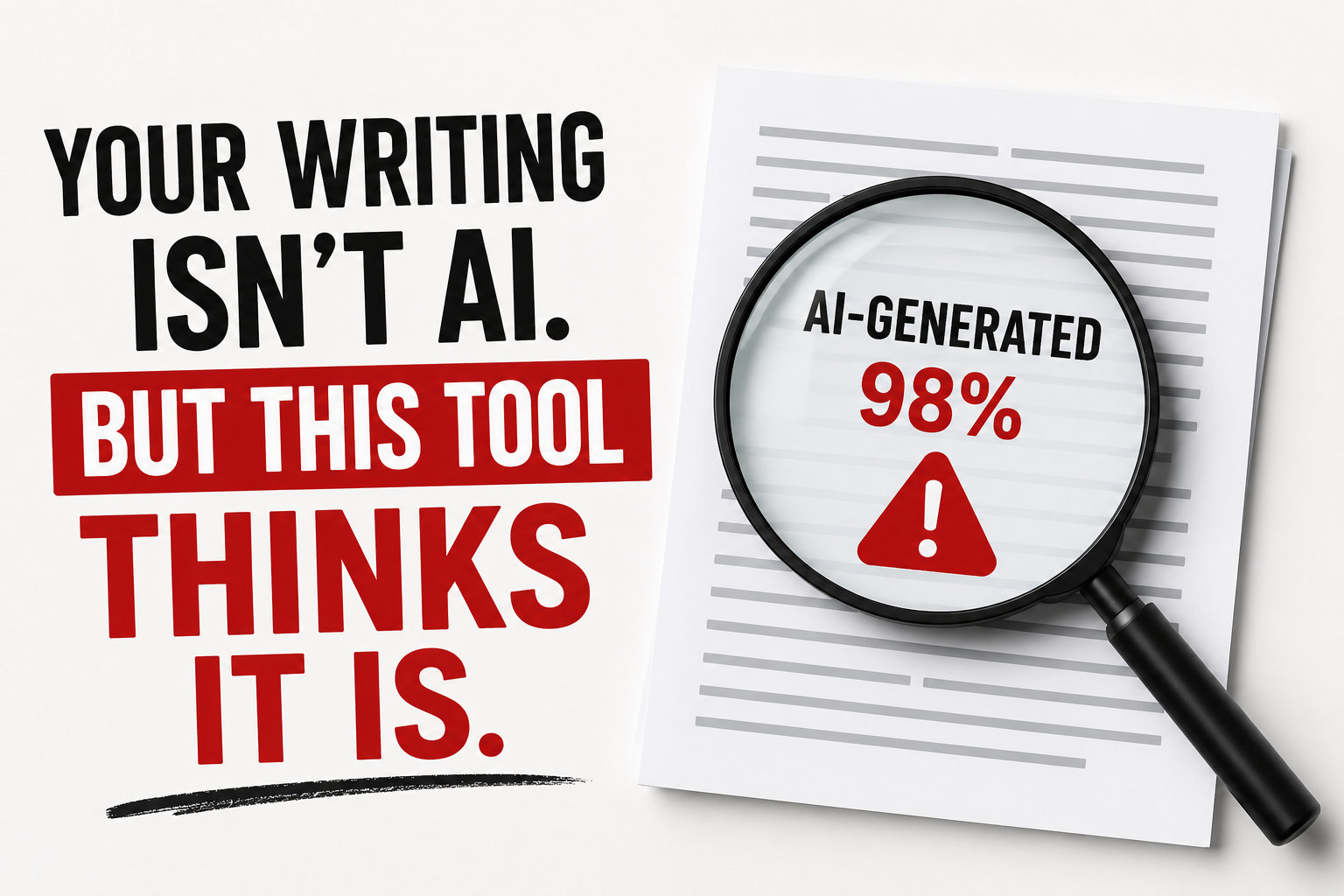
The new office rumor is not that someone used AI. It is that someone wrote a paragraph too cleanly, too quickly, or too differently from their usual style, and now a detector says the work looks suspicious.
The uncomfortable shift is this: schools and workplaces are adopting tools that can make authentic writing look guilty before a human being has asked a single serious question.
The Verge’s reporting on AI detectors captures a broader mood change: institutions are scared of being fooled, so they are building systems that treat everyone as a potential cheat. That fear is understandable, but it is also creating a trust crisis where the burden falls on students, employees, applicants, and freelancers to prove that their own words are really theirs.
Why detection feels like certainty
AI detectors are appealing because they promise order in a messy moment. Teachers are overwhelmed by ChatGPT-era assignments, managers are trying to evaluate work they cannot always see being done, and hiring teams are flooded with applications that may be polished by bots. A score that says “likely AI-generated” feels like a shortcut to certainty.
The problem is that the technology does not actually deliver certainty. OpenAI shut down its own AI text classifier after citing a low rate of accuracy, a remarkable signal from one of the companies most familiar with the underlying technology. Detection depends on probability, patterns, and assumptions about style, not proof of authorship.
That distinction gets lost once a score enters a classroom, HR file, or performance conversation. A detector may be framed as “one input,” but its output can quickly become the center of the case. People trust numbers because numbers look neutral, even when the model behind them is opaque.
This is especially risky for writers whose style already sits outside an assumed norm. Stanford researchers found that AI detectors can be biased against non-native English writers, flagging their work at higher rates than native English writing. In a school or workplace, that means the people most likely to be questioned may also be the people least able to challenge the accusation without fear of retaliation or embarrassment.
The career cost of false suspicion
At work, a false flag is not just awkward. It can damage credibility, stall advancement, and turn routine communication into a self-conscious performance. If your manager thinks your memo may not be yours, every future memo arrives with a shadow over it.
The same dynamic affects students before they even enter the workforce. A plagiarism or misconduct allegation can alter grades, scholarships, recommendations, internships, and graduate-school prospects. Even when a student is eventually cleared, the experience teaches a grim career lesson: clear writing can be punished if it resembles the wrong statistical pattern.
Workers face a similar bind. Many companies encourage AI experimentation in one context and punish suspected AI use in another. Employees are told to be efficient, modern, and tool-savvy, but also to produce work that feels sufficiently human on demand.
That ambiguity is corrosive. If an analyst uses AI to brainstorm a report outline, is that acceptable? If a job candidate uses a grammar tool to refine a cover letter, is that deception? If an employee rewrites a client email with help from a workplace-approved assistant, should the final draft be treated differently from one edited by a colleague?
Without clear rules, suspicion fills the gap. People begin saving drafts not to improve their writing, but to defend themselves. The writing process becomes a legal record, and the workplace becomes less collaborative because every document could become evidence.
What fair AI policies should do
The answer is not to pretend AI tools do not exist. They are already embedded in search engines, productivity suites, grammar checkers, note-taking apps, and coding environments. A serious policy starts by separating acceptable assistance from misrepresentation, then explains how concerns will be investigated.
Some institutions have already recognized the risk of overreliance. Vanderbilt University disabled Turnitin’s AI detection tool and pointed to concerns about false positives, transparency, and the burden placed on students. That decision is useful because it treats detection not as a magic shield, but as a governance problem.
A fair policy should include a few basic protections:
No detector-only discipline: A score should never be the sole basis for punishment, termination, grade penalties, or hiring rejection.
Clear disclosure rules: People should know when AI assistance is allowed, when it must be cited, and when it is prohibited.
Human review: Concerns should be evaluated through drafts, process notes, conversations, and context, not a single probability score.
Appeal rights: Students and workers need a defined way to challenge an accusation without being treated as more suspicious for doing so.
Bias awareness: Institutions should account for risks to non-native English writers, neurodivergent writers, and people with highly structured writing styles.
Companies also need to stop treating AI use as a character flaw when the business itself is pushing automation. If leadership wants employees to use AI responsibly, it has to define responsible use in operational terms. Vague warnings about “authenticity” are not enough.
Vendors have a role, too. Turnitin’s own AI writing detection materials describe the tool as a way to provide indicators, not as an infallible judge. Institutions that buy these systems should preserve that limitation in policy rather than turning indicators into verdicts.
How to protect your work without sounding defensive
Until policies catch up, individuals need practical habits that protect their credibility without making every assignment or memo feel like a courtroom exhibit. The goal is not paranoia; it is process visibility. If questions arise, you want to be able to show how your work developed.
For students, that may mean keeping outlines, source notes, and version history. For employees, it can mean using shared documents, saving research trails, and documenting when AI tools were used for permitted tasks such as summarizing notes or generating first-pass ideas. These habits are useful even when no one questions you because they improve collaboration and accountability.
The tone matters. “Here is my process” lands better than “I swear I did not cheat.” In a trust-poor environment, calm documentation is more persuasive than panic.
Managers and educators should take the same lesson from the other side. If a piece of writing seems inconsistent, ask about the process before making an accusation. A conversation can reveal coaching, editing, stress, translation tools, or simply improvement. Not every change in voice is evidence of misconduct.
The deeper career skill here is not avoiding AI. It is learning how to work transparently in a world where authorship is more complicated. People who can explain their decisions, methods, sources, and tool use will be better positioned than those forced into silence by unclear rules.
The bottom line
AI detectors are becoming symbols of a larger institutional anxiety: the fear that no one can tell what is real anymore. But replacing trust with automated suspicion will not make schools or workplaces more honest.
The better path is clear rules, human judgment, and proportional evidence. Authentic writing should not have to survive a machine’s suspicion before it earns a person’s trust.