Angélique Kidjo’s Walk of Fame Moment
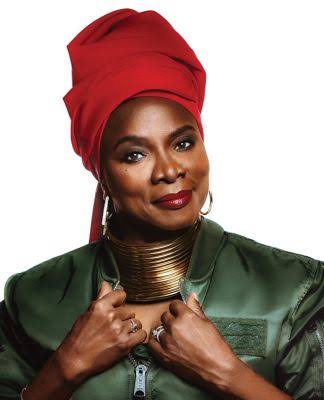
Angélique Kidjo’s next honor is not just another trophy for a career already crowded with them. Billboard reports that the Beninese icon will become the first African musician to receive a star on the Hollywood Walk of Fame, a milestone that lands at a moment when African music is reshaping pop’s global center of gravity.
The takeaway: Kidjo’s star is both a personal coronation and a public marker of African music’s expanding mainstream power.
Why this star matters beyond Hollywood
The Hollywood Walk of Fame is a peculiar institution: part civic ritual, part entertainment branding, part mythology machine. Its stars turn careers into tourist landmarks, placing artists in a permanent public story about who gets remembered by the American entertainment industry.
That is why Kidjo’s selection matters. The Hollywood Chamber of Commerce’s Class of 2026 announcement puts her name alongside globally familiar figures from film, television, sports, and music, but her placement carries a distinct cultural charge. For African music, the symbolism is unusually direct: an artist from Benin, singing across languages and traditions, being recognized on one of Hollywood’s most visible stages.
Kidjo has never fit neatly into the industry’s boxes. She is a West African singer, a global pop experimenter, a jazz collaborator, a funk historian, a political voice, and an interpreter of the diaspora’s musical memory. Her Walk of Fame star acknowledges a body of work that has long argued, through sound, that African music is not a niche category but a foundation of modern popular music.
A career built on motion and reinvention
Kidjo’s career has been defined by movement: between Benin and France, between Yoruba, Fon, French, and English, between traditional rhythms and contemporary studio production. Her music has always treated borders as invitations rather than barriers, folding West African percussion into funk, salsa, jazz, reggae, gospel, and pop without flattening any of them.
Her Grammy record helps explain why this Hollywood honor feels overdue rather than sudden. The Recording Academy’s artist profile documents a run of wins and nominations that places her among the most celebrated global music artists of her generation. Those awards include recognition for albums that did not simply “cross over” into Western markets, but insisted on African musical intelligence as the center of the work.
One of Kidjo’s signature moves has been reclamation. Her 2018 reimagining of Talking Heads’ Remain in Light did more than cover a canonical rock album; it traced the African rhythmic ideas that had helped animate it in the first place. In Kidjo’s hands, the project became a brilliant act of musical return, transforming a Western art-rock classic into a diasporic conversation.
That ability to turn influence into dialogue is central to her importance. Kidjo is not a guest in global pop history; she is one of the artists who reveals how much of that history has always been African, even when the industry failed to say so clearly.
The mainstream is finally catching up
Kidjo’s Walk of Fame recognition arrives during a broader shift in how African music circulates internationally. Afrobeats, amapiano, alté, Afro-house, and other African-led sounds now move through festival stages, streaming charts, fashion campaigns, and arena tours with a visibility that would have seemed improbable to many executives two decades ago.
Yet the breakthrough is not just commercial. It is aesthetic. Producers in Lagos, Accra, Johannesburg, Cotonou, Nairobi, and beyond are not waiting for permission to shape global taste; they are setting terms that artists in Europe, the United States, Latin America, and Asia now respond to in real time.
Kidjo’s star connects that present-tense explosion to a deeper lineage. Before today’s streaming-era African superstars became fixtures on international playlists, Kidjo was building stages wide enough for African artistry to be heard as contemporary, sophisticated, and universal. She helped normalize the idea that an African artist could be deeply rooted and globally fluent at once.
That context makes the “first” especially striking. Hollywood has long benefited from African musical influence, from jazz and blues foundations to Afro-diasporic rhythms running through soul, funk, disco, hip-hop, house, and pop. Recognizing Kidjo as the first African musician with a Walk of Fame star highlights progress, but it also exposes how late the institution is in honoring the sources of so much modern sound.
More than a music honor
Kidjo’s public identity has always extended beyond performance. She has used her platform to advocate for education, women’s rights, and humanitarian causes, work reflected in her role as a UNICEF Goodwill Ambassador. That activism is not a side project; it is part of the moral architecture of her artistry.
Her songs often carry the pulse of celebration, but they are rarely escapist in the shallow sense. Kidjo’s music makes joy sound like resistance, especially when it foregrounds African languages, women’s voices, and histories too often pushed to the margins of the global entertainment business.
That combination helps explain why she has become such a durable figure across generations. For older listeners, she represents a standard-bearer for African excellence on the world stage. For younger artists, she represents a blueprint: collaborate widely, protect your roots, and refuse to shrink your cultural identity to make it marketable.
There is also a practical industry message here. Institutions tend to follow momentum, and Kidjo’s recognition suggests that African music’s mainstream presence is no longer being treated as a passing trend. The star will be fixed in concrete, but the story around it is dynamic: African artists are claiming more space in the architecture of global pop memory.
What the milestone says about the future
The next question is not whether more African musicians deserve similar recognition. They do. The question is how quickly legacy institutions will evolve from celebrating isolated breakthroughs to acknowledging an entire ecosystem of African creativity.
Kidjo’s honor should open the door wider for artists from across the continent and diaspora whose work has changed popular music’s vocabulary. That includes pioneers who built international audiences before the streaming era, as well as contemporary stars who are proving that global scale no longer requires cultural dilution.
This is where the Walk of Fame star becomes useful as more than symbolism. It gives media, fans, and industry gatekeepers a visible reference point for a larger truth: African music is not newly relevant; it is newly impossible for the mainstream to ignore.
The bottom line
Angélique Kidjo’s Walk of Fame star is a landmark because it honors an artist who has spent decades expanding the world’s ears. It also signals a larger correction in how mainstream institutions recognize African music’s creative authority.
Hollywood may be giving Kidjo a star, but the brighter story is the one her career has been telling all along: African music belongs at the center of the global stage.