Apple’s Harlem Bet: Colson Whitehead as Prestige Crime TV
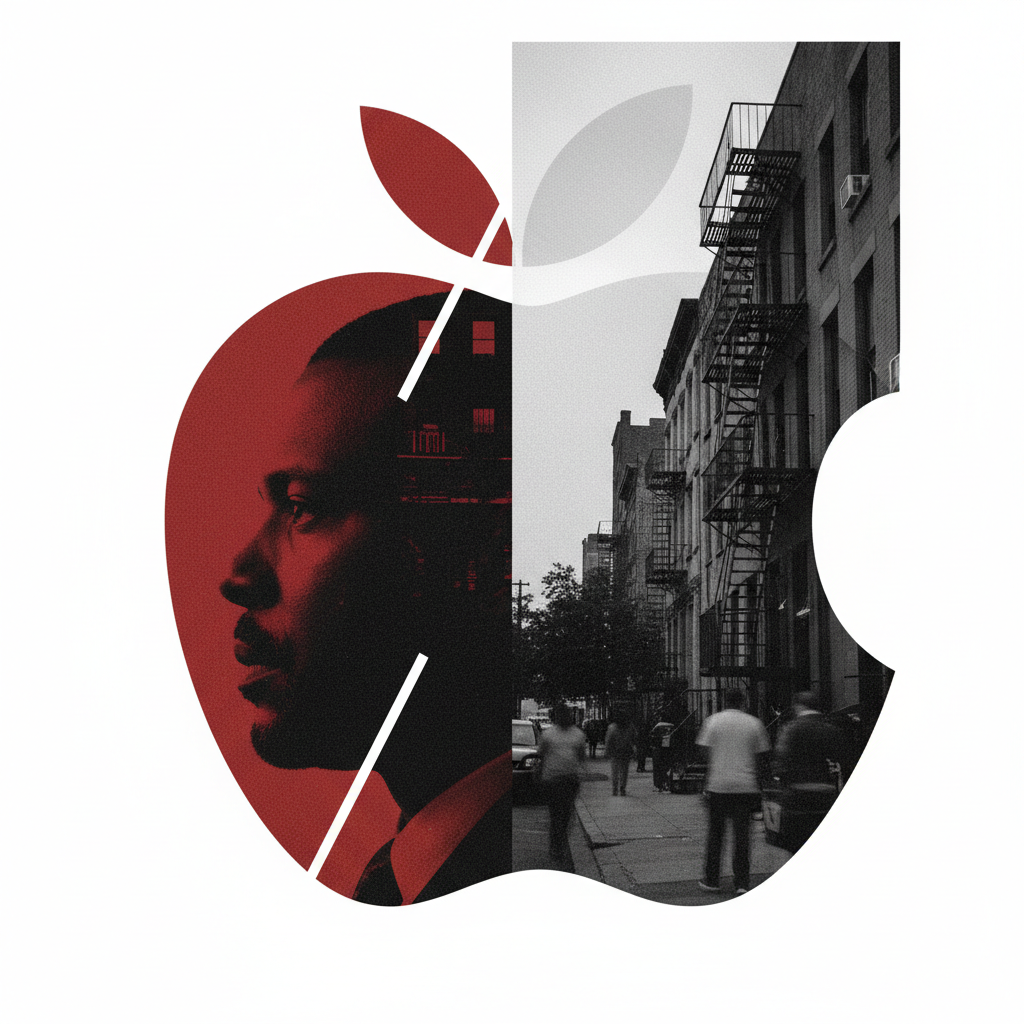
If Apple really wants a crime drama that can do more than solve a case, Colson Whitehead’s Harlem books are exactly the kind of swing prestige TV was built for. Variety has reported that Apple is developing a television adaptation of Whitehead’s “Harlem” trilogy—a still-evolving literary crime saga that begins with Harlem Shuffle and continues with Crook Manifesto. Development is not a greenlight, and the usual caveats apply: no premiere date, no cast, no guarantee it reaches screens. But the move is revealing anyway.
Apple is not merely chasing another heist show. It is circling a property with genre velocity, Pulitzer-grade authorship, and a built-in historical canvas: Harlem from the late 1950s into the chaos and charisma of 1970s New York. In a streaming market where “prestige” can no longer mean slow, expensive, and vague, Whitehead’s trilogy offers something more valuable: a propulsive crime story with cultural memory baked into the walls.
Why Whitehead’s Harlem Is Built for TV
The obvious hook is Ray Carney, the furniture salesman at the center of Harlem Shuffle. Carney is respectable—mostly. He sells sofas, tends to his family, and knows how to look like a man committed to ordinary upward mobility. He is also a fence with underworld connections, a negotiator between legitimate aspiration and criminal opportunity. That contradiction is television gold.
Great TV antiheroes are rarely “bad” in the abstract. They are men and women whose compromises make sense one step at a time. Carney belongs in that lineage, but he is not a recycled Tony Soprano or Walter White. His double life is shaped by race, class, real estate, policing, family pride, and the particular pressure of Black ambition in mid-century New York. The question is not simply whether he can get away with something. It is whether respectability itself is a rigged game.
Whitehead’s structure also helps. Harlem Shuffle unfolds across linked episodes in Carney’s life rather than a single mystery-box plot. Crook Manifesto jumps into the 1970s, using crime to trace a city altered by blaxploitation cinema, crooked cops, arson, fiscal crisis, and neighborhood reinvention. That gives a series room to breathe: each season can have its own caper or investigation while the larger story tracks Harlem’s transformation and Carney’s moral drift.
The Prestige Streamer Playbook Has Changed
For a while, literary adaptations were treated as prestige insurance: adapt the beloved novel, hire stars, market the seriousness. But streamers are now looking for books that can carry multiple seasons without sacrificing urgency. Literary crime sagas are especially useful because they come with three things platforms need: recognizable IP, narrative engines, and thematic heft.
Apple has already shown a taste for book-driven genre television. Slow Horses, adapted from Mick Herron’s spy novels, became one of the service’s signature shows because it combines sharp plotting with a durable ensemble and a world that can keep generating stories. Presumed Innocent, based on Scott Turow’s legal thriller, showed how a familiar title can be reframed for a modern limited-series audience. The strategy is not “books are respectable.” It is “books can be engines.”
That matters in the post-peak-TV era. Streamers need shows that feel premium but do not require viewers to do homework. Crime is a universal entry point: someone lies, steals, kills, betrays, investigates, or covers up. The prestige layer comes from what the crime reveals. In Whitehead’s Harlem, a robbery can expose a social hierarchy. A crooked detective can embody an entire civic rot. A furniture store can become a map of American capitalism.
Cultural Weight Without a Lecture
Whitehead’s name carries rare authority. He is a two-time Pulitzer Prize winner, honored for The Underground Railroad and The Nickel Boys, and his work has already proved adaptable: Barry Jenkins’ The Underground Railroad turned his alternate-history novel into one of the most visually ambitious television events of recent years. But the Harlem books present a different challenge and opportunity. They are looser, funnier, seedier, and more overtly genre-friendly.
That balance is crucial. A series version should not flatten the books into a museum tour of Black New York. The pleasure of Whitehead’s crime writing is that history arrives through action: a hustler’s pitch, a cop’s shakedown, a family argument, a nightclub favor, a job that sounds simple until it is not. The cultural weight is there because the world is specific, not because the characters stop to explain it.
That specificity could help Apple stand out in a crowded field of period crime dramas. Harlem is not just a backdrop. It is the pressure system. The neighborhood’s glamour, danger, commerce, and vulnerability are inseparable from the story. Done right, the show could move from showrooms to back rooms, jazz clubs to precinct houses, brownstones to demolition sites, making the city feel alive without turning every scene into production-design flexing.
The Adaptation Risks Are Real
The biggest risk is mistaking “prestige” for politeness. Whitehead’s crime novels work because they have bite. They are elegant, but they are also grimy. They understand scams, grudges, vanity, and the small humiliations that push people into bad decisions. A too-sleek adaptation could sand off the danger and leave only handsome period surfaces.
Casting will matter enormously. Ray Carney needs charm, calculation, fatigue, and the haunted optimism of a man who believes he can manage chaos if everyone else would simply behave. The supporting players—criminals, relatives, cops, strivers, political operators—cannot feel like archetypes orbiting a protagonist. The books’ world is dense; the show must be, too.
Pacing is another challenge. Whitehead’s episodic plotting is an asset, but television will need a clean seasonal spine. The smart approach would be to preserve the caper energy while letting the consequences accumulate. Viewers should feel the immediate fun of a job gone wrong and the long-term cost of Carney’s rationalizations.
Why Apple’s Bet Makes Sense
Apple TV+ has positioned itself as a curated premium service rather than a volume machine. That makes Whitehead a logical target. The Harlem trilogy is not disposable content; it is the kind of adaptation that can be sold as adult drama, literary event, crime entertainment, and cultural conversation all at once.
It also gives Apple a potential franchise that does not need superheroes, dragons, or a sprawling fantasy bible. The franchise is time, place, and character. Start with Carney in the 1960s. Let the city harden around him. Follow the money, the favors, the betrayals, the family pressures. By the 1970s, the world has changed, but the old debts remain.
That is the promise of Whitehead’s Harlem: crime as continuity. Every score leaves residue. Every compromise becomes architecture.
Conclusion: A Caper With a Long Memory
An Apple adaptation of Colson Whitehead’s Harlem trilogy could easily be marketed as a stylish period crime drama. But the larger opportunity is richer than that. This is a saga about respectability, corruption, race, money, and the American city—wrapped in the pleasures of heists, hustles, and double lives.
Prestige TV needs stories with momentum and meaning. Whitehead’s Harlem has both. If Apple gets it right, this will not just be another literary adaptation. It could be the next great crime series with something to say.