Apple Music’s AI Labels Could Reshape Afrobeats Trust
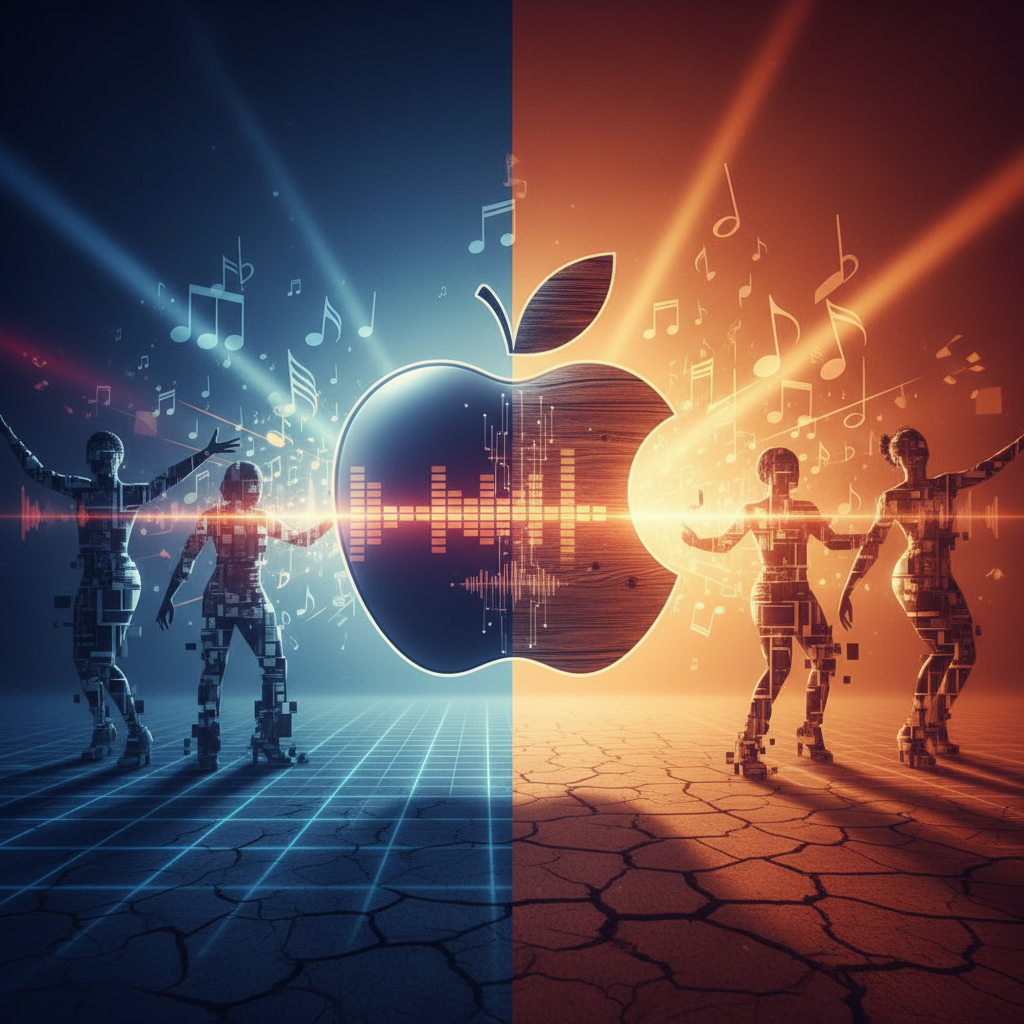
A synthetic Burna Boy-style hook can now be mocked up before lunch. A Wizkid-adjacent vocal texture can be tested over an amapiano log drum by dinner. By midnight, a fan-made edit can be on social feeds moving faster than any label marketing plan.
That is the new reality Apple Music is reportedly preparing to confront. According to Billboard, Apple Music plans to add labels for AI-generated music later this year, a move that could make disclosure part of the listening experience rather than a buried industry conversation. For global pop, that matters. For Afrobeats, amapiano, and other digital-first African and diaspora scenes, it could be a turning point.
These markets move at internet speed. Hits break through TikTok snippets, WhatsApp forwards, DJ edits, YouTube visualizers, and streaming playlists long before traditional gatekeepers catch up. In that environment, an AI label is not just a technical tag. It is a trust signal.
Why AI Disclosure Matters More in Fast-Moving Scenes
Afrobeats has become one of streaming’s most agile global languages because it thrives on circulation. A Lagos record can be remixed in London, danced to in Accra, playlisted in New York, and re-edited by creators in Johannesburg in the same week. The scene’s strength is also what makes it vulnerable to confusion.
When music spreads through short clips, many listeners encounter a song detached from its credits. They hear a voice, a bounce, a producer tag, or a familiar cadence before they know who made it. AI tools complicate that further. A track can sound “in the style of” a recognizable star without that artist having entered a booth. A beat can imitate a producer’s swing. A vocal demo can be mistaken for a leak.
Disclosure would not solve every problem, but it would give platforms a first line of defense: a visible distinction between human-made recordings, AI-assisted works, and fully generated tracks. That distinction matters in genres where identity is part of the value proposition. Fans do not just stream an Afrobeats record for melody; they stream personality, accent, slang, lineage, locality, and chemistry.
If Apple Music gets this right, an AI label could help preserve the context that streaming often flattens.
The Sampling Question Is About More Than Clearance
Afrobeats already has a sophisticated relationship with borrowing. Sampling, interpolation, and rhythmic quotation are part of pop music globally, and the African pop ecosystem is no different. Burna Boy’s “Last Last,” built around Toni Braxton’s “He Wasn’t Man Enough,” is a famous recent example of how a recognizable sample can become part of a new cultural moment when properly cleared and creatively transformed.
AI raises a different question: what happens when the “sample” is not a recording but a style?
A producer might use AI to generate a horn phrase that resembles highlife-era textures, a vocal chant that evokes a regional choir tradition, or a drum loop modeled on existing amapiano and Afrobeats records. Legally, that may not look like traditional sampling. Culturally, it can feel just as consequential.
This is where labeling could force a more honest conversation. A simple “AI-generated” badge may be too blunt for the way music is actually made. Many modern records involve human songwriting, programmed drums, sample packs, vocal tuning, stem separation, and now AI-assisted ideation. The industry will need more precise language: Was AI used to generate a lead vocal? To create a backing texture? To clone a voice? To separate stems? To write lyrics? To produce artwork only?
For producers, that nuance is essential. Afrobeats production is not generic “vibes”; it is craft. The bounce of a Kel-P drum pattern, the polish of a P.Priime arrangement, the swing associated with Sarz, or the atmospheric choices in a Tems record are creative signatures. If AI tools begin imitating those signatures at scale, metadata must do more than mark a song as artificial. It must help listeners understand the role of the machine.
Artists Need Labels That Protect, Not Punish
The danger is that AI disclosure becomes a stigma instead of a standard. That would be a mistake.
Musicians have always used technology to extend imagination: drum machines, Auto-Tune, samplers, digital audio workstations, pitch correction, and vocal comping all changed what records could sound like. AI will be part of that continuum for some creators. An emerging artist in Nairobi or Port Harcourt might use AI to sketch harmonies, test translations, clean noisy demos, or prototype a video treatment without a large budget. Those uses should not automatically place the artist in the same category as an anonymous account uploading fake celebrity vocals.
The real dividing line is consent and transparency. Did the people whose voices, likenesses, performances, or catalogs shaped the output agree to it? Are the human creators credited? Is the listener being misled?
Apple Music’s reported move could push distributors and rights holders to capture better data before songs arrive on the platform. That would affect independent artists as much as major-label acts. If upload forms begin asking whether AI was used, artists will need clearer guidance. Vague checkboxes will not be enough. A young producer should not have to guess whether using an AI stem-cleanup tool triggers the same label as generating a complete fake duet.
Good policy would protect experimentation while making deception harder.
Fans Are the Real Audience for Metadata
The music business often treats metadata as back-office plumbing. Fans experience it differently. Credits, lyrics, canvas videos, badges, and playlist placements shape how listeners interpret a record.
An AI label on Apple Music would sit in that interpretive layer. It could change whether fans share a song, whether journalists cover it, whether DJs trust it, and whether playlist editors treat it as culturally credible. In scenes where authenticity is constantly debated—who owns a sound, who crossed over, who diluted it, who innovated—it could become a powerful symbol.
Imagine two tracks surfacing the same week: one is a new single from a rising Ghanaian artist with AI-assisted background vocals clearly disclosed; the other is an anonymous “leak” using a synthetic version of a Nigerian superstar’s voice. Without labels, both can travel as content. With labels, listeners have at least one more piece of context before the rumor cycle takes over.
That context also matters for archives. Afrobeats is documenting its global ascent in real time. Future listeners should be able to know which recordings captured actual performances and which reflected synthetic reconstruction or machine-generated imitation. Streaming platforms are no longer just shops; they are cultural memory systems.
The Platform Trust Race Has Begun
Apple Music is not moving in a vacuum. YouTube has already been working publicly with music partners on AI principles, and Deezer has announced tools to detect AI-generated uploads. The Recording Academy has also clarified that music with AI elements can be eligible for Grammys only when human authorship remains meaningful.
That broader direction is clear: the next phase of streaming competition will not only be about catalog size or exclusive sessions. It will be about trust.
For Afrobeats and adjacent scenes, that trust must be built with global sensitivity. Western platforms should not treat African and diaspora genres as datasets of rhythms, accents, and vocal styles to be mined without credit. Nor should they over-police artists who use new tools to compete in an already unequal industry. The goal should be disclosure with dignity: clear labels, fair enforcement, detailed credits, and respect for local creative ecosystems.
Conclusion: A Small Badge With Big Consequences
Apple Music’s reported AI labels may look like a minor product update. They are not. They could shape how fans distinguish experimentation from imitation, how producers defend their signatures, and how artists build credibility in the most viral music markets on earth.
Afrobeats became global because it travels fast. The challenge now is making sure it travels truthfully.