Ariana Grande’s Global 200 Takeover Shows Pop’s Power
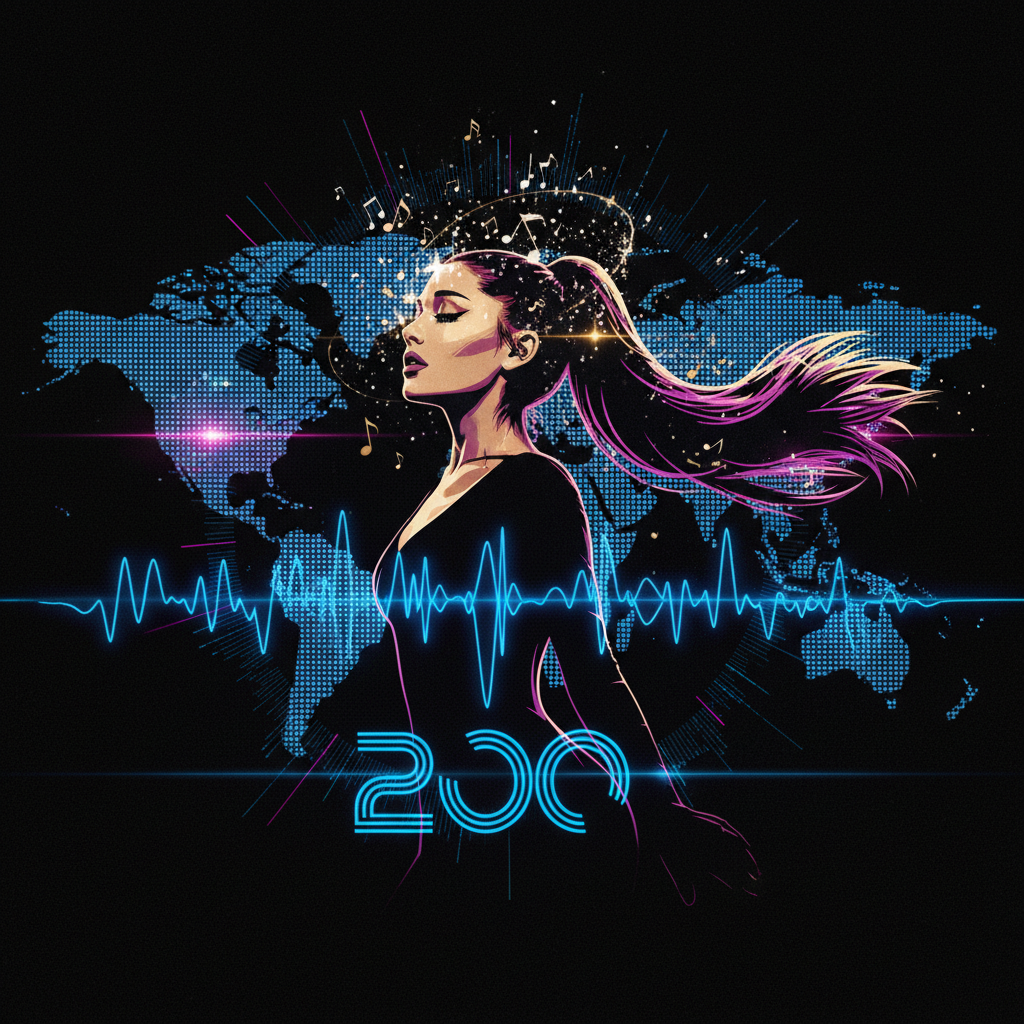
Billboard’s latest Global 200 snapshot has the kind of chart flex that still makes the industry stop scrolling: Ariana Grande holding five of the top 10, led by “Hate That I Made You Love Me.” In a music economy supposedly ruled by fragmentation, micro-scenes, and algorithmic discovery, that is a loud reminder that the biggest pop album cycles can still bend global listening around themselves.
The takeaway: streaming changed the mechanics of pop dominance, but it did not kill the blockbuster.
Why one album can flood a global chart
The modern pop blockbuster is not just a collection of songs; it is a full-platform event. When Grande lands half of the Billboard Global 200 top 10, the result is not simply fan enthusiasm, but a coordinated burst across streaming services, short-form video, playlisting, social conversation, press, and fandom-led repeat listening.
That matters because the Global 200 is designed to measure songs across territories, not just in the United States. Billboard’s global charts combine worldwide streaming and sales activity, with methodology intended to capture scale across major digital markets rather than the habits of one country alone.
For a star at Grande’s level, a new era arrives with built-in infrastructure. The lead single primes the market, the album release creates a listening ritual, and every track gets a temporary spotlight as fans search for favorites, decode lyrics, and push deep cuts into the conversation.
The old blockbuster model depended on radio saturation, physical retail, and TV exposure. The new one depends on velocity: how quickly a release can turn attention into measurable plays around the world.
The Global 200 rewards coordinated attention
Billboard’s global chart methodology helps explain why a major album week can look so dramatic. In the streaming era, every track is available at once, and every listener can immediately contribute to multiple songs’ chart performance rather than buying or requesting only the designated single.
That creates a crucial shift. A fan who plays an album front to back is not just supporting the focus track; they are feeding an entire slate of potential chart entries, especially in the first days of release.
The result is what might be called the album-bomb effect, though that phrase can make it sound accidental. For the biggest stars, it is often the point: maximize curiosity, make the album feel culturally mandatory, and let listeners sort the hierarchy in real time.
Several forces now work together in a superstar’s favor:
Global fan bases: Major pop audiences are no longer centered on one market, so release weeks can travel across time zones.
Full-catalog access: Every album track is instantly playable, shareable, and chart-eligible.
Playlist gravity: High-profile placements can accelerate discovery beyond core fans.
Narrative intensity: Lyrics, relationships, aesthetics, and visuals all become part of the listening experience.
Repeat behavior: Dedicated fandoms can sustain momentum through organized streaming and social amplification.
This is why a top 10 takeover feels different from a conventional hit single. It is not only about one song breaking through; it is about the artist commanding the whole frame.
Superstar cycles are built for more than week one
The biggest question after any chart takeover is whether it reflects durable demand or launch-week force. Grande’s current Global 200 showing is a victory either way, but its long-term significance depends on what happens once the release-week surge settles and casual listeners begin choosing the songs they want to keep.
That is where today’s pop campaigns have become more flexible. Instead of betting everything on one preselected single, labels can watch streaming behavior identify the next hit, then adjust radio, video, remix, and playlist strategy accordingly.
A song like “Hate That I Made You Love Me” leading the pack gives the campaign a clear center. But the presence of four other top 10 tracks suggests listeners are not engaging with the release as a one-song proposition, which is exactly what labels want from a premium album cycle.
Streaming has also extended the definition of a hit’s runway. A track can debut huge, dip, return through a viral moment, climb after a performance, or be revived by a remix months later. That makes the album not just a product drop, but a reservoir of future singles.
The broader market supports that strategy. Spotify’s Loud & Clear project has emphasized how international and cross-border listening now shapes artist income and reach, while recorded music trade groups have repeatedly pointed to streaming as the central driver of global recorded music revenue.
What this means for the rest of pop
Grande’s Global 200 dominance is good news for superstars, but it also sharpens the divide between pop’s top tier and everyone else. The same systems that make global discovery easier can make attention harder to hold when a household-name artist arrives with a major release.
For emerging acts, the lesson is not to imitate the scale of a Grande campaign. It is to understand the mechanics: build anticipation, give listeners a reason to experience more than one track, and create enough identity around a release that it feels like an event rather than inventory.
For established stars, the bar is higher. A major album now needs multiple entry points: the obvious single, the fan-favorite ballad, the quotable lyric, the visual motif, the performance clip, and the track that can travel outside the core audience.
That explains why pop eras have become increasingly cinematic. The music still has to connect, but the rollout has to give people a reason to participate publicly, whether by ranking tracks, sharing interpretations, or attaching songs to their own stories.
There is also a competitive pressure on platforms. Charts like the Global 200 make worldwide demand visible, but they also reveal how quickly attention concentrates around a few releases. When a superstar lands five songs in the top 10, the chart becomes both a measurement of popularity and a map of cultural oxygen.
The bottom line
Ariana Grande’s Global 200 takeover shows that the pop blockbuster is not a relic of the CD era; it has been rebuilt for streaming. The tools have changed, but the core dynamic remains familiar: when a superstar gives the world a reason to listen at the same time, the charts still move in formation.
The streaming era may be more crowded, faster, and more global than any previous music economy. But moments like this prove that scale still matters, and pop’s biggest names can still turn an album release into a worldwide event.