Atiku’s Tinubu Suit Puts 2027 Eligibility in Play
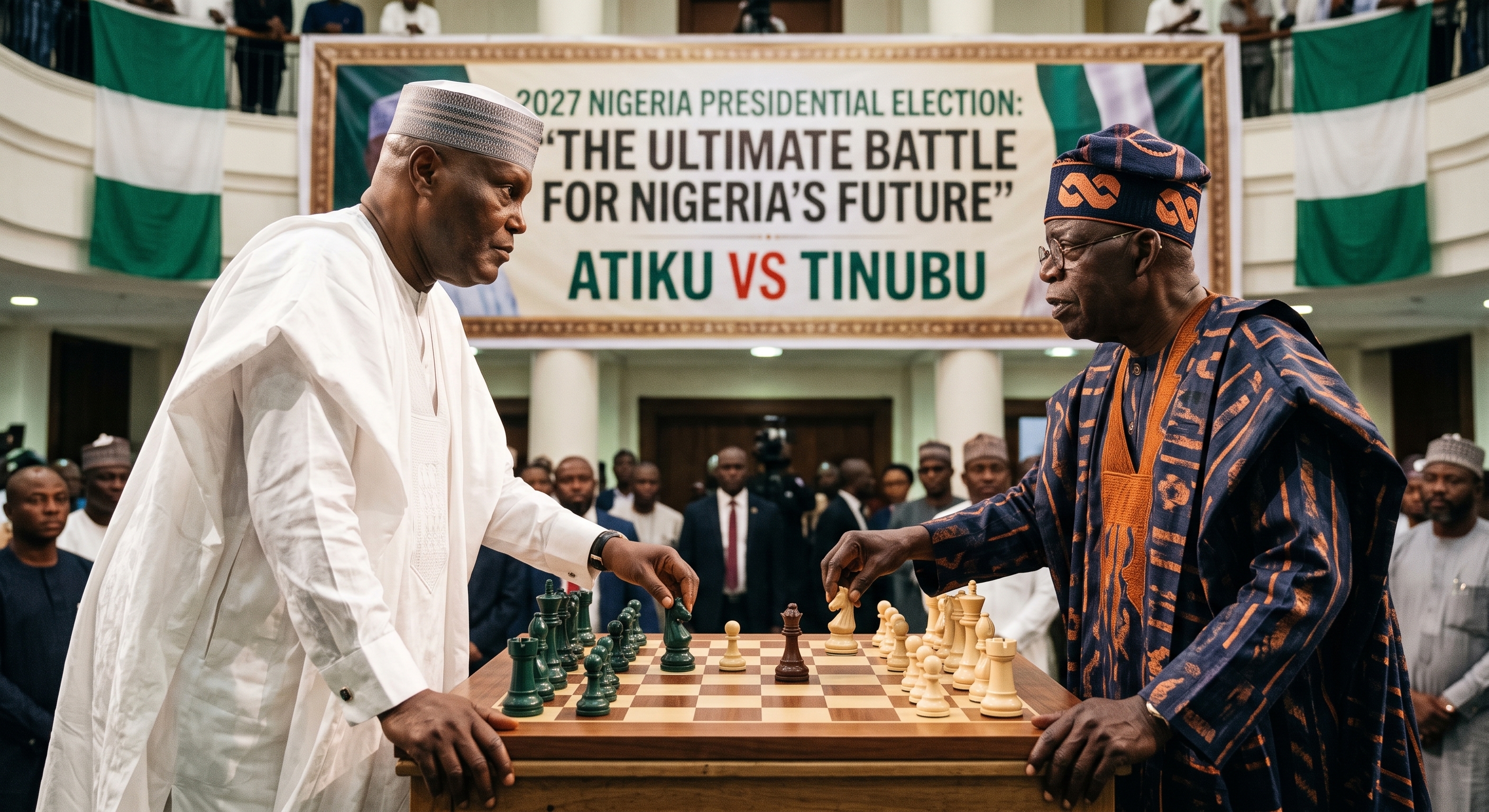
The 2027 presidential race may have found its first major battlefield before the campaign posters go up: the courtroom.
Live reports that former Vice President Atiku Abubakar has gone to court seeking President Bola Tinubu’s disqualification have pushed an old rivalry into a new phase. This is no longer just about who can build the broadest coalition, control the strongest party machinery, or survive Nigeria’s punishing campaign trail. It is now about a more fundamental question: who is legally allowed to be on the ballot?
That question is explosive because eligibility fights do not merely embarrass candidates. They can reorder primaries, unsettle alliances, freeze campaign planning and force parties to spend precious months defending paperwork instead of selling a message. If the case proceeds, it could become one of the defining pre-campaign contests of 2027.
What Atiku’s Legal Argument Is Really About
At the heart of any disqualification suit against a presidential candidate is Section 137 of the 1999 Constitution, the provision that sets out who cannot run for president. It covers issues such as prior election to the office twice, certain criminal convictions, bankruptcy, secret society membership, indictments for fraud or embezzlement, and the presentation of a forged certificate to the Independent National Electoral Commission.
That last category has been politically potent in Nigeria because election litigation often turns on documents: nomination forms, academic records, affidavits, tax declarations and party certificates. A candidate can survive harsh criticism in rallies and interviews, but a court case asks a colder question: what did the candidate submit, and does the law attach consequences to it?
For Atiku, the reported move appears aimed at shifting the Tinubu question from public debate to judicial determination. In 2023, Tinubu’s opponents challenged his election through the presidential election petition process. The Supreme Court ultimately affirmed his victory, closing that electoral cycle. But 2027 is a separate election, and the legal strategy now seems designed to test whether old controversies can become a forward-looking bar to a new nomination.
That distinction matters. A court may be asked not to undo 2023, but to stop a repeat candidacy if constitutional disqualification is established. Tinubu’s side would likely answer that the issues have been decided, are speculative before nomination, or do not meet the high threshold required by the Constitution.
Why Timing Could Decide the Case Before the Merits
In Nigerian election law, timing is often as decisive as evidence. The Electoral Act and the Constitution impose tight rules on pre-election disputes. Courts frequently ask: when did the cause of action arise, who has standing to sue, and was the case filed within the required window?
That creates an immediate challenge for any 2027 eligibility case filed before parties have formally nominated candidates. If Tinubu has not yet emerged as the All Progressives Congress candidate for 2027, his lawyers may argue that the claim is premature. A court could ask whether it is being invited to decide a hypothetical dispute rather than an actual nomination controversy.
On the other hand, Atiku’s team may argue that constitutional eligibility is not a mere party matter. If the allegation is that a sitting president is constitutionally barred from seeking another term, waiting until the eve of nomination could compress the issue into a chaotic race against statutory deadlines.
This is where the case could become procedural before it becomes political. Nigerian courts have dismissed many election-related cases not because the underlying allegations were trivial, but because the claimant lacked locus standi or missed the narrow filing window. A suit that is too early may be called speculative. A suit that is too late may be called statute-barred.
That is why the filing date, the reliefs sought and the exact legal trigger identified in the claim will be critical. A request for a declaration that Tinubu is ineligible is different from a request restraining INEC from accepting his nomination after party primaries. The former tests constitutional interpretation; the latter fits more neatly into the pre-election framework.
The Political Calculation Behind the Court Move
Atiku’s reported move is not occurring in a vacuum. It comes as Nigeria’s opposition space remains unsettled after the 2023 election, with the Peoples Democratic Party weakened by internal division and opposition figures still searching for a credible path to unseat an incumbent.
A courtroom challenge can serve several political purposes at once. First, it keeps Tinubu’s eligibility controversies alive in national conversation. Second, it signals that Atiku intends to remain central to the opposition strategy for 2027. Third, it forces the ruling party to respond on legal terrain rather than purely economic or governance performance.
For Tinubu, the political risk is not only losing a case. It is the distraction. Incumbents prefer campaigns framed around delivery: infrastructure, inflation, exchange-rate stability, security, jobs and social welfare. Eligibility litigation changes the subject. Every court mention can generate headlines. Every procedural ruling can be interpreted as momentum by one side or the other.
For Atiku, the risk is also obvious. If the court throws out the case early, Tinubu’s camp will present it as another failed attempt to defeat him through litigation. That could strengthen the president’s narrative that the opposition is stuck in the last election while he is focused on governing.
What It Could Mean for APC, PDP and INEC
If the case gains traction, the first institution to feel the pressure will be the APC. Even if the party remains publicly confident, uncertainty over a candidate’s legal status can complicate elite negotiations. Governors, ministers, legislators and donors all prefer clarity. A pending disqualification case can make that clarity harder to maintain.
The PDP also faces a strategic dilemma. If Atiku is seen as leading the fight, he may consolidate influence among party loyalists who believe 2023 grievances were never fully answered. But that same move could irritate opposition actors who want a broader anti-incumbent coalition not dominated by one figure.
INEC, meanwhile, will be watching the case through an administrative lens. The commission’s role becomes crucial once parties submit names of candidates. If a court issues any order affecting nomination or acceptance of a candidate, INEC must decide how to comply while staying within the election timetable. That is why courts are usually cautious about orders that could disrupt the electoral calendar without clear legal grounding.
The practical scenarios are stark. A dismissal would clear political space for Tinubu and hand the APC a talking point. A narrow procedural ruling could postpone the fight until formal nomination. A substantive ruling against Tinubu, while a high bar, would be a political earthquake long before the first campaign rally.
Conclusion: The 2027 Race Has Started in Legal Language
The biggest mistake would be to treat this as just another courtroom headline. Eligibility litigation can shape the psychology of an election long before voters cast ballots.
Atiku’s reported suit turns 2027 into a contest not only over performance, popularity and party strength, but over constitutional permission. Whether the case survives procedure, reaches the merits, or collapses quickly, it has already done one thing: it has reminded Nigeria’s political class that the next presidential election may begin not at a campaign ground, but before a judge.