Doctor Doom Arrives as Marvel Bets on the X-Men
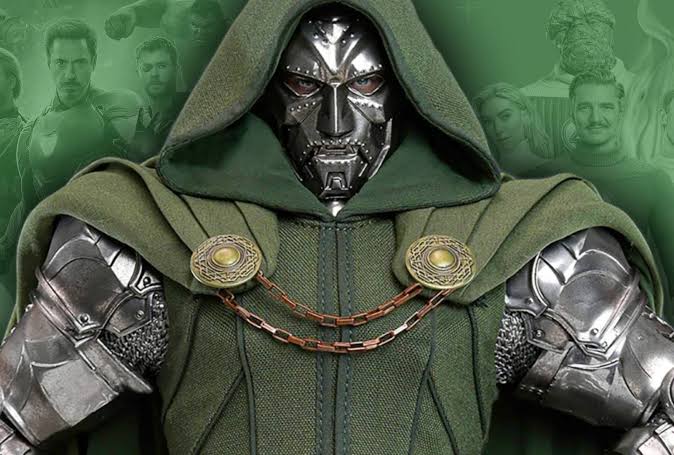
Marvel did not need to show much of Doctor Doom to make the internet stop scrolling. The point of the new Avengers: Doomsday reveal is not just that Doom is here, or even that Robert Downey Jr. is the man behind the mask. It is that Marvel Studios is sending the clearest possible signal to an exhausted fanbase: the MCU’s next era will not be business as usual.
After years of uneven post-Endgame momentum, abandoned certainty around Kang, and a multiverse strategy that sometimes felt more like homework than spectacle, Doomsday now looks like Marvel’s biggest reset button. The bet is audacious: put Downey back at the center of the machine, reintroduce the Fox-era X-Men as event-level fuel, and use Doctor Doom as the villain who can make all of it feel like one story.
That is not a trailer reveal. That is a corporate thesis statement in a metal mask.
Doom Is More Than a Villain Reveal
Doctor Doom is one of the few Marvel characters big enough to justify this level of theatricality. He is not simply a bad guy with a plan. In the comics, Victor Von Doom is monarch, scientist, sorcerer, wounded ego, and apocalyptic threat rolled into one. He can fight Reed Richards on Monday, manipulate gods by Wednesday, and convince himself he is saving the world by Friday.
That matters because the MCU has spent years searching for a new gravitational center. Thanos worked because everything pointed toward him. Even when he was absent, his shadow organized the universe. The Infinity Stones gave the saga a clean visual and narrative language: find the gems, assemble the gauntlet, stop the snap.
The Multiverse Saga has been messier. Loki did elegant work with timelines and variants. Spider-Man: No Way Home made nostalgia feel emotional instead of cynical. Doctor Strange in the Multiverse of Madness gave Marvel permission to break reality onscreen. But across films and Disney+ series, the big picture often felt diffuse.
Doom solves several problems at once. He is a single face for the threat. He connects naturally to the Fantastic Four. He can plausibly operate across science, magic, politics, and multiversal chaos. Most importantly, he does not need the audience to memorize a new cosmic rulebook. Doom wants control. Doom believes he deserves it. Doom is terrifying because he may be competent enough to get it.
Robert Downey Jr. Changes the Temperature
Casting Downey as Doom is the kind of move only Marvel would attempt, because only Marvel has this specific pop-cultural history to weaponize. Downey’s Tony Stark was not just the MCU’s first hero; he was the house style. His arrogance, speed, guilt, charisma, and self-sacrifice defined what Marvel movies felt like for more than a decade.
Bringing him back as Doctor Doom is risky precisely because it is so loaded. If it feels like a stunt, fans will reject it as desperation. If it works, it turns the entire MCU legacy inside out. The actor who embodied Marvel’s greatest hero becomes the face of its next existential threat.
That does not necessarily mean Doom is a Tony Stark variant, and Marvel would be wise not to reduce him to one. The stronger play is psychological, not literal. The audience sees Downey and remembers the savior. The characters may see Doom and encounter someone who is brilliant, armored, persuasive, and catastrophically sure of himself. That echo is enough.
It also gives Doomsday something recent MCU entries have often lacked: an instantly legible emotional hook. You do not have to explain why this matters. You only have to show Downey behind the mask and let fifteen years of audience investment do the rest.
The X-Men Are the Real Reset Button
The Doom reveal may own the headline, but the X-Men crossover is the bigger strategic play. Marvel has been teasing mutant integration for years, from Patrick Stewart’s Professor X appearing in Multiverse of Madness to Kelsey Grammer’s Beast cameo in The Marvels and the massive commercial success of Deadpool & Wolverine. Each appearance tested the same question: do audiences still care about the Fox-era X-Men?
The answer has been loud enough for Marvel to build around it.
That is why Doomsday feels less like another Avengers sequel and more like a collision between Marvel’s two cinematic dynasties. The MCU Avengers represent the studio’s empire. The X-Men represent the crown jewel Marvel could not fully use for years, until Disney’s acquisition of 21st Century Fox brought the characters back under the broader corporate umbrella.
The nostalgic value is obvious. Names like Professor X, Magneto, Cyclops, Mystique, Nightcrawler, Beast, and Gambit carry decades of screen memory. But nostalgia alone is not enough. The real opportunity is thematic. The X-Men bring prejudice, identity, legacy, and generational conflict into a franchise that has recently leaned heavily on cosmic mechanics. Mutants make the multiverse personal.
That could be the key to making Doomsday land. A crossover of this size cannot simply be a parade of entrances. Marvel has already played that card. Endgame earned its portals scene because the story had spent years turning those characters into emotional investments. No Way Home worked because Tobey Maguire and Andrew Garfield were not just cameos; they helped Peter Parker understand grief, failure, and responsibility.
For Doomsday, the X-Men need to matter beyond applause. They should complicate the Avengers’ worldview. They should bring histories the MCU cannot neatly absorb. They should make Doom’s promise of order sound seductive to a fractured multiverse.
Marvel Is Betting Everything on Event Energy
The most important thing about Avengers: Doomsday is that it is being positioned as an event at a time when “event” has become harder to sell. Superhero audiences are no longer showing up automatically. Familiar logos are not enough. Disney+ abundance trained viewers to wait, skip, or sample. The theatrical MCU has had hits, but it has also lost the sense that every chapter is mandatory.
Marvel’s answer appears to be scale, but not scale alone. The studio is stacking symbolic assets: Downey’s return, Doom’s arrival, the Fantastic Four pipeline, the Fox X-Men, and the looming promise of Secret Wars. That is the kind of architecture designed to make fans feel that if they miss this one, they miss the turn.
The danger is overload. A movie cannot be a shareholder deck with fight scenes. If Doomsday is asked to revive Avengers hype, launch Doom, honor Downey’s return, integrate mutants, set up Secret Wars, and reassure viewers that the MCU still has a plan, it could buckle under its own importance.
But the upside is enormous. Doctor Doom is exactly the villain who can make a chaotic mega-crossover feel intentional. The X-Men are exactly the characters who can make the MCU feel dangerous and new again. And Downey is exactly the performer who can turn skepticism into curiosity with one line reading.
The Bottom Line
_ Avengers: Doomsday_ is not just another Marvel sequel. It is the studio’s boldest attempt to reclaim the feeling that the MCU is moving toward something fans cannot afford to miss.
Doctor Doom gives Marvel a new center. The X-Men give it fresh electricity. Robert Downey Jr. gives it a shock no marketing campaign could manufacture. Now Marvel has to do the hardest thing of all: make the crossover matter after the applause fades.