Ekiti Trailer Gridlock Is a Supply-Chain Warning
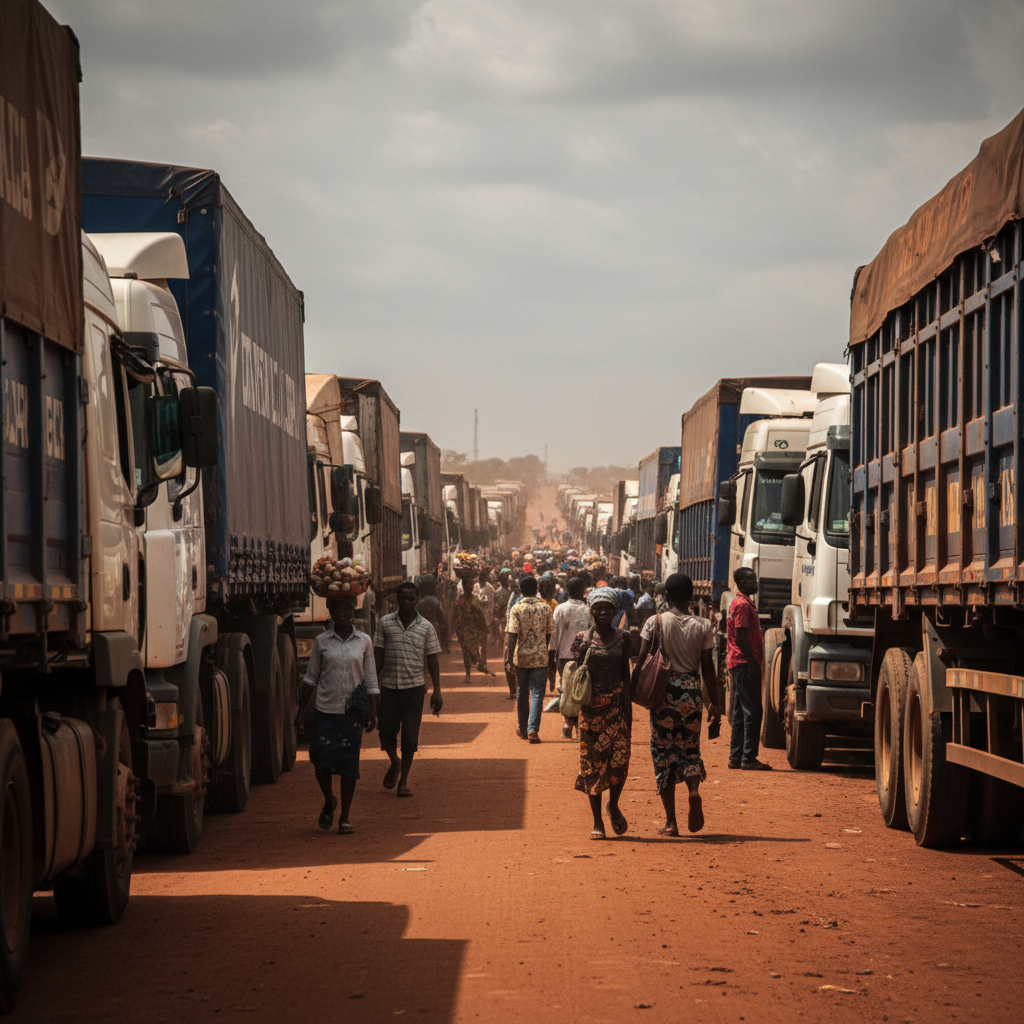
A queue of parked trailers is easy to dismiss as a local traffic headache—until you ask what is inside them, where they are going, and who is waiting at the other end.
That is why the Channels Television report on hundreds of loaded trailers stranded in Ekiti should worry more than motorists in the state. It is a warning flare for Nigeria’s supply chains. When articulated vehicles carrying food, fuel, raw materials, construction inputs, and consumer goods are trapped for days on a bad or blocked road, the cost does not remain on that highway. It travels into markets, filling stations, factories, ports, and neighbourhood shops.
Nigeria often debates inflation as if it is only about exchange rates, interest rates, or money supply. Those matter. But so does asphalt. A failed road can behave like an unofficial tax: it delays goods, raises transport costs, damages cargo, burns diesel, increases security risks, and ultimately forces businesses to pass the pain to consumers.
Ekiti’s trailer gridlock is therefore not just a road story. It is an economic story.
One Bottleneck, Many Bills
A stranded truck is not idle in a cost-free way. The driver must eat. The motor boy must survive. The truck owner may still be servicing a loan. The cargo owner may be watching delivery deadlines collapse. If the trailer is refrigerated, generators or cooling systems need fuel. If it carries perishables, every hour reduces the value of the load.
Take a trailer carrying tomatoes, pepper, onions, yams, or plantain from producing belts to southern markets. A two-day delay can mean bruised produce, spoilage, lower market quality, and distress sales. Traders then try to recover losses by increasing prices on the good stock that survives. The consumer in Ado-Ekiti, Akure, Ibadan, Lagos, or any onward market may never know the reason a basket costs more; the explanation is buried somewhere in a traffic queue.
The same logic applies to non-food cargo. Cement distributors waiting for supply may increase retail prices when stock runs low. Spare-part dealers may delay repairs for transporters and small manufacturers. Supermarkets and wholesalers may face gaps in inventory. Even when goods eventually arrive, the additional diesel burned in traffic, towing costs, repairs from bad roads, and informal expenses along the route become part of the final price.
This is how a road bottleneck becomes inflationary. It does not need to shut down the whole country. It only needs to obstruct enough freight on a busy corridor to create scarcity, uncertainty, and higher logistics charges.
Food Prices Feel Road Failure First
Food is usually the fastest place where transport shocks show up because Nigeria’s food system depends heavily on road haulage. Farm produce moves from rural clusters to aggregation points, then to urban wholesale markets, and finally to retailers. At each stage, traders make pricing decisions based on availability, expected replacement cost, and the risk of loss in transit.
If trailers loaded with food are stranded in Ekiti, the first impact may be waste. The second is reduced market supply. The third is higher prices. The fourth is lower consumer purchasing power, especially for households already spending a large share of income on food.
This is particularly dangerous in an economy where food inflation has remained a major pressure point. The National Bureau of Statistics’ inflation releases have repeatedly shown food as a central driver of headline inflation. In that context, poor road conditions are not just infrastructure neglect; they are a direct threat to household welfare.
Consider a small restaurant owner who buys pepper, tomatoes, onions, rice, garri, and cooking oil every morning. If supply trucks are delayed and wholesale prices jump, she has three bad options: reduce portion sizes, increase menu prices, or absorb the loss. None of those choices is neutral. Workers who rely on affordable meals pay more. Customers buy less. The restaurant’s margin shrinks. A road failure miles away becomes a daily business crisis.
Fuel Movement and Port Logistics Are Also Exposed
Trailer gridlock does not only affect farm produce. Nigeria’s fuel distribution system also relies significantly on road movement, especially for moving petrol, diesel, and lubricants from depots to retail stations and industrial users. When tankers are trapped, delayed, or diverted, local scarcity can appear quickly.
Fuel logistics is especially sensitive because delay multiplies cost. Tanker owners factor in turnaround time: how long it takes to load, travel, discharge, and return. A route that should take one day but stretches into three reduces fleet efficiency. To maintain profitability, transporters may raise freight charges. Filling stations, haulage companies, bakeries, cold-room operators, hospitals, and small businesses using generators all feel the effect.
Ports are part of the same chain. Nigeria has spent years trying to improve truck access around major ports, especially in Lagos, because congestion there has historically delayed imports and exports. But fixing access to the port gate is not enough if inland corridors remain unreliable. A container cleared from port still has to move to a warehouse, factory, market, or construction site. If it gets stuck in Ekiti or any similar choke point, the port reform benefit is diluted.
For exporters, the damage can be even more severe. Agricultural exports, processed foods, and manufactured goods depend on predictable timelines. Missed shipping windows can mean demurrage, contract penalties, quality deterioration, and lost buyer confidence. A country trying to earn more non-oil foreign exchange cannot afford logistics systems where one failed road can swallow delivery schedules.
Small Businesses Pay the Highest Price
Large companies can sometimes absorb disruption. They may reroute, maintain buffer stock, hire logistics consultants, or spread costs across multiple warehouses. Small businesses rarely have those luxuries.
A furniture maker waiting for boards and fittings cannot complete orders. A welder expecting steel rods may disappoint a client. A pharmacy waiting for stock may run out of fast-moving medicines. A building-materials retailer may face angry customers after promising delivery based on a truck that is now stuck in traffic. A market trader who borrowed money to buy inventory may lose both goods and repayment time.
This is why supply-chain disruption is not abstract. It is deeply personal for small operators. Delays break trust. They create cash-flow pressure. They force businesses to hold more inventory than they can afford or to raise prices before customers are ready. Over time, frequent logistics shocks make businesses less competitive and discourage expansion.
There is also a safety dimension. Long trailer queues expose drivers and cargo to theft, harassment, accidents, fatigue, and health risks. When truckers spend nights on isolated roads, the cost of insecurity becomes part of logistics pricing. That cost is again pushed down the chain until it reaches ordinary buyers.
What Ekiti Should Force Policymakers to Rethink
The lesson from the Ekiti gridlock is not simply that one road needs urgent repair, though it almost certainly does. The broader lesson is that Nigeria needs to treat key freight corridors as economic infrastructure, not political projects to be remembered only during campaigns.
That requires four practical shifts.
First, road maintenance must become preventive, not emergency-driven. Waiting until trailers are stranded is more expensive than routine resurfacing, drainage clearing, axle-load enforcement, and bridge monitoring.
Second, freight mapping should guide investment. Government at federal and state levels should know which roads carry the highest volumes of food, fuel, construction materials, and export cargo. Those corridors should receive priority because their failure has national consequences.
Third, Nigeria needs better incident response for freight routes. When a road collapses or a queue forms, there should be rapid traffic management, alternative route communication, security deployment, and temporary repair capacity. Leaving drivers to improvise turns delay into chaos.
Fourth, the country must deepen alternatives to road haulage. Rail freight, inland dry ports, and better multimodal planning cannot replace trucks overnight, but they can reduce the pressure on highways. A supply chain that depends overwhelmingly on trailers will always be vulnerable to gridlock, bad roads, insecurity, and fuel price shocks.
Conclusion: A Traffic Jam With National Consequences
The stranded trailers in Ekiti are more than a dramatic roadside image. They are a snapshot of how fragile Nigeria’s logistics system remains. A blocked road can spoil food, delay fuel, raise transport costs, weaken port efficiency, and squeeze small businesses already battling inflation and weak demand.
If policymakers treat the gridlock as a local inconvenience, they will miss the bigger message. Nigeria’s supply chains are only as strong as the roads that carry them. When those roads fail, the bill arrives everywhere—from the trader’s stall to the family dinner table.