What Middle East Embassy Warnings Really Signal
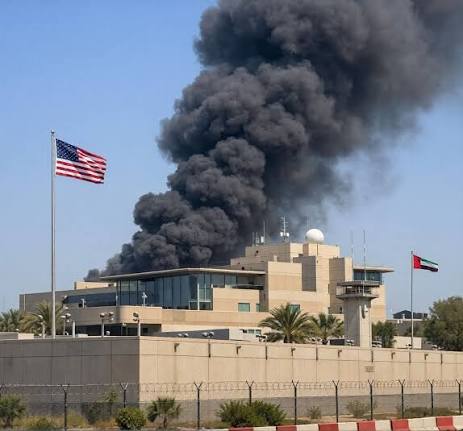
A travel alert is rarely just a travel alert.
When an embassy tells its citizens to “consider departing,” the language can sound cautious, even bureaucratic. It is not a siren. It is not a declaration of war. But in the Middle East, where escalation can move faster than commercial airlines can add seats, those words often function as an early-warning signal: governments are gaming out a scenario in which normal exit routes may narrow, embassies may be overwhelmed, and a localized conflict may become a regional emergency.
That is why the latest wave of Middle East advisories has landed with more force than a standard consular notice. The headline — U.S. embassies urging citizens to consider leaving — captures a shift that diplomats, airlines, insurers, and security analysts all watch closely. Evacuation language is no longer background noise. It is becoming one of the first public indicators that officials see a real risk of wider escalation.
The meaning behind “consider departing”
Embassies choose words carefully. “Exercise increased caution” is not the same as “reconsider travel.” “Do not travel” is not the same as “leave now.” And “consider departing while commercial options remain available” is a particularly important phrase because it points to a closing window.
The U.S. State Department’s travel advisory system is built around graded risk, but embassy security alerts are often more immediate. They respond to developments on the ground: missile exchanges, embassy threats, airspace closures, mass protests, border disruptions, or intelligence suggesting that the next 24 to 72 hours could look different from the last.
In Lebanon, for example, U.S. officials have repeatedly warned citizens not to rely on a government evacuation and to make their own plans while commercial flights are operating. In Israel, the West Bank and Gaza, advisories have stressed the volatility of the security environment, including the possibility that border crossings and air routes can change with little notice. Those are not abstract warnings. They reflect the hard logistics of crisis: if airspace closes, ports clog, roads become unsafe, or airlines suspend service, even a well-resourced embassy cannot simply move thousands of people out on demand.
That is the key signal. “Consider departing” is not just advice to tourists. It is a message that the government is reducing assumptions about stability.
Why evacuation advisories now move markets and headlines
A decade ago, many travel warnings were treated as niche notices for expatriates and frequent flyers. Today, they are watched almost like economic data.
Airlines monitor them because advisories can precede route suspensions or insurance changes. Energy traders watch them because regional escalation in the Middle East can threaten shipping lanes, oil infrastructure, or Gulf airspace. Multinational companies read them as cues for staff drawdowns. Newsrooms track them because they often arrive before an official public assessment of military risk.
The reason is simple: governments may not always say what intelligence they have, but they do reveal concern through behavior. If embassies restrict staff movement, authorize dependents to leave, move non-essential personnel, or warn private citizens to depart, that is a public-facing sign that risk calculations have changed.
The Middle East is especially sensitive to this pattern. A strike in one country can trigger retaliation in another. A militia attack can draw in a state actor. A maritime incident in the Red Sea or Gulf can hit global trade. An exchange between Israel and Iran, or between Israel and Iran-backed groups, can quickly affect Lebanon, Iraq, Syria, Jordan, the Gulf, and beyond.
In that environment, the embassy advisory becomes an early pressure gauge. It does not predict exactly what happens next. But it tells citizens, companies, and allies that officials are no longer treating escalation as a remote scenario.
The commercial-flight problem
The most practical reason embassies urge early departure is also the most overlooked: evacuation is easiest before everyone realizes they need one.
Commercial exits are fragile in a crisis. Airlines can cancel routes for crew safety, insurance costs, or airspace restrictions. Seats can vanish within hours. Ticket prices can spike. Connecting airports can become overwhelmed. Land borders may technically remain open but become slow, unsafe, or politically complicated.
Lebanon offers a clear example. During periods of heightened Israel-Hezbollah tensions, foreign governments have repeatedly urged nationals to leave while flights are still available. That phrase matters because Beirut’s airport is a single crucial exit point for many civilians. If it closes or becomes unreachable, evacuation becomes vastly more complex.
Israel and the Palestinian territories present a different but related challenge. Airspace disruptions, missile alerts, airport closures, and changing border procedures can turn a routine departure into a moving target. Citizens who wait for a final, unmistakable warning may find that the practical options have already narrowed.
This is why consular messages often sound more urgent than political statements. A foreign ministry may publicly call for de-escalation. An embassy, meanwhile, has to plan for the mechanics of protecting citizens if de-escalation fails.
What these warnings say about regional escalation
The latest advisories should be read less as panic and more as preparation. Governments are signaling that the regional risk map has widened.
That risk has several layers. First is direct military escalation: strikes, counterstrikes, drone attacks, missile barrages, or attacks on bases and diplomatic facilities. Second is spillover through allied armed groups, particularly in Lebanon, Iraq, Syria, and Yemen. Third is disruption to transport corridors — airports, ports, border crossings, and shipping lanes. Fourth is the political risk of mass protests, retaliatory attacks, or sudden restrictions imposed by host governments.
No single advisory confirms that any one of these outcomes is imminent. But taken together, they show that embassies are preparing for a scenario in which events stop being contained.
That is why the language matters. “Consider departing” sits in the uneasy space between normal caution and emergency evacuation. It tells citizens: do not wait for the moment when leaving becomes obviously necessary, because that may also be the moment when leaving becomes difficult.
How citizens should read the signal
For travelers and expatriates, the lesson is not to panic. It is to act earlier than instinct suggests.
That means checking official embassy alerts, confirming documents are valid, keeping phones charged, maintaining access to cash, identifying multiple routes out, and staying in contact with employers or family. It also means understanding that the government’s ability to help may be limited if the crisis expands quickly.
For businesses, the message is similar: evacuation planning should not begin when airports close. Companies with staff in high-risk areas need trigger points, transport options, communications trees, and clear authority to move people before the situation becomes chaotic.
And for observers trying to understand the direction of the crisis, embassy alerts should be treated as one data point alongside military movements, airline cancellations, oil prices, militia statements, and diplomatic activity. They are not prophecy. But they are rarely meaningless.
Conclusion: the warning before the warning
When embassies tell citizens to “consider departing,” they are not simply issuing travel advice. They are revealing a change in official risk assumptions.
In the Middle East’s current climate, that matters. The most important signal may not be the dramatic announcement after escalation begins. It may be the quieter consular message beforehand — the one urging people to leave while the airport is still open, the border is still passable, and the crisis is still officially described as avoidable.