Fitness Startups Are Back, and AI Is the New Trainer
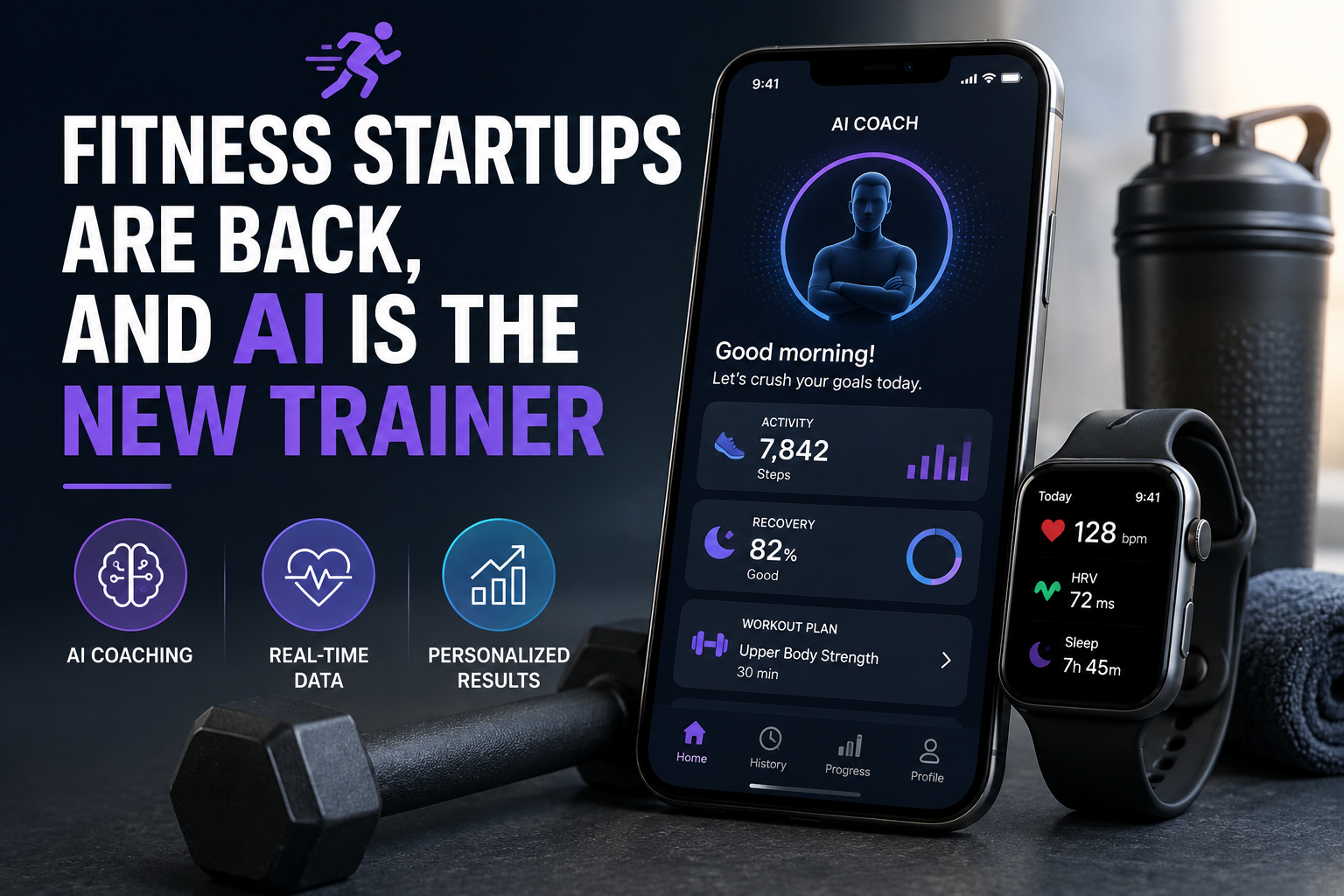
The next fitness unicorn probably will not arrive in a crate.
After the pandemic boom-and-bust cycle that made connected bikes, mirrors and treadmills look like the future of exercise, investors are circling fitness again—but with a very different checklist. The money is moving away from heavy hardware and toward software that can learn from the body: AI coaches, wearable data platforms, metabolic health tools, recovery analytics and personalized training plans that update in real time.
That shift matters because fitness tech is no longer just competing with gyms. It is competing for a place in the broader health stack, alongside telehealth, longevity clinics, wearables, GLP-1 weight-loss programs and employer benefits. Crunchbase’s sector coverage has pointed to renewed activity in health and wellness startups, but the pattern is clear: venture capital is returning with discipline. The pitch that wins now is not “Peloton, but for X.” It is “a coach, clinician and data layer in your pocket.”
The post-Peloton reset changed the investor playbook
Fitness tech did not disappear after the at-home workout boom faded. It got repriced.
The pandemic pulled years of demand forward. Consumers bought equipment, subscribed to classes and turned spare rooms into mini gyms. Then gyms reopened, discretionary spending tightened, and the economics of shipping expensive equipment became harder to defend. Hardware-heavy fitness companies faced the same problem: high upfront costs, complicated logistics, thin upgrade cycles and subscription churn once novelty wore off.
That hangover made investors cautious. A connected treadmill can be beautiful, but it ties growth to manufacturing, inventory, freight, customer support and financing plans. A software-first coaching platform, by contrast, can scale across phones, watches and wearables consumers already own.
The new investor question is not whether people care about fitness. They do. McKinsey has estimated the global wellness market at more than $1.8 trillion, with consumers continuing to spend on health, sleep, nutrition, fitness and longevity. The question is whether a startup can turn that demand into recurring revenue without behaving like a consumer electronics company.
That is why the most attractive fitness startups increasingly look less like equipment brands and more like data companies.
AI coaching is the product investors understand
The appeal of AI fitness coaching is simple: personal training is valuable, but expensive and hard to scale. If software can deliver even part of that value—adaptive workouts, form cues, recovery guidance, habit nudges and nutrition suggestions—it can expand the market beyond people who can afford a human coach.
This is where generative AI gives fitness startups a new story to tell. Earlier fitness apps relied on static plans: choose a goal, receive a program, check off workouts. Newer products can adjust based on sleep, soreness, heart-rate variability, injury history, menstrual cycle data, schedule constraints and workout compliance.
Concrete examples are already visible. Whoop has pushed deeper into recovery and performance insights with an AI coach that interprets wearable data in plain language. Fitbod uses training history to recommend strength workouts and adjust muscle-group targeting. Future pairs users with human coaches but uses software to make remote personalization feel more continuous. Freeletics and similar apps have long used adaptive training plans, but AI raises the ceiling for conversational support and habit formation.
For investors, this category has three things hardware rarely offers: better margins, faster iteration and more data. Every completed workout, skipped session, sleep score and recovery metric becomes feedback. If the product improves as the user engages, retention can become a moat.
The strongest AI coaching companies will not simply bolt a chatbot onto a workout library. They will combine behavior design, physiological data and credible training science. A generic motivational bot is easy to copy. A system that understands when to push, when to deload and how to keep a user consistent for 18 months is much harder.
Fitness is becoming a health data business
The boundary between fitness and healthcare is blurring. That is another reason investors are paying attention.
Wearables have made continuous body data mainstream. Apple Watch, Garmin, Oura, Whoop and Fitbit have trained consumers to monitor sleep, heart rate, readiness, steps and calories. Meanwhile, GLP-1 drugs have reframed weight management as a medical and behavioral journey, not just a willpower problem. Employers and insurers are also looking for tools that can reduce long-term health costs by improving activity, strength, sleep and metabolic health.
That creates an opening for fitness startups that can connect exercise to outcomes. A platform that helps a user run faster is useful. A platform that helps a prediabetic user build muscle, improve sleep and sustain weight loss may be far more valuable.
Rock Health’s digital health funding analysis has shown that investors remain selective, but they continue to back companies with clear clinical or economic value. Fitness startups that can credibly position themselves inside prevention, chronic-condition management or longevity will have more funding paths than those selling workouts alone.
This does not mean every fitness app should pretend to be a medical device. In fact, overclaiming is a risk. The FDA’s work around AI and machine-learning-enabled medical devices is a reminder that once software starts making health-related claims, regulatory expectations can change. The winners will be precise about what they do: coaching, education and wellness on one side; diagnosis and treatment on the other.
The next moat is personalization, not content
For years, fitness startups competed on content: more classes, more trainers, more music, more modalities. That worked when streaming workouts felt new. It is weaker now because content libraries are abundant and consumer attention is fragmented.
Personalization is harder to commoditize.
A good AI fitness platform should know that a user slept badly, missed Tuesday’s lift, has a 25-minute window before work, wants to avoid knee pain and tends to quit programs after week four. It should then prescribe something realistic, not idealized. The best coach is not the one with the most exercises; it is the one that keeps the user coming back.
This is why startups that integrate multiple data streams are better positioned. Strength training logs, wearable recovery metrics, nutrition habits and calendar context can produce recommendations that feel specific rather than templated. The product becomes a daily decision engine.
There is also a business model advantage. Personalized coaching can support premium pricing better than undifferentiated workout video subscriptions. Consumers may resist paying $20 a month for another class library, but they may pay more for a coach that helps them train safely, lose weight, sleep better or prepare for a race.
What investors will fund now
The bar is higher than it was in 2020. A slick app and a celebrity trainer are not enough. The most fundable fitness startups will likely share a few traits:
- Software-first distribution: built for phones and existing wearables, not dependent on proprietary equipment.
- Defensible data loops: recommendations improve as users log more workouts and biometric signals.
- Clear retention mechanics: coaching, accountability and habit design that reduce churn.
- Health-adjacent credibility: partnerships with coaches, clinicians, employers or insurers where appropriate.
- Responsible AI claims: useful personalization without pretending to replace medical professionals.
Hardware is not dead. There will still be room for devices that capture unique data or create a superior training experience. But hardware now needs to justify itself as part of a larger platform, not as the whole company.
Conclusion: the gym is becoming intelligent
Fitness tech is back, but it is returning with a different center of gravity. The industry’s next phase will be less about putting screens on machines and more about turning data into better decisions.
Investors want startups that can make coaching scalable, personal and measurable. That means AI systems that understand behavior, wearables that feed useful signals and platforms that connect exercise to broader health outcomes.
The old pitch was to bring the gym home. The new pitch is bigger: build the intelligent layer between people and their bodies. That is where the next wave of fitness tech funding is headed.