Frank Beard and the Groove That Made ZZ Top Immortal
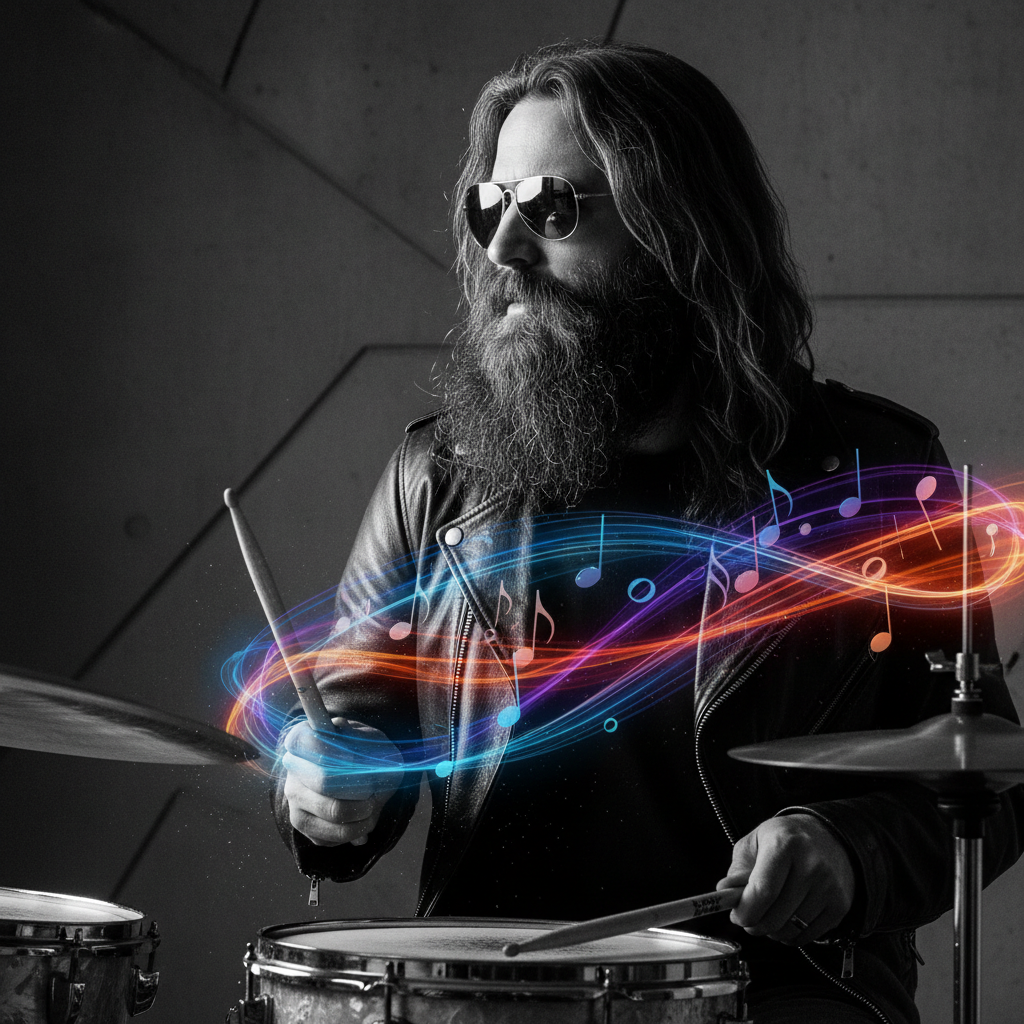
Frank Beard rarely played like a drummer trying to be noticed. That was the point.
In ZZ Top, the flash tended to arrive first through Billy Gibbons’ serrated guitar tone, Dusty Hill’s chesty bass lines, the Texas mythology, the synchronized beards, the cars, the shades, and the sly humor. Beard—famously the member without the long beard—sat behind the kit and made the whole machine move. With Billboard and Variety reporting his death at 77, the loss is not only that of a founding-era rock figure. It is the end of a rhythmic signature that helped make one of American rock’s most recognizable bands sound deceptively simple, deeply funky, and impossible to mistake.
Beard’s genius was restraint. He did not crowd ZZ Top’s songs; he clarified them. He played the pocket so hard that the pocket became the hook.
The drummer who made less sound like more
Born Joseph Michael Beard, Frank Beard joined forces with guitarist-singer Billy Gibbons and bassist-singer Dusty Hill at the end of the 1960s, forming the lineup that would become ZZ Top’s classic identity. For more than five decades, the trio’s appeal rested on an almost architectural balance: Gibbons supplied the sting, Hill supplied the muscle, and Beard supplied the grid.
That grid was never stiff. On early ZZ Top records, Beard pulled from Texas blues, boogie, R&B, and bar-band swing. He understood that a shuffle was not just a pattern; it was a posture. Listen to “La Grange,” and the drums do not announce themselves with a grand entrance. They creep in, dry and tight, letting the guitar riff and vocal mutter build the room. When the track kicks harder, Beard does not overplay. He leans into the groove, making the band sound like a roadhouse engine idling until it suddenly surges forward.
“Tush” works the same way in miniature. The song is barely over two minutes, but Beard’s drumming gives it shape: crisp snare hits, unfussy fills, and a backbeat that never distracts from the riff. The performance is not technically ornate, but it is musically exact. Many drummers can play more notes. Fewer can make a song feel that inevitable.
ZZ Top’s sound depended on his discipline
ZZ Top’s image was big, but the band’s best music was built on economy. Beard’s discipline gave Gibbons and Hill the room to sound enormous. His parts often functioned like a frame around the guitar: steady enough to ground the riff, loose enough to let it swagger.
That approach mattered because ZZ Top’s songs are frequently about feel more than narrative. “Cheap Sunglasses” rides on a lean, funky strut. “Tube Snake Boogie” turns a simple groove into a wink. “Just Got Paid” hits with blues-rock force but never loses its forward roll. Beard’s drumming in these songs is not merely timekeeping; it is attitude management. He decides how much grease the machine gets.
The chemistry with Dusty Hill was especially crucial. Hill’s bass often played with a blunt, almost percussive authority, and Beard met it with an unfussy pulse that made the low end feel welded together. That locked-in quality became one of ZZ Top’s secret weapons. The trio format left nowhere to hide, so the rhythm section had to be both solid and suggestive. Beard and Hill could make a sparse arrangement feel full without cluttering it.
In rock history, restraint is often undervalued because it can be mistaken for simplicity. Beard’s playing proves the difference. He understood where not to put a fill, when to let a guitar phrase breathe, and how to make repetition feel hypnotic instead of mechanical. That is why ZZ Top’s riffs do not just sit on top of the drums; they seem to grow out of them.
From Texas boogie to MTV precision
ZZ Top’s commercial peak in the 1980s introduced a different challenge. With albums like Eliminator, the band absorbed synthesizers, sequenced textures, and a sleeker studio finish without abandoning its blues-rock DNA. Songs such as “Gimme All Your Lovin’,” “Sharp Dressed Man,” and “Legs” brought ZZ Top to MTV saturation, pairing hot-rod futurism with a sound that was tighter, cleaner, and more mechanized than the band’s early records.
That era sometimes leads listeners to underestimate Beard’s role, because the production leaned into programmed precision. But the reason those tracks still feel like ZZ Top rather than anonymous 1980s rock is that the band’s rhythmic sensibility remained intact. The beats are stripped down, squared off, and engineered for maximum impact, but they still reflect Beard’s core musical philosophy: find the pulse, remove the excess, make the riff strut.
“Sharp Dressed Man” is a perfect example. The beat is not busy. It does not need to be. Its job is to make every guitar accent land like a spotlight hitting chrome. “Gimme All Your Lovin’” works because the rhythm is direct enough to become almost physical; it turns the song into a machine, but a machine with hips.
That balance—human swing and studio precision—helped ZZ Top cross generations. The band could satisfy blues-rock loyalists, arena audiences, and MTV viewers because the underlying groove was always legible. Beard was central to that legibility.
A legacy measured in feel, not flash
ZZ Top’s induction into the Rock & Roll Hall of Fame in 2004 recognized more than longevity. It recognized a band that turned regional ingredients into a global brand without sanding away its eccentricity. Beard’s contribution to that achievement was foundational. He was not the visual emblem of ZZ Top, but he was one of the reasons the emblem had musical weight.
His playing also offers a lesson about what makes a rock drummer great. Greatness is not only speed, complexity, or volume. Sometimes it is the ability to make a band sound like itself within two bars. Beard could do that. His grooves carried fingerprints: dry, economical, slightly dirty, locked to the riff, allergic to unnecessary decoration.
That is why his death feels like the closing of a defining chapter. Dusty Hill’s death in 2021 had already broken one of rock’s longest-running classic lineups. Beard’s passing deepens the sense that ZZ Top’s original rhythmic engine now belongs to history, even as the records continue to sound startlingly alive.
Conclusion: the backbeat behind the beards
Frank Beard did not need to dominate ZZ Top’s songs to define them. He understood that the right groove could be more memorable than the loudest fill, and that a drummer’s highest calling is sometimes to make everyone else sound undeniable.
Put on “La Grange,” “Tush,” or “Sharp Dressed Man” today and listen past the obvious hooks. There, in the clipped snare, the steady kick, the unshowy lift of the shuffle, is Beard’s enduring signature. He made ZZ Top move. That movement is now his monument.