Infantino’s Five-Day FIFA Crisis
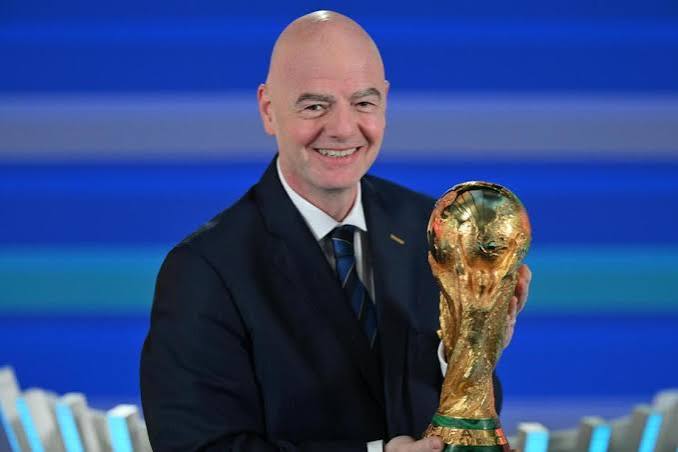
The crisis did not begin with a missed penalty, a red card or a goal-line decision. It began with a number: $25bn.
For five bruising days, Gianni Infantino’s FIFA found itself defending not a football idea but a financial vehicle — a private-investment proposal that promised to remake the Club World Cup and create a new global nations competition. What had been sold as ambition quickly became a referendum on trust. Who were the investors? What were they buying? Why was the process moving faster than the answers?
By the end, the private-money plan had not simply stalled. It had exposed the fault line running through world football: FIFA’s hunger to grow its own competitions versus UEFA’s determination to protect both the calendar and its political authority. Infantino survived the week, but his leadership emerged with a new question attached to it: if football’s biggest reforms are brokered like private deals, who is governing the game?
The pitch: $25bn and a new world order
Infantino’s proposal was bold enough to sound revolutionary. FIFA would expand the Club World Cup into a serious global club tournament and explore a new international nations competition. In return, a consortium of private investors would inject vast sums into the project — widely reported at around $25bn over a 12-year cycle.
To FIFA’s supporters, this was overdue modernisation. The old Club World Cup, often treated in Europe as a mid-season inconvenience, had never matched its name. A larger tournament could give South American, African, Asian and North American clubs more meaningful access to elite global competition. Smaller federations, too, could see the appeal: more FIFA revenue usually means more distribution money.
But the detail was the problem. The investor group was not initially fully disclosed to FIFA’s own decision-makers. The commercial structure was unclear. The calendar impact was obvious but unresolved. And the politics were explosive because the plan appeared to create major new FIFA properties in spaces already crowded by UEFA’s Champions League, national-team competitions and domestic leagues.
In other words, FIFA was not just proposing a tournament. It was proposing a redistribution of football’s commercial power.
Why UEFA saw more than a funding plan
UEFA’s resistance was not merely institutional jealousy, though that was part of the story. European football supplies many of the world’s richest clubs, biggest broadcasters and most marketable players. Any expanded FIFA club competition would need Europe’s participation to be credible — but it would also compete with UEFA’s own crown jewel, the Champions League.
That made the private-investment model especially sensitive. If an external consortium helped fund and shape FIFA competitions, UEFA feared a precedent: global football policy being accelerated by outside capital rather than negotiated through federations, leagues, clubs and player bodies.
The concerns were practical as well as political. Top players were already stretched across domestic leagues, continental competitions, national-team windows and summer tournaments. A bigger Club World Cup could mean another elite event inserted into a calendar with little slack. Clubs worried about release obligations. Leagues worried about fixture congestion. Player representatives worried, as ever, that the athlete would be the last stakeholder consulted and the first asked to absorb the cost.
The deeper issue was confidence. UEFA’s public scepticism hardened because FIFA was asking its partners to trust a plan before fully revealing its architecture. That is a dangerous sequence in governance: first approve the concept, then discover the deal.
The five-day collapse: from momentum to mistrust
The drama played out like a rolling live blog because each development seemed to escalate the stakes.
First came the sense of inevitability. Infantino wanted the FIFA Council to back a revamped Club World Cup, and the money attached to the wider plan gave the project momentum. FIFA could argue that it was leaving revenue on the table by allowing club football’s global showcase to remain underpowered.
Then came the pushback. UEFA figures, European club representatives and leagues demanded more transparency. The question was not whether FIFA had the right to innovate. It was whether a governing body could ask for approval on a project whose financial backers and contractual implications were not fully visible.
Next came the political break. UEFA’s opposition became public, not whispered. The message was severe: confidence in Infantino’s handling of the process had been damaged. For a FIFA president elected after the Sepp Blatter era on promises of reform, transparency and clean governance, that mattered. The optics were brutal — a leader of world football pressing ahead with a privately backed plan while major stakeholders complained they were being asked to sign a blank cheque.
By the end of the sequence, the broad private-money project had lost its clean route to approval. FIFA did push forward with the idea of a revamped Club World Cup, but the wider package — especially the proposed global nations competition tied to the investor offer — was effectively broken by resistance. What remained was not triumph but a compromised victory: FIFA had shown its intent, UEFA had shown its veto power, and the rest of football had seen how quickly reform can turn into a legitimacy crisis.
Governance on trial, not just Infantino
It is tempting to frame the episode as Infantino versus UEFA president Aleksander Ceferin, or FIFA versus Europe. That is too narrow. The bigger story is how football governs commercial change in an era when private capital is everywhere.
Private money is not inherently illegitimate. Stadium projects, broadcast deals, club ownership, data companies and tournament sponsorships all depend on commercial investment. The problem comes when capital appears to set the pace for governance. A governing body is supposed to begin with sporting need, competitive fairness and stakeholder consent. Money should fund the policy, not define it.
The FIFA plan blurred that line. If a private consortium was prepared to pay billions, what influence would it have over format, timing, hosting, media rights and long-term strategy? Would confederations outside Europe genuinely gain power, or simply become part of a new commercial product controlled from the top? Would clubs be partners or performers? Would fans get a better competition, or another expensive tournament layered onto an already bloated calendar?
Those questions remain relevant. The Club World Cup has since continued to expand in concept, and the battle over the international calendar has only intensified. The European Super League saga later proved the same lesson from the opposite direction: when football’s future is introduced through financial engineering, supporters and institutions quickly ask who benefits.
The lesson FIFA could not ignore
Infantino’s five-day crisis did not end his presidency, nor did it stop FIFA’s ambition to build a bigger global club event. But it did establish a limit. Even a FIFA president with electoral strength and a compelling revenue argument cannot govern by surprise when the reform touches clubs, players, leagues, confederations and broadcasters at once.
The irony is that FIFA had a defensible sporting case. A genuine Club World Cup should be more than a ceremonial afterthought. Football outside Europe deserves meaningful global stages. Revenue should not be monopolised by one continent. But good ideas can be weakened by bad process, and this one was.
The private-investment collapse became a leadership crisis because it turned a question of funding into a question of trust. Infantino wanted to sell football a bigger future. UEFA’s answer was blunt: not like this.
Conclusion
The episode endures because it captured modern football’s central conflict in miniature. Everyone wants growth, but nobody agrees who should control it. FIFA saw private capital as acceleration. UEFA saw it as a threat. Clubs saw risk. Players saw another demand on their bodies. Fans saw another reminder that the game’s biggest decisions are often made far from the pitch.
That is why Infantino’s five-day crisis mattered. It was not just a failed funding plan. It was world football asking whether governance still leads the money — or merely follows it.