Inside Lagos Port’s ₦10bn Drug Bust
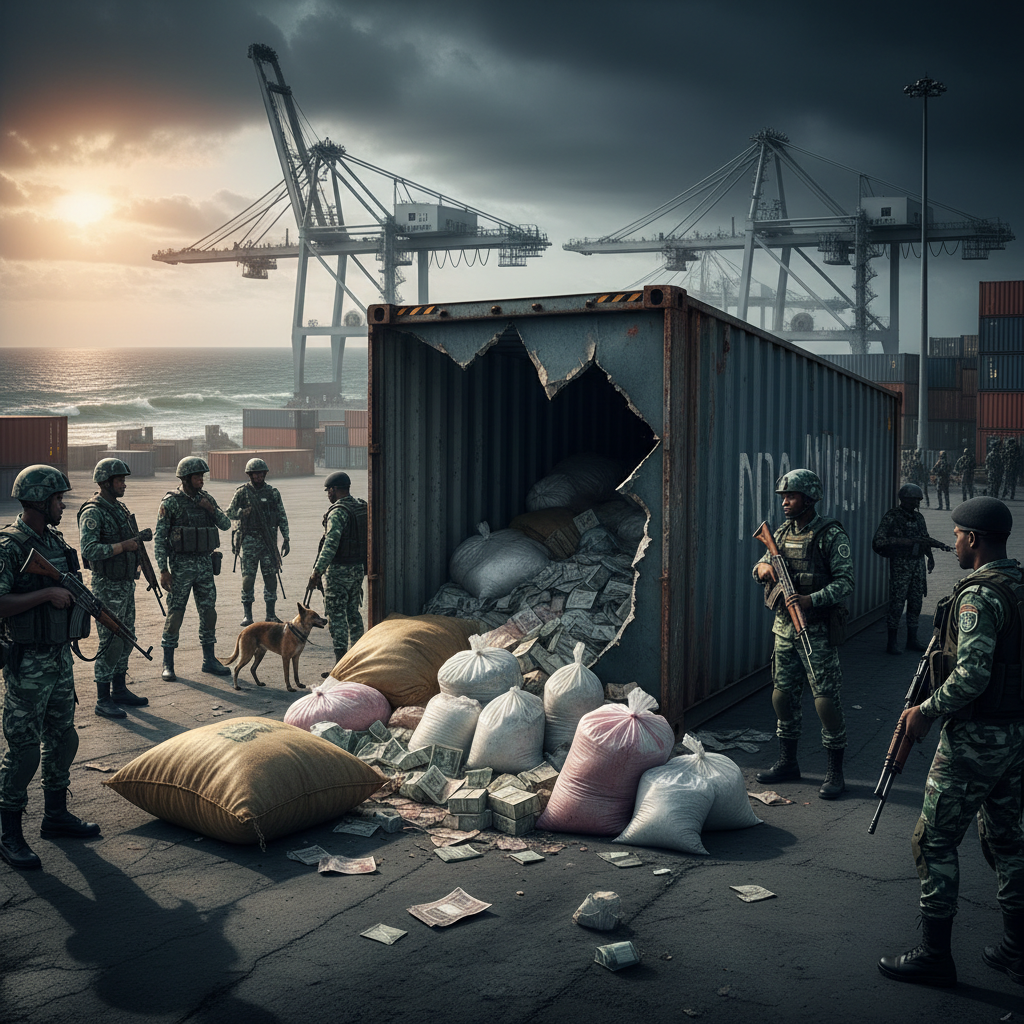
A container is supposed to be boring: a steel box, a seal number, a manifest and a bill of lading. That is precisely why drug networks love it. Once a container enters the maritime system, it becomes one unit among thousands moving through ships, terminals, trucks, bonded warehouses and clearing desks.
That is the backdrop to the NDLEA-reported ₦10bn seizure at Lagos ports involving cocaine, opioids and “Canadian Loud”, the high-potency cannabis strain increasingly showing up in Nigerian seizures. The headline number is dramatic, but the more important story is structural: Nigeria’s busiest maritime gateways are under pressure from trafficking groups that understand port congestion, documentation loopholes, weak cargo visibility and the economics of inspection.
This was not just a drug bust. It was a stress test of Nigeria’s port-security architecture.
Why Lagos Ports Matter to Traffickers
Lagos is Nigeria’s commercial choke point. Apapa, Tin Can Island and related terminals sit at the centre of the country’s import economy, connecting shipping lines, freight forwarders, customs brokers, warehouses and trucking routes into the largest consumer market in West Africa.
For legitimate trade, that scale is an advantage. For smugglers, it is camouflage.
A busy port offers three benefits to traffickers. First, volume: the more containers a terminal handles, the harder it is to physically examine every box. Second, complexity: each shipment has multiple actors, from overseas exporters to local consignees, clearing agents and transporters. Third, delay: congestion and documentation backlogs create windows for tampering, diversion or negotiated shortcuts.
Drug syndicates exploit the same trade lanes that move food, medicine, building materials, used vehicles and electronics. A container declared as machinery can hide cocaine in compartments. Pharmaceutical imports can be used to mask illicit opioids. Vehicles and consolidated cargo can conceal vacuum-sealed cannabis packs. The point is not that ports are ungoverned; it is that ports are high-speed, high-volume systems where even a small failure rate can be lucrative.
Cocaine, Opioids and Loud: Three Different Problems
The reported mix in the ₦10bn Lagos seizure matters because each drug type tells a different story about Nigeria’s exposure.
Cocaine is the classic transnational commodity. It is produced mainly in Latin America, moved through maritime and air routes, and often uses West Africa as a transit, repackaging or redistribution zone. In the port environment, it may be hidden in legitimate containers, ship compartments, false panels, food consignments or industrial goods. A relatively small quantity can carry enormous value, making it attractive for networks that can bribe, coerce or infiltrate logistics chains.
Opioids are a different challenge. Nigeria has long battled misuse of tramadol, codeine-based mixtures and other controlled pharmaceuticals. These consignments often travel in bulk, sometimes falsely declared, under-declared or mixed with legal products. Unlike cocaine, opioids feed a large domestic market as well as regional demand. That makes port interceptions especially important: one container can translate into millions of tablets entering street-level distribution.
“Canadian Loud” points to a newer consumer trend. The term is used locally for imported, high-potency cannabis strains often marketed as premium products. It has appeared in seizures involving parcels, cars, cargo shipments and concealed luggage. Its presence in maritime seizures shows how cannabis trafficking is no longer only about locally grown supply. Imported cannabis has become a status product, and traffickers are using global logistics to serve that demand.
Together, these categories show why maritime enforcement cannot be built around one drug profile. The same port must detect small, high-value cocaine loads; large, tablet-heavy opioid shipments; and cannabis concealed in consumer cargo.
The Security Gaps the Bust Exposes
A major seizure usually proves that enforcement worked. It also reveals where traffickers thought enforcement would fail.
The first vulnerability is cargo visibility. Nigeria has invested in scanners and digital systems over the years, but inspection remains uneven. Where scanners are unavailable, underused or overwhelmed, agencies fall back on intelligence-led targeting and physical examination. That approach can work, but it depends on credible data, inter-agency coordination and the willingness to delay suspicious cargo despite commercial pressure.
The second gap is documentation integrity. Bills of lading, packing lists and import declarations can be manipulated. False descriptions, vague commodity codes, undervaluation and consignee layering make it harder to know which container deserves attention. When a shipment changes hands through agents and proxies, accountability becomes blurred.
The third gap is the human chain. Ports are not just infrastructure; they are people. Clearing agents, truckers, terminal workers, shipping representatives, warehouse staff and security officers all touch cargo at different points. Traffickers do not need to corrupt an entire system. They need one leak: a compromised manifest, a tipped-off examination schedule, a container moved at the wrong time, or a seal replaced before inspection.
The fourth issue is fragmentation. Customs, NDLEA, port authorities, terminal operators, police and other agencies all have legitimate roles. But when systems do not speak to each other in real time, suspicious patterns can be missed. A consignee linked to one seizure may still appear in another port process under a slightly altered company name. A container flagged by one agency may not trigger an automatic risk alert across the chain.
What a Stronger Port Response Looks Like
The answer is not simply “inspect more containers.” Total inspection would slow trade, raise costs and still miss sophisticated concealment. The better response is smarter risk management.
That starts before vessels arrive. Advance cargo information should be analysed against risk indicators: ship route, origin port, consignee history, commodity type, freight forwarder patterns, unusual routing and documentation inconsistencies. A container carrying controlled pharmaceuticals from a high-risk route should not be treated like a routine shipment of tiles.
Second, scanning must be reliable and integrated. Modern non-intrusive inspection tools are only useful when they are maintained, staffed and linked to enforcement databases. Scanned images should be stored, reviewed and audited. If a box is selected for examination, the process should be traceable from the first alert to final release or seizure.
Third, agencies need joint targeting cells at the ports. NDLEA intelligence, Customs data, shipping information and terminal movement records should be fused, not exchanged days later through letters. Drug trafficking is fast; bureaucracy is slow. Port security has to move at the speed of the supply chain.
Fourth, Nigeria needs stronger accountability for repeat-risk actors. If a consignee, clearing agent, warehouse or shipping route repeatedly appears around suspect consignments, that pattern should trigger enhanced scrutiny. The goal is not to punish legitimate trade; it is to make the logistics ecosystem hostile to anonymous, disposable import networks.
Conclusion: The Bust Is a Warning, Not a Finish Line
The ₦10bn Lagos port bust is a win for enforcement, but it should not be treated as an isolated victory. It is evidence that traffickers see Nigeria’s maritime gateways as valuable, usable and worth testing.
Cocaine, opioids and Canadian Loud do not move through ports by accident. They move because container trade offers scale, concealment and plausible paperwork. The next phase of port security must therefore be intelligence-led, data-driven and relentlessly coordinated.
Nigeria does not need to choose between faster trade and safer ports. It needs systems strong enough to deliver both.