Meta’s Child Safety Case Could Reshape Social Apps
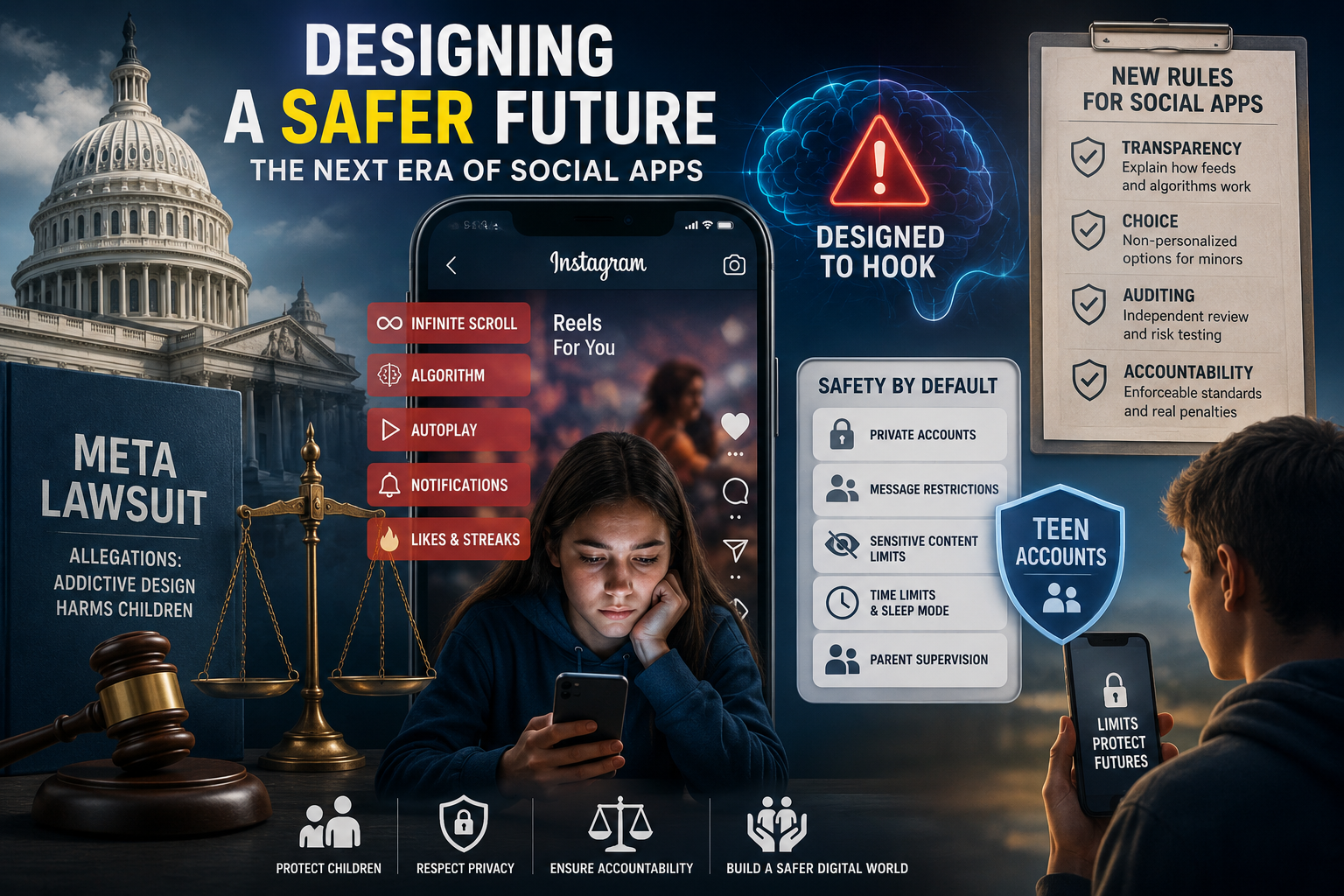
The most consequential tech lawsuit of the moment is not just about what Meta knew. It is about what every social app may soon be allowed to build.
A coalition of state attorneys general has accused Meta of designing Instagram and Facebook features that “hook” young users while publicly downplaying risks to children and teens. Meta disputes the allegations and says it has built dozens of youth safety tools. But the case lands at a time when parents, schools, regulators and even some former platform insiders are converging on the same question: should the mechanics of social media be treated like neutral software, or like a consumer product with safety obligations?
That distinction matters. If prosecutors persuade courts and lawmakers that addictive design patterns, algorithmic recommendations and weak age controls are foreseeable harms rather than unfortunate side effects, the next generation of social apps could look very different.
The lawsuit turns product design into evidence
For years, debates over youth safety online focused on content: bullying, eating disorder posts, sexual exploitation, violent videos, misinformation. The Meta case widens the frame. It targets the architecture beneath the content.
That includes features familiar to anyone who has opened Instagram “for a minute” and looked up 40 minutes later: infinite scroll, algorithmic feeds, autoplay Reels, push notifications, likes, streak-like engagement loops and recommendation systems that rapidly learn what keeps a user watching. Prosecutors argue that these tools are not incidental. They are the business model, optimized to increase time spent, impressions served and data collected.
The legal strategy is powerful because it reframes child safety as a design problem. A teenager does not need to search for harmful content if the feed predicts vulnerability and keeps supplying emotionally charged material. A 12-year-old does not need to understand privacy settings if the defaults expose them to unwanted contact. A parent cannot supervise effectively if controls are buried, optional or easy to bypass.
Meta’s defense is that it has invested heavily in teen protections, including age-based defaults, limits on sensitive content, supervision tools and, most recently, Instagram Teen Accounts that automatically place younger users into more restrictive settings. That response is also telling. It shows the industry already accepts that default design matters. The fight is over whether such changes should be voluntary, enforceable, or mandated across the market.
Algorithms are becoming a regulatory target
The first era of internet regulation treated platforms largely as hosts. The next era is more interested in systems that rank, recommend and amplify.
For youth safety, that shift is enormous. A chronological feed is one thing; a personalized engagement engine is another. Recommendation systems can be useful, surfacing educational videos, sports highlights or niche communities. But they can also create feedback loops around anxiety, body image, self-harm, extreme dieting or compulsive use. Regulators are increasingly asking whether platforms should be required to test those risks before shipping features to minors.
Expect three algorithmic pressure points.
First: transparency. Platforms may be pushed to explain how youth feeds are ranked, what signals are used, and how sensitive topics are suppressed or promoted. The European Union’s Digital Services Act already requires very large platforms to assess systemic risks and give users more information about recommender systems.
Second: choice. Regulators may require non-personalized feeds for minors by default, or at least a prominent option to turn off profiling-based recommendations. This would not kill social apps, but it would challenge the engagement-maximization model that powers them.
Third: auditing. Lawmakers are likely to demand independent review of youth safety claims. “Trust us” is losing credibility. If a company says it reduces harmful recommendations to teens, regulators may want data access, testing protocols and penalties for misleading public statements.
The practical result could be less opaque personalization for young users. Not no algorithms, but safer ones: tuned for age-appropriate content, time well spent and reduced exposure to known risk categories.
Parental controls are no longer enough
Big Tech has leaned heavily on parental controls as proof of responsibility. Instagram has supervision tools. TikTok has Family Pairing. Snapchat has Family Center. YouTube offers supervised experiences. These tools can help, but they share a basic weakness: they assume parents have time, technical fluency and a cooperative child.
That is a fragile safety model.
A parent may not know which settings exist. A teen may create a second account. A platform may nudge users toward public posting, constant notifications or algorithmic recommendations even after a parent sets limits. And many of the highest-risk moments happen in private messages, late at night, or inside recommendation loops parents never see.
The regulatory trend is therefore moving from parental dashboards to child-centered defaults. That means accounts for minors start private, unknown adults face friction before contacting teens, nighttime notifications are limited, sensitive content is restricted, location sharing is off, and data collection is minimized unless a user or parent deliberately changes settings.
Instagram Teen Accounts are a good example of where the industry is heading. They bundle private accounts, messaging restrictions, content limits, time-limit reminders and sleep mode into a default experience for younger users. Whether regulators see that as sufficient or overdue will shape the next phase of enforcement.
The lesson for every platform is clear: safety cannot be an optional menu. If a product is likely to be used by children, regulators increasingly expect the safest version to be the default version.
The ripple effects will hit all of Big Tech
Meta is the headline defendant, but the stakes extend across the social web.
TikTok faces similar scrutiny over compulsive video loops and teen recommendations. YouTube must keep proving that its recommendation system can distinguish between entertainment and harmful rabbit holes for younger audiences. Snapchat’s disappearing messages and location features raise different but related questions about contact risk and supervision. Roblox, Discord and gaming-adjacent communities face pressure around child grooming, monetization and moderation.
Even companies not built around social feeds should pay attention. App stores may face demands for stronger age verification and parental consent flows. AI chatbot makers will be asked how their products respond to minors in emotional distress. Wearables and education apps may be scrutinized for how much child data they collect and how long they keep it.
The emerging rule is simple: if a company profits from youth engagement, it may also inherit youth safety duties.
That does not mean every service must verify government IDs or ban teens from the internet. Heavy-handed age checks can create privacy risks of their own. But it does mean platforms will be expected to prove they are not using minors as another growth segment to optimize.
A new bargain for social media
The Meta lawsuit may take years to resolve. Some claims could be narrowed. Others may survive. But the broader reckoning is already underway.
The old bargain of social media was frictionless growth: sign up quickly, share widely, scroll endlessly, personalize everything. The new bargain will demand friction in the places that matter: before adults can contact minors, before sensitive recommendations pile up, before notifications pull teens back at midnight, and before companies make public safety claims they cannot substantiate.
For users, that may make apps feel a little less addictive. For parents, it could make supervision less like a second job. For platforms, it will mean building youth safety into product roadmaps rather than press releases.
Meta’s case is not just a courtroom fight over the past. It is a preview of the design rules that may govern the next decade of social apps.
Sources
- Reuters: US states sue Meta, saying its social media harms children's mental health
- Meta: Introducing Instagram Teen Accounts
- U.S. Surgeon General: Social Media and Youth Mental Health
- European Commission: Digital Services Act protection of minors
- FTC: Proposed changes to the Children's Online Privacy Protection Rule