Methane in the Niger Delta: Nigeria’s Invisible Oil Crisis
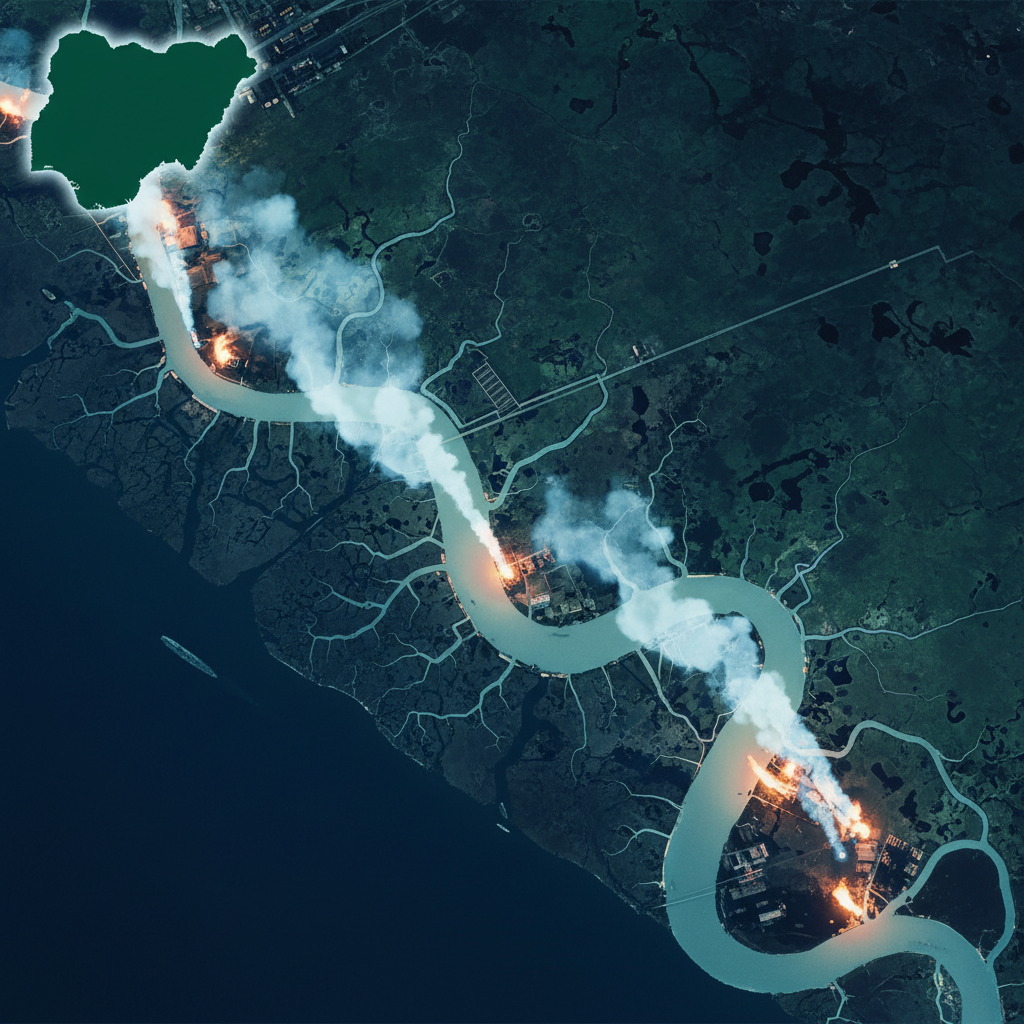
A methane leak does not announce itself like an oil spill. It does not blacken a creek, coat a fishing net or leave the rainbow sheen that tells a farmer his soil has been poisoned again. It escapes through valves, tanks, compressors, pipelines and flare stacks—often unseen, often unmeasured, and therefore too easy to deny.
That invisibility is why the Niger Delta’s methane problem is so politically convenient. A recent Guardian report has put renewed attention on methane emissions around oil and gas operations in the region, highlighting a familiar pattern: companies extract value, regulators demand paperwork, communities carry the risk, and the atmosphere absorbs the bill.
Methane is not just another greenhouse gas. Over a 20-year period, it traps more than 80 times as much heat as carbon dioxide. It is also the main ingredient in natural gas, which means every leak is both climate pollution and wasted product. In a region already scarred by decades of spills, gas flaring and weak enforcement, methane exposes the next frontier of Nigeria’s oil accountability crisis: pollution that is technically detectable, financially fixable, but politically postponed.
The Science: Why Methane Matters So Much
Methane’s danger lies in its potency and speed. Carbon dioxide lingers for centuries, but methane does its worst damage in the near term. That makes cutting methane one of the fastest available ways to slow warming this decade.
Oil and gas systems release methane in several ways. Some emissions are accidental: leaking valves, faulty seals, corroded pipelines, poorly maintained compressors. Some are operational: gas is vented during maintenance, pressure relief, equipment blowdowns or production disruptions. Some come from incomplete flaring, when gas burned at a flare stack is not fully combusted and methane slips through.
In the Niger Delta, all of these pathways matter. The region’s oil infrastructure is old, spread across difficult terrain, and often close to homes, farms, rivers and mangroves. A leaking facility in a remote swamp may go uninspected for months. A flare that burns badly may be treated as a local nuisance rather than a climate event. A tank farm may emit vapour continuously while residents nearby complain of odours, heat, soot and breathing problems.
Methane itself is not usually the direct toxic threat at typical outdoor concentrations. The larger health burden comes from what travels with oil and gas operations: volatile organic compounds, nitrogen oxides, particulate matter, sulphur compounds and ground-level ozone formed in the atmosphere. For communities living beside flow stations and flare stacks, the experience is not an abstract climate calculation. It is coughing children, irritated eyes, damaged crops, acidified rainwater, declining fish catches and nights lit orange by burning gas.
The Regulation Gap Companies Can Drive Through
Nigeria is not without rules. The country has pledged to reduce methane, and the Nigerian Upstream Petroleum Regulatory Commission has issued methane and greenhouse-gas guidelines for upstream oil and gas operations. On paper, operators are expected to detect leaks, quantify emissions, repair faulty equipment and report progress.
The problem is the distance between regulation and enforcement.
For decades, Nigeria’s oil governance has relied heavily on company-supplied data. If emissions are self-reported, inspections are infrequent, penalties are modest, and regulators lack independent monitoring capacity, then methane becomes a bookkeeping issue rather than a public-interest emergency. What cannot be independently measured can be minimized. What is minimized can be delayed.
This weakness is especially dangerous during asset divestment. International oil companies have been selling onshore and shallow-water assets to domestic firms, often presenting this as a strategic exit from difficult terrain. But pollution liabilities do not vanish when ownership changes. If ageing infrastructure is transferred without strict methane baselines, transparent remediation obligations and enforceable financial guarantees, host communities may inherit a more opaque system with fewer global reputational pressures.
The basic accountability question is simple: who proves that a facility is not leaking? In a serious methane regime, the burden cannot rest on communities with no equipment, no access to sites and no legal budget. Operators must be required to measure emissions with credible technology, publish facility-level data, and repair leaks within binding timelines. Regulators must verify, not merely receive reports.
Host Communities Pay for Pollution They Cannot See
In many Niger Delta communities, people know the symptoms of oil extraction even when they do not know the molecule responsible. Farmers notice cassava yields falling near industrial sites. Fishers travel farther for smaller catches. Families collect rainwater but fear what it carries. Residents describe headaches, heat stress, smoke, odours and the constant anxiety of living near pipelines that may spill, explode or leak.
Methane deepens these burdens because it connects local neglect to global damage. Every unreported leak adds to climate warming, and climate warming returns to the Delta as flooding, coastal erosion, saltwater intrusion and unpredictable rainfall. The region is therefore hit twice: first by pollution from extraction, then by climate impacts intensified by the fuels extracted.
This is not an argument against energy production. It is an argument against sacrifice zones. Nigeria needs revenue, power and industrial growth. But it cannot build a credible energy future on a model that treats rural communities as emission buffers and regulatory afterthoughts.
Concrete fixes exist. Leak detection and repair programmes are standard practice in serious oil and gas jurisdictions. Infrared cameras can identify methane plumes. Satellites can detect large releases. Continuous monitors can be installed at high-risk sites. Pneumatic devices can be replaced. Routine venting can be restricted. Flares can be properly maintained or eliminated where gas capture is possible.
None of this is science fiction. It is basic operational discipline.
What Real Accountability Would Look Like
A credible methane crackdown in the Niger Delta would start with measurement. Nigeria should require facility-level methane inventories for all upstream and midstream assets, including assets being sold or transferred. Those inventories should be independently audited and made public in formats communities, journalists and researchers can use.
Second, leak detection must be routine and enforceable. Operators should conduct regular surveys using approved technologies, with shorter inspection intervals for older assets and facilities near communities. Detected leaks should trigger mandatory repair deadlines, not polite recommendations.
Third, penalties must outweigh the benefit of delay. If it is cheaper to leak than to fix, companies will leak. Fines should reflect climate damage, lost gas value, duration of non-compliance and proximity to populated areas. Repeat offenders should face permit consequences.
Fourth, communities need standing in the process. Host communities should have access to complaint mechanisms, inspection results and emergency response plans. Local monitors can be trained to document visible signs of malfunction—such as abnormal flaring, odours, noise or equipment failure—but they should not be forced to replace the state. Community evidence should trigger official investigation.
Finally, Nigeria should align its oil-sector methane rules with its climate diplomacy. It is not enough to sign global pledges while domestic enforcement remains weak. Methane reduction is one of the few climate actions that can deliver quick wins: less warming, less wasted gas, better air quality and more trust in public institutions.
Conclusion: Stop Treating Methane as Air
The Niger Delta’s methane fight is not invisible because the science is weak. It is invisible because invisibility serves power. Methane can be found. Leaks can be fixed. Data can be published. Companies can be held responsible.
What Nigeria lacks is not technology, but urgency. Until regulators treat methane as measurable pollution rather than an inconvenient by-product, oil firms will keep postponing action—and host communities will keep paying for emissions they cannot see.