Moses Inwang’s ‘Ordinary People’ Is Netflix’s Mid-Budget Test
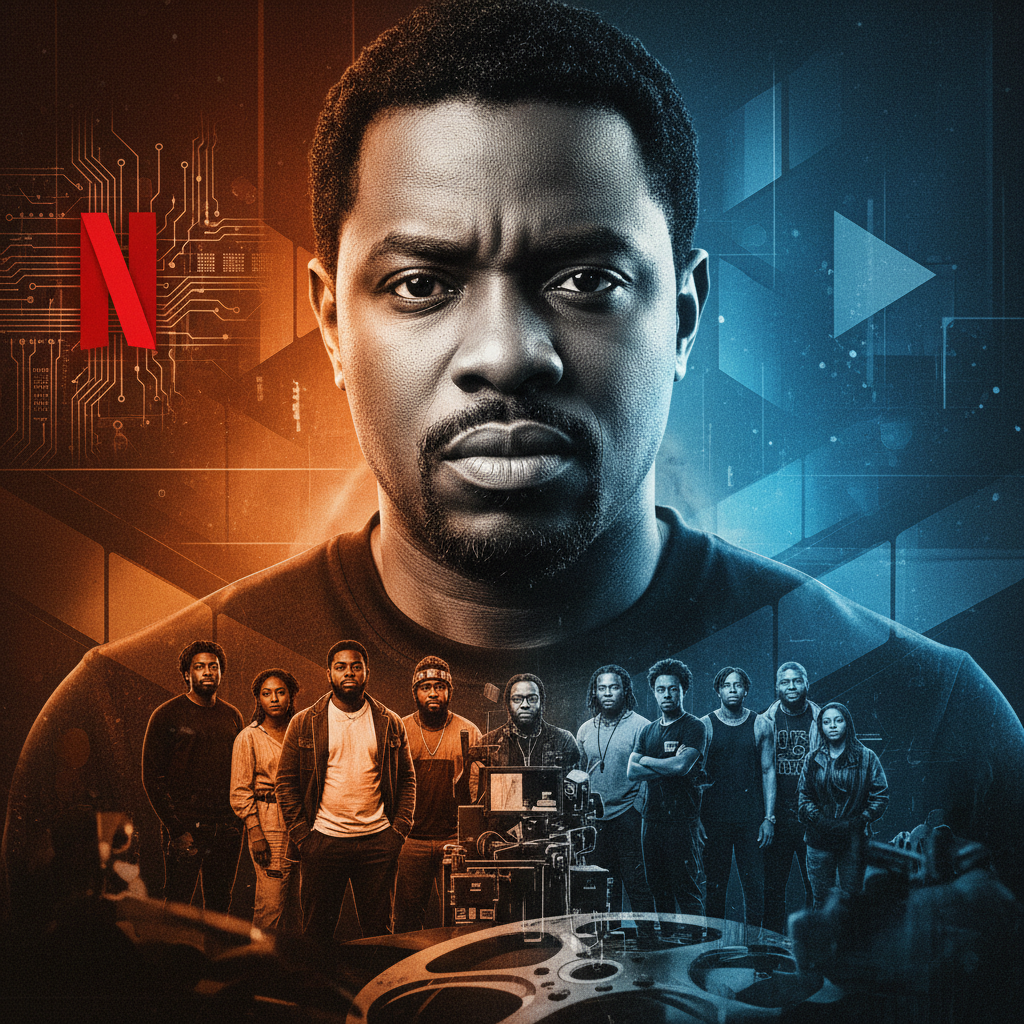
The trailer for Moses Inwang’s Ordinary People does not arrive like a thunderclap. That may be the point.
Ahead of its September 4 premiere on Netflix, the film is being positioned less as a red-carpet event and more as a streaming-native Nollywood drama: intimate, emotionally legible, star-driven enough to catch attention, but not dependent on theatrical hype to justify its existence. In a market where the loudest conversations often orbit box-office records, prestige epics, celebrity premieres, and high-concept thrillers, Ordinary People looks like a quieter but potentially more revealing test.
Can a mid-budget Nigerian drama travel on Netflix by selling tension, familiarity, and human stakes rather than spectacle? That question matters because the answer will say plenty about where Nollywood’s streaming future is heading.
A Trailer Built for the Scroll, Not the Cinema Lobby
The most interesting thing about the Ordinary People trailer is how direct it is. It does not appear to be selling scale. It sells feeling. The emphasis is on faces, domestic pressure, interpersonal conflict, and the kind of everyday moral choices that Nollywood has always known how to dramatize. The title itself is a promise: these are not superheroes, mythic kings, or glamorous criminals. They are people with recognisable problems, pushed into decisions that may expose who they really are.
That is a very different campaign language from the one used for event films. A theatrical push often needs the big hook: the sweeping premise, the expensive location, the ensemble reveal, the premiere-night photo wall. Streaming marketing works differently. A Netflix trailer has to survive the platform economy, where audiences decide within seconds whether a film belongs on their weekend list. The question is not only “Is this important?” It is “Do I understand what emotional experience I’m being offered?”
For Ordinary People, the answer seems to be: a grounded drama about private lives under strain. That clarity is useful. On Netflix, where a Nigerian title may sit beside a Korean thriller, a Spanish mystery, a Tyler Perry melodrama, and a South African crime series, a film has to communicate fast. Mood becomes marketing. Conflict becomes metadata.
Why Mid-Budget Nollywood Matters on Netflix
Calling Ordinary People “mid-budget” should not sound like faint praise. Mid-budget drama is where a large part of Nollywood’s identity has historically lived: family tension, betrayal, marriage trouble, class anxiety, faith, ambition, grief, survival. These are stories that do not require massive visual effects or sprawling action sequences. They require credible performances, sharp pacing, and emotional payoff.
The challenge is that streaming has changed the packaging. In cinemas, Nigerian films often benefit from local familiarity: cast popularity, press rounds, social media chatter, and audience loyalty. On Netflix, the film has to perform for multiple audiences at once. It must satisfy Nigerian viewers who understand the cultural shorthand while also remaining accessible to viewers who may be encountering the story with little context.
That makes films like Ordinary People strategically important. Netflix cannot build a sustainable Nollywood catalogue only on prestige projects and splashy imports. It also needs durable dramas that subscribers will discover outside opening-weekend noise. These are the films that make a platform feel lived-in rather than occasional. They fill the gap between the blockbuster and the disposable upload.
Nollywood’s strength has never been merely volume; it has been emotional efficiency. A well-made Nigerian drama can establish stakes quickly because the social pressures are instantly readable: family expectations, money problems, reputation, marriage, migration, class performance, religious obligation. The best streaming version of that tradition does not dilute those elements. It sharpens them for a broader screen culture.
Moses Inwang’s Position in the Streaming Moment
Moses Inwang is a practical fit for this kind of test. His work has often sat in the commercial heart of Nollywood, where genre, melodrama, and audience familiarity intersect. That matters because Netflix’s Nigerian strategy has not only been about discovering new voices; it has also been about translating established industry instincts into a global streaming environment.
The director’s name gives Ordinary People a recognizable industry anchor, but the film’s success will likely depend on execution rather than auteur branding. This is not the kind of release that can coast on novelty. Viewers will judge it by whether the drama grips, whether the characters feel specific, and whether the final act delivers enough consequence to justify the journey.
That is exactly why the film is worth watching closely. The streaming era has created a new middle lane for Nollywood filmmakers: projects that are too contained to be marketed as spectacles but too polished to be treated as filler. If Ordinary People connects, it reinforces the value of that lane. If it disappears quickly into the catalogue, it will highlight the difficulty of getting adult dramas to cut through without a louder campaign.
Beyond Theatrical Hype: The New Nollywood Shelf Life
A theatrical release is often judged by urgency. Did people show up immediately? Did the film trend? Did it generate premiere-week conversation? Netflix changes the timeline. A film can land modestly and still find viewers over weeks through recommendations, genre rows, actor searches, and word of mouth. That longer shelf life is especially important for dramas.
Consider how different Nigerian streaming titles have been framed in recent years. Blood Sisters leaned into thriller momentum and limited-series binge appeal. Aníkúlápó arrived with the weight of folklore, costume, and cultural prestige. The Black Book sold itself through action, corruption, and revenge, with a scale that made it easy to position internationally. Ordinary People appears to be playing a smaller game: everyday lives, emotional escalation, moral pressure.
That smaller game can be powerful, but it needs discipline. Streaming audiences may forgive limited scale; they are less forgiving of slack storytelling. A mid-budget drama must look intentional, not underpowered. It must make its containment feel like intimacy. The home, office, church, hospital room, or family compound cannot simply be affordable locations. They have to become pressure chambers.
This is where packaging matters. Posters, thumbnails, synopsis copy, and trailers are not accessories anymore. They are part of the storytelling contract. A viewer who clicks on Ordinary People because they expect an emotionally charged Nigerian drama needs the film to deliver exactly that, with enough freshness to avoid feeling like a recycled home-video premise in streaming clothes.
What Success Would Signal
If Ordinary People works, its significance will be larger than one title. It would suggest that Netflix can continue to develop Nollywood’s middle tier: films that are not awards-season epics or record-chasing theatrical juggernauts, but polished dramas built for discovery. That is a healthy ecosystem. Not every film should have to be an event to matter.
It would also encourage more precise commissioning. Nigerian audiences are not a monolith, and international viewers are not allergic to specificity. The films that travel best are often the ones that understand their own world clearly. A drama does not need to explain everything if the emotional architecture is strong. It needs stakes, rhythm, texture, and performances that pull viewers past the subtitles-or-no-subtitles divide.
For Netflix, the test is curation. For Nollywood, the test is refinement. For audiences, the test is simple: when the film appears on September 4, does it feel like something worth choosing in a crowded queue?
Conclusion
Ordinary People may not be Netflix’s loudest Nigerian release, but it could be one of its more instructive ones. Its trailer points to a future where Nollywood dramas are sold less by theatrical spectacle and more by emotional clarity, streaming polish, and long-tail appeal. If Moses Inwang’s film turns ordinary lives into compelling drama, it will make a strong case for the kind of Nigerian movie Netflix needs more of: grounded, accessible, and built to last beyond the opening-day buzz.