Nigeria’s Coast Is Disappearing Into the Atlantic
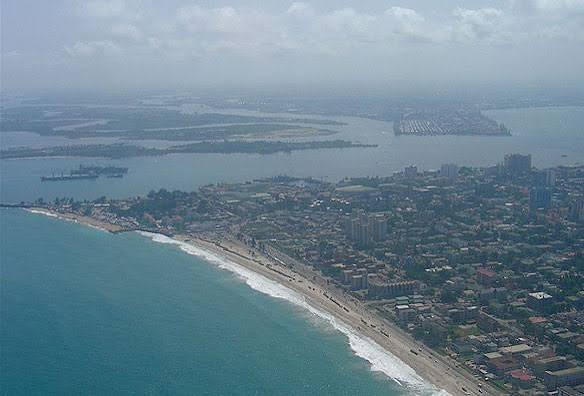
The Atlantic does not arrive in Ayetoro with drama every day. Sometimes it comes quietly, pushing a little farther under a doorway, softening the sand beneath a wall, leaving salt where a family used to sleep. Then, during a storm or a high tide, it takes a house whole.
In this fishing community on Nigeria’s southwestern coast, residents have watched the ocean consume streets, churches, schools and generations of memory. What looks like a local tragedy is also a preview of a much larger crisis: Nigeria’s coastline is under mounting pressure from sea-level rise, stronger storm surges, subsidence, sand mining, mangrove loss and decades of uneven coastal planning.
For fishing families, erosion is not an abstract climate indicator. It is the loss of a boat landing, a smokehouse, a market stall, a home used as collateral, a child’s route to school. As the Atlantic advances, livelihoods are being pulled out to sea with the land.
A shoreline that is moving faster than families can rebuild
Ayetoro, in Ondo State, is often described by residents as a community that once had room to breathe. Founded in the mid-20th century and nicknamed a prosperous “happy city,” it grew around fishing, trading and communal labor. Today, the defining feature of the town is retreat.
The pattern is familiar across many eroding coasts: first the beach narrows, then footpaths vanish, then houses nearest the water are abandoned or collapse. Families move inland if they can. Those without money crowd into relatives’ homes or rebuild with temporary materials, knowing the next storm may undo everything.
This is what makes coastal erosion so devastating. It rarely behaves like a single disaster with a clear beginning and end. It is a slow emergency punctuated by sudden losses. A family may survive one flood, repair a wall, replace fishing gear and reopen a stall. But repeated damage drains savings, weakens buildings and turns recovery into a permanent condition.
In fishing communities, the shoreline is also workplace infrastructure. Nets are dried there. Canoes are launched there. Fish are landed, sorted, smoked and sold there. When that strip of land disappears, the community loses not just property but the physical platform of its economy.
Why the Atlantic is gaining ground
Coastal erosion is natural, but Nigeria’s crisis is being intensified by human and climate pressures converging at once.
The first is sea-level rise. As the planet warms, oceans expand and land ice melts, raising global sea levels. NASA data show that global mean sea level has risen significantly since satellite measurements began in the early 1990s, and the rate of rise is accelerating. A higher baseline ocean means tides and storm surges start from a more dangerous level.
The second is the loss of natural buffers. Mangroves, wetlands, sandbars and coastal vegetation absorb wave energy and hold sediment in place. When mangroves are cleared for fuelwood, development, aquaculture or access channels, the coast becomes more exposed. In the Niger Delta and other low-lying areas, that loss is especially costly because communities sit close to sea level.
The third is sediment disruption. Rivers naturally carry sand and silt to the coast, replenishing beaches and deltas. Dams, dredging, shoreline construction and sand mining can interrupt that supply. When less sediment reaches the coast, waves remove material faster than nature can replace it.
Finally, there is subsidence: land sinking because of natural compaction, groundwater extraction or hydrocarbon-related activities. In a sinking delta, even modest sea-level rise becomes more severe locally. The result is “relative sea-level rise,” where the water appears to climb faster because the land is dropping too.
These forces do not act separately. A storm hitting a coast stripped of mangroves, starved of sediment and already lower than it used to be can cause damage far beyond what older residents remember.
The economic damage goes far beyond lost homes
The immediate images of erosion are physical: collapsed houses, broken roads, flooded classrooms. But the deeper cost is economic instability.
Fishing households operate on thin margins. A lost canoe, torn net or damaged smoking kiln can erase months of income. When landing sites move or become unsafe, fishers spend more time and fuel reaching usable shore. Traders, many of them women, lose access to steady supply and customers. Spoilage rises when processing sites flood or transport routes fail.
Those pressures ripple outward. Less fish in local markets can push up prices. Young people who might have learned fishing or fish processing leave for cities, often without secure work waiting. Families spend money on repairs instead of education, health care or business investment. Land that once served as wealth becomes unsellable if buyers believe it will soon be underwater.
The World Bank has warned that coastal degradation already carries a multibillion-dollar price tag for Nigeria. A study focused on Lagos, Delta and Cross River states estimated large annual losses from flooding, erosion, ecosystem damage and pollution. Those figures do not fully capture the informal economy of smaller fishing settlements, where losses may never appear in official accounts.
This is why the crisis should not be treated only as an environmental issue. It is a food security issue, a housing issue, a labor issue and a public finance issue. Every naira spent repeatedly rebuilding the same vulnerable assets is money not spent on long-term adaptation.
Hard walls alone will not save the coast
When waves threaten homes, the instinctive response is to build a barrier. Sea walls, groynes and revetments can protect specific stretches of coast, especially in dense urban areas where retreat is difficult. But hard engineering can also shift erosion elsewhere if poorly designed. A wall that saves one frontage may accelerate scouring down the beach.
Nigeria needs a more strategic coastal defense approach: one that combines engineering, ecosystem restoration and land-use planning.
That means mapping erosion hotspots with satellite data, tide gauges and local reporting. It means restoring mangroves where they can still function as living defenses. It means regulating sand mining and dredging so communities are not stripped of their natural protection. It means designing setback zones that prevent new homes, schools and clinics from being built directly in high-risk areas.
In some places, protection will be feasible. In others, the most honest option may be planned relocation, done early enough to preserve dignity and livelihoods. That is politically difficult, but unmanaged retreat is already happening. Families are moving after they lose everything, rather than before the danger becomes irreversible.
Adaptation also has to protect work, not just shelter. If a fishing village is moved inland without cold storage, landing access, transport links and markets, relocation can become economic displacement. A successful plan would include safer housing, boat access, fish-processing facilities, credit for gear replacement and support for women traders who anchor the local fish economy.
Conclusion: the sea is sending a warning
Ayetoro’s disappearing shoreline is not an isolated curiosity. It is a warning from the Atlantic edge of a warming world, where climate change meets fragile infrastructure and coastal poverty.
Nigeria still has choices. Better data, smarter planning, restored ecosystems and targeted protection can reduce the damage. But delay is itself a decision. For communities watching the sea take their homes one tide at a time, the question is no longer whether the coast is changing. It is whether policy will move faster than the water.