Nigeria’s Drowning Gap Is Bigger Than Swimming Lessons
Drowning is often imagined as a private tragedy: a child slips away at a riverbank, a passenger falls from a boat, a swimmer overestimates the current. But the scale is public, global and preventable. The World Health Organization estimates that around 300,000 people die from drowning every year — roughly one life lost every two minutes.
For Nigeria, that statistic is not abstract. It meets floodwater in Lokoja, schoolchildren in riverine communities, overloaded ferries in Lagos and Niger Delta waterways, and coastal neighborhoods where a high tide can turn a street into a canal. The instinctive solution is to say: teach more people to swim. That matters. But science and public-health evidence point to a bigger answer: drowning prevention works best when it is built like a safety system, not offered as a single skill.
Drowning is a systems problem, not just a swimming problem
Swimming lessons save lives, especially when paired with water-safety education. But they are only one layer in what injury-prevention scientists call a “defence in depth” approach: multiple barriers, each designed to catch failure before it becomes fatal.
WHO’s recommended package includes installing barriers to control access to water, providing safe places away from water for preschool children, teaching school-age children swimming and water-safety skills, training bystanders in safe rescue and resuscitation, enforcing boating and ferry regulations, and improving flood-risk management.
That list matters because most drowning deaths do not happen in the controlled setting of a pool. They happen in open water, during transport, after floods, near wells and drainage channels, or when a child is unsupervised for a few minutes. A swimming lesson cannot compensate for an unfenced pond beside a nursery, a ferry without life jackets, a bridge with no guardrail, or a flood warning that never reaches the family that needs to move.
Nigeria’s prevention gap is therefore not just a shortage of pools. It is a shortage of predictable protections around daily contact with water.
Nigeria’s risk map runs through floods, ferries and childhood
Nigeria has many drowning environments at once. In riverine states, water is a transport route, workplace and playground. In coastal cities such as Lagos, informal settlements can sit beside lagoons, canals and tidal channels. Across the country, seasonal flooding turns roads, drains and low-lying homes into sudden hazards.
The 2022 floods showed how quickly water can overwhelm ordinary life. Reuters reported that more than 600 people were killed and over 1.3 million displaced during Nigeria’s worst flooding in a decade. Drowning is not the only cause of death in disasters like that, but floodwater increases drowning risk sharply: people attempt to cross fast-moving water, children play near newly formed pools, vehicles are swept away, and rescue services struggle to reach cut-off communities.
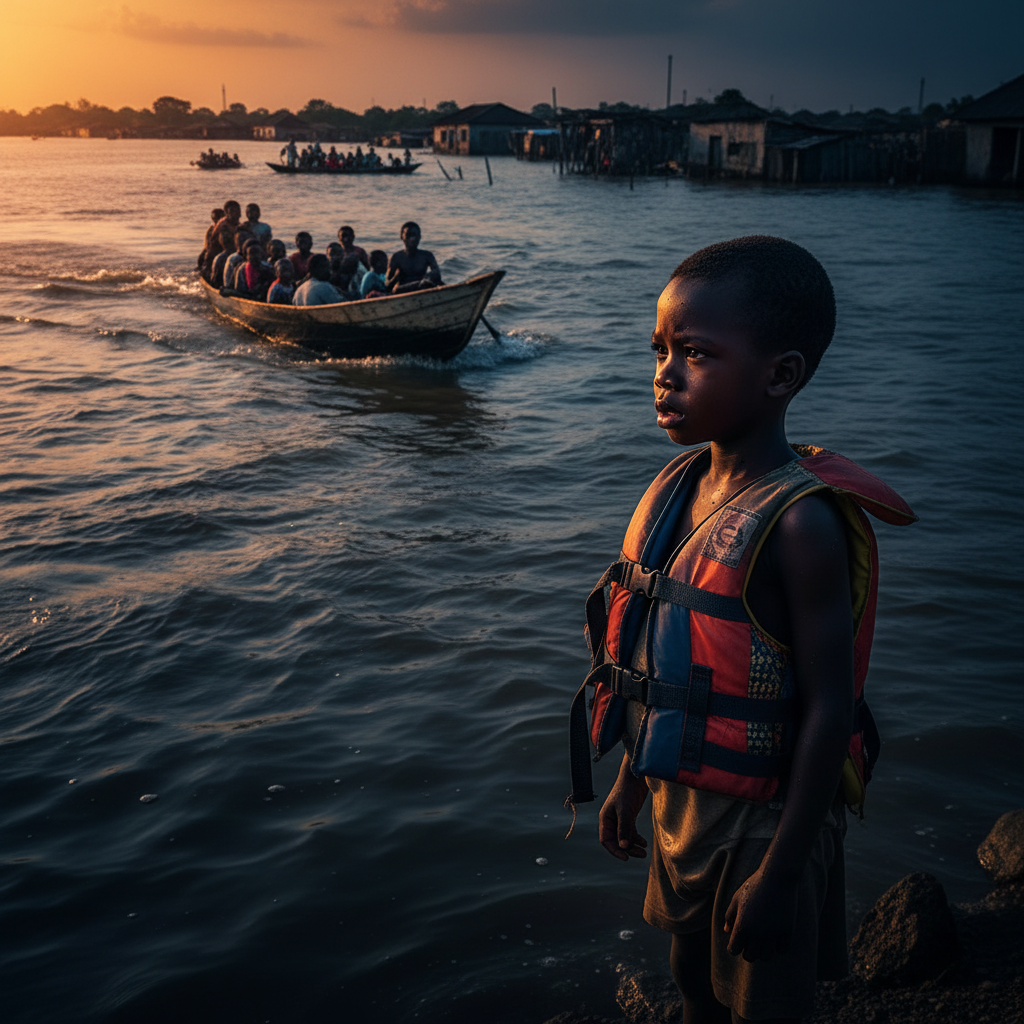
Ferries are another urgent front. Nigeria’s inland waterways carry commuters, traders and schoolchildren. Yet fatal boat accidents often follow the same pattern: overcrowding, night travel, poor weather, weak enforcement, limited life jackets and delayed rescue. A scientifically sound prevention plan would treat each of these as a modifiable risk factor.
Then there is childhood. Globally, children are among the most vulnerable to drowning. In Nigeria, the danger can start close to home: open wells, drainage ditches, borrow pits, fish ponds, riverbanks and flood channels. For a toddler, a bucket, gutter or shallow pool can be enough. For an older child, the risk shifts toward unsupervised play, peer pressure, swimming in currents, or helping adults during floods.
What prevention should look like in schools
Schools are one of Nigeria’s most practical entry points for drowning prevention, even where swimming pools are unavailable. A national school-water-safety programme does not have to begin with competitive swimming. It can begin with survival knowledge.
Children should learn how to recognize dangerous water, avoid flooded drains and fast currents, understand why swimming alone is risky, and know what to do when someone is in trouble. The rule is simple but lifesaving: reach or throw, do not go. A child who jumps in to rescue a friend may become the second victim. Teaching safe rescue — using a stick, rope, container or float — can prevent that chain reaction.
Where pools, beaches or safe controlled water bodies exist, schools can add practical survival swimming: floating, treading water, turning onto the back, moving a short distance to safety, and exiting water safely. These are not luxury skills. They are emergency skills.
But the science is clear: lessons must be age-appropriate and supervised. Teaching very young children to swim should never be used as a substitute for adult supervision or barriers. For nursery and primary schools near water, the priority may be fencing, controlled gates, safe pickup zones, and staff trained to respond.
Nigeria can also embed drowning prevention into disaster-preparedness drills. Just as schools practice fire safety, flood-prone schools should practice safe evacuation routes, “do not cross floodwater” rules, head counts and family notification plans.
Ferries and coastal cities need enforceable safety rules
For waterways, prevention depends on regulation that is visible at the point of risk. A life jacket locked in an office does not save a passenger. A weather advisory ignored at a jetty does not prevent a capsize.
Nigeria’s ferry-safety agenda should be practical and enforceable: mandatory life jackets in usable condition for every passenger, passenger manifests, limits on night travel where navigation is poor, penalties for overloading, weather-based service suspensions, and basic vessel inspection. Operators should be trained not only in navigation but in emergency response: how to distribute passengers, signal distress, keep people together in the water and use flotation devices.
Coastal cities need another layer: urban design. Open drains should be covered or guarded. Canals and retention ponds should have warning signs, barriers and lighting. Construction sites that leave pits filled with rainwater should be treated as public hazards. In informal settlements, local leaders and emergency agencies can map drowning hotspots the way public-health teams map disease clusters.
That is the science of prevention: find where risk concentrates, then interrupt it before the emergency.
Flood preparedness is drowning prevention
Nigeria cannot prevent every flood, but it can reduce drowning deaths during floods. That requires earlier warnings, clearer evacuation triggers and trusted local communication.
Flood alerts should not stop at technical bulletins. They must become actionable messages: which communities are at risk, when water is expected to rise, which roads are unsafe, where shelters are located, and what families should carry. Radio, SMS, mosque and church networks, market associations, transport unions and school administrators can all be part of the warning chain.
Rescue capacity also matters. Local volunteers in flood-prone areas should be trained in safe rescue and basic resuscitation. Communities need ropes, flotation aids, boats where appropriate, and clear command structures. The first rescuer is often not a federal agency; it is a neighbor. Training that neighbor can be the difference between recovery and survival.
Conclusion: the lesson is larger than the pool
Nigeria should expand swimming and water-safety education. But the country’s drowning challenge is bigger than lessons, and the solution must be bigger too.
The lives at risk are on ferries, in classrooms, beside drains, near rivers, inside flood zones and along the coast. A serious prevention strategy would combine skills, supervision, infrastructure, enforcement, early warning and community rescue. That is how drowning deaths fall: not by asking individuals to outswim danger, but by designing danger out of daily life.
With 300,000 people dying worldwide each year, drowning is not a rare accident. It is a public-health problem hiding in plain water. Nigeria has the tools to close the gap — if prevention moves from advice to systems that work before anyone goes under.