Nigeria’s Glasgow 2026 Powerlifting Gold Rush
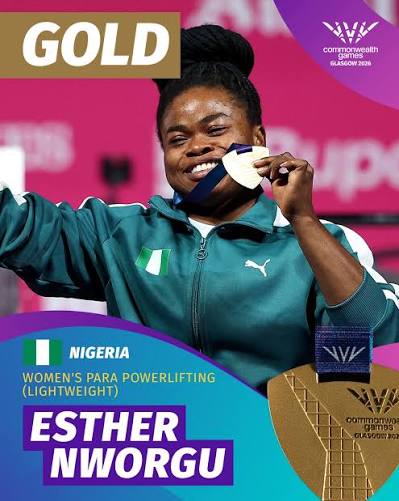
Team Nigeria’s Glasgow 2026 story is not being written in the loudest stadium. It is being built on the bench, one controlled lift at a time, by athletes who have long carried Nigerian sport’s most reliable medal promise with too little noise around them.
Complete Sports’ fresh reports from Glasgow have captured what now feels like a familiar rhythm: Nigerian para powerlifters arriving at the platform, setting the tone early, and forcing the medal table to adjust. The golds are not isolated flashes. They are evidence of a system—imperfect, underfunded, often under-publicised, but remarkably productive—that keeps converting local resilience into Commonwealth and global-class performances.
For a country that tends to reserve its biggest sporting emotions for football, Team Nigeria’s powerlifting surge may be the Games’ most important homegrown story.
The medal rush is not a surprise anymore
Nigeria’s powerlifting success in Glasgow should not be treated as a miracle. It is the latest chapter in a pattern that has stretched across Paralympic Games, Commonwealth Games and World Para Powerlifting events.
Names such as Lucy Ejike, Esther Oyema, Bose Omolayo and Folashade Oluwafemiayo have already made Nigerian powerlifting a global reference point. Oluwafemiayo, in particular, has become the face of an elite standard: technically disciplined, emotionally composed and capable of turning high-pressure final attempts into statement lifts.
That history matters because it reframes Glasgow 2026. The gold rush is not simply about athletes “overachieving” on the day. It is about a Nigerian pipeline that has learned how to prepare lifters for the hardest moments of international competition: the weigh-in, the tactical selection of attempts, the long pauses between rounds, the psychological battle of lifting after a rival has posted a mark.
Powerlifting is unforgiving. There is nowhere to hide. A medal can swing on a red-light technical call, a rushed descent, or a bar that stalls inches above the chest. Nigeria’s lifters have repeatedly shown that they understand the sport’s margins. In Glasgow, that experience is showing in the confidence of the attempts, the patience of the coaching corners and the way Nigerian athletes keep turning podium opportunities into anthems.
A homegrown system doing elite work
The most striking thing about Team Nigeria’s powerlifting run is how homegrown it remains. This is not a medal machine powered by luxury facilities, endless competition tours or the kind of commercial spotlight that follows track stars and footballers. Much of the ecosystem is built on local gyms, federation camps, para-sport networks, experienced coaches and senior athletes who pass down the details that separate a good lifter from a champion.
That pipeline is easy to underestimate because it does not always look glamorous. It is built through repetitive work: perfecting the bench setup, strengthening the lockout, managing bodyweight, and learning how to stay calm under referees’ commands. It also depends on community. In Nigerian para powerlifting, the best athletes do not only win medals; they become proof of possibility for the next generation.
That is why Glasgow’s medals carry a deeper meaning. Every gold won by Team Nigeria tells younger athletes back home that the route is real. The path may still be difficult, but it exists—from local discovery to national camp, from national camp to continental events, and from there to the Commonwealth and Paralympic stage.
The country’s challenge is not whether it can produce elite lifters. It already has. The challenge is whether it can support them early enough, consistently enough and publicly enough to turn an impressive pipeline into a protected national asset.
Why para powerlifting fits Nigeria’s competitive DNA
Nigeria’s success in powerlifting also reflects something cultural: a high tolerance for pressure, a tradition of strength sports, and a deep pool of athletes who thrive when performance is reduced to a single decisive moment.
In football, a player can recover from a poor touch. In sprinting, a stumble can be fatal but the race is over in seconds. In powerlifting, pressure accumulates slowly. The athlete must wait, listen, set, lower, pause and drive. The entire hall watches a controlled struggle between body, bar and nerve.
Nigerian lifters have made that pressure feel like home. The best of them combine raw strength with a theatrical calm. They take the platform with the authority of athletes who know they belong there. That quality matters in Commonwealth competition, where the difference between gold and silver is often not just strength but composure.
Glasgow 2026 is therefore doing more than adding medals to Nigeria’s total. It is reminding the wider sporting public that elite performance can come from disciplines that do not dominate television schedules. Para powerlifting may not command the weekly headlines of the Premier League or the emotional frenzy of the Super Eagles, but in terms of global reliability, it is one of Nigeria’s strongest sporting exports.
The medal table should force a policy conversation
Success can be dangerous if administrators treat it as self-sustaining. Nigeria’s powerlifting results should prompt celebration, but they should also force a serious policy conversation.
If this programme is producing gold under constrained conditions, what could it do with better investment? More regional talent identification? More accessible equipment? More sports science support? More international tune-up competitions? Better athlete welfare before major Games?
The answers are not abstract. Powerlifting requires specialised benches, calibrated plates, technical coaching, medical support and consistent competition exposure. It also requires a welfare system that allows athletes to train like professionals rather than survive like amateurs.
Nigeria has too often waited until medal ceremonies to remember athletes in less fashionable sports. Glasgow should break that cycle. The country’s para powerlifters have earned more than applause after the anthem. They have earned planning, funding and visibility before the next Games begin.
The pipeline is already delivering. The question is whether the system around it will finally match the ambition of the athletes inside it.
The story Glasgow should not let us miss
Every multi-sport Games produces a headline act. Sometimes it is a sprinter. Sometimes it is a swimmer. For Nigeria at Glasgow 2026, the defining image may be a lifter on the bench, arms locked out, waiting for the referee’s signal as teammates erupt behind the barrier.
That image deserves to travel beyond the powerlifting hall.
Team Nigeria’s gold rush is not a side story. It is a national sporting lesson: when talent, toughness and coaching continuity meet, Nigeria can build world-class excellence from home. The athletes have done their part in Glasgow. Now the country must decide whether to treat their success as a pleasant surprise—or as a blueprint.