Nigeria Reopens Israel Pilgrimage, Security Questions Remain
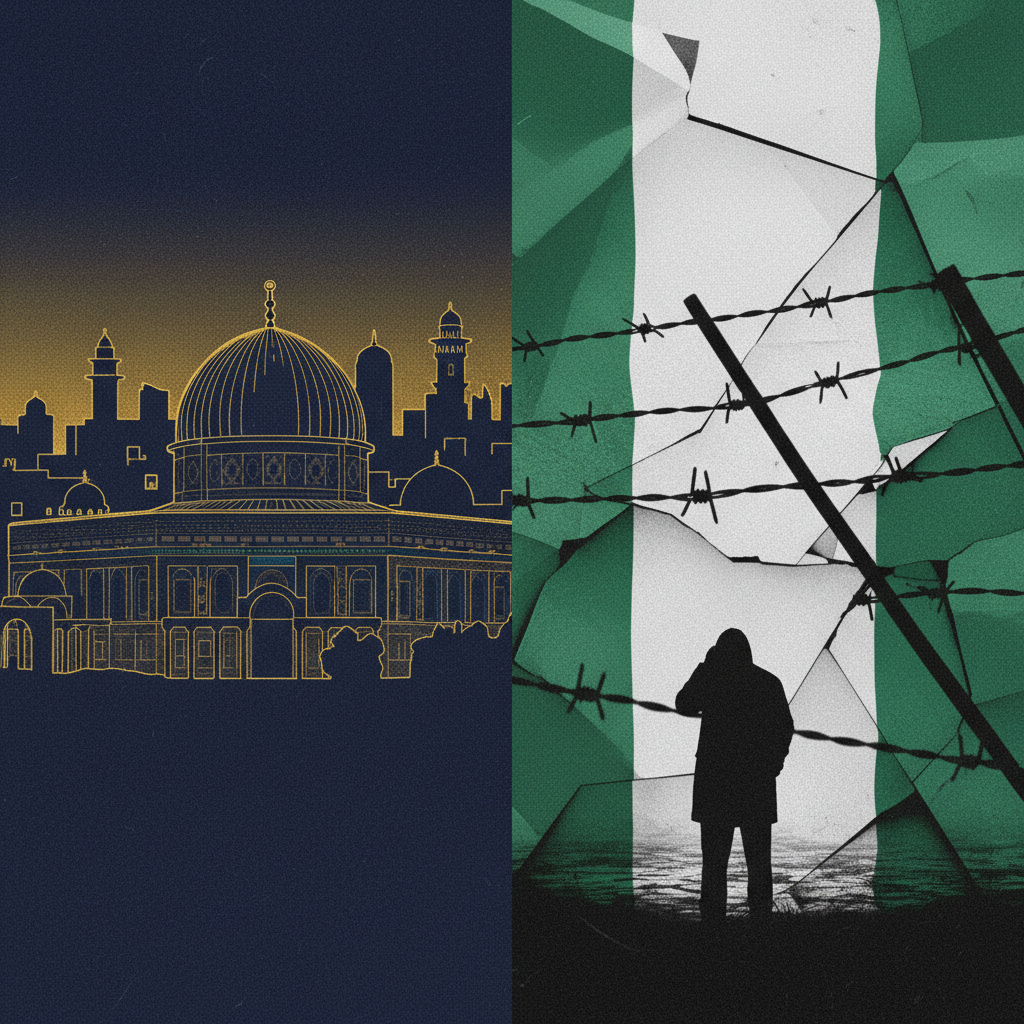
For many Nigerian Christians, the Holy Land is not a holiday destination. It is a living map of scripture: a dawn prayer on the Mount of Olives, a walk through Jerusalem’s Old City, a visit to Bethlehem, a hymn sung on the Sea of Galilee. That is why reports that the Nigerian Christian Pilgrim Commission (NCPC) has lifted its suspension on pilgrimages to Israel matter far beyond the travel trade.
The move signals a cautious reopening of one of Nigeria’s most symbolically important faith-travel routes after the Israel-Hamas war forced cancellations and uncertainty. But it does not mean the security question has been settled. For pilgrims, churches, state pilgrimage boards and tour operators, the message is clear: Israel may be back on the itinerary, but risk management now has to travel with the group.
A route with deep religious and economic weight
Nigeria is one of Africa’s most important outbound Christian pilgrimage markets. Through the NCPC, state pilgrimage boards, churches and licensed private operators, thousands of Nigerians have historically travelled to Israel and nearby biblical sites in Jordan, Egypt and the Palestinian territories.
These journeys are spiritual, but they are also highly organised logistics operations. A typical package can involve group visas, chartered or block-booked flights, hotel allocations in Jerusalem or Tiberias, coach transfers, clergy-led devotionals, medical screening, travel insurance and coordination with ground handlers abroad.
When the Israel-Hamas war escalated in October 2023, that machinery was disrupted almost overnight. Pilgrimage windows were postponed. Deposits became difficult conversations. Operators had to renegotiate hotel blocks and airline seats. Some churches moved retreats to local camps or alternative overseas destinations. State boards, which often work months in advance, were left balancing spiritual demand against duty of care.
The reported lifting of the NCPC ban therefore offers relief. It reopens a path for long-delayed pilgrims, particularly those who had already paid or had been preparing for the trip before the suspension. It also gives operators a basis to begin selling again, though likely with more caveats than before.
Why “open” does not mean “normal”
The biggest mistake would be to treat the reopening as a return to pre-war conditions. Israel remains a functioning destination with a sophisticated security infrastructure, but the wider region is still volatile.
International travel advisories continue to urge caution. The U.S. State Department maintains a high-risk advisory for Israel, the West Bank and Gaza, warning of terrorism, civil unrest and armed conflict. The UK Foreign, Commonwealth & Development Office also continues to advise against travel to certain areas and warns that the security situation can change quickly.
That matters because Christian pilgrimage itineraries are not limited to one hotel and one conference hall. They often include movement across sensitive geography: Jerusalem’s Old City, Bethlehem in the West Bank, northern Israel near the Galilee, and sometimes routes that depend on changing border and checkpoint conditions. A trip can be safe one week and require rerouting the next.
Air access is another pressure point. Ben Gurion Airport has remained central to Israel’s connectivity, but airlines have repeatedly adjusted schedules during periods of heightened tension. For group travel, even a short-notice cancellation can become a major operational problem: 80 pilgrims need hotel extensions, a new flight plan, meal arrangements, medication support and family updates back home.
In other words, the question for Nigerian pilgrimage is no longer simply, “Can we go?” It is, “Can we go with a credible contingency plan?”
What pilgrims should expect now
For intending pilgrims, the reopened route will likely feel more structured and more conditional. Expect more paperwork, more briefings and more explicit warnings before departure.
First, insurance will matter more. Pilgrims should confirm that their policy covers medical emergencies, trip interruption, evacuation and conflict-related disruptions where available. Many standard policies exclude war or civil unrest. The cheapest policy may be the least useful one.
Second, itineraries may change with little notice. A planned visit to Bethlehem, Jericho or parts of northern Israel could be replaced if local partners advise against movement. Pilgrims should see flexibility as a safety feature, not a failure of planning.
Third, health and mobility screening will be important. Pilgrimage is physically demanding even in calm times: long walks, queues, stairs, early departures and intense heat depending on the season. In a tense environment, groups may need to move faster or wait longer at checkpoints. Elderly pilgrims and those with chronic conditions should travel with medical clearance and enough medication for delays.
Fourth, communication discipline will be essential. Group leaders should maintain updated next-of-kin records, WhatsApp broadcast lists, hotel rooming lists and emergency contacts. Pilgrims should be discouraged from wandering away from the group, posting sensitive real-time location details, or engaging in political arguments at religious sites.
A Holy Land trip can still be deeply meaningful. But the modern pilgrim needs a charger, travel documents, insurance details and situational awareness alongside the prayer book.
Tour operators face a new duty-of-care test
For Nigerian tour operators and church travel planners, the reopening is good commercial news—but it also raises the bar.
Operators will need to be more transparent in their marketing. Packages should clearly state what happens if flights are suspended, sites are closed, or an itinerary is changed for security reasons. Refund policies, postponement rules and insurance limitations must be explained before money changes hands.
Ground partners in Israel and the Palestinian territories will also become more important. A reliable local handler is not just someone who provides buses and guides; they are the operator’s early-warning system. They know which roads are open, where demonstrations are expected, whether a checkpoint is delayed, and whether a site visit should be brought forward or cancelled.
Churches and state pilgrimage boards should ask harder questions before approving groups: Who is monitoring advisories daily? What is the evacuation plan? Which hospital would receive a pilgrim in Jerusalem or Tel Aviv? What happens if the group is stranded for 48 hours? Are there alternative hotels? Who speaks to families and the media if something goes wrong?
These questions may sound bureaucratic, but they are now part of responsible faith travel. Spiritual leadership and operational competence have to work together.
A cautious reopening, not a blank cheque
The NCPC’s reported decision reflects a familiar tension: faith communities want to reconnect with sacred places, while officials and operators must manage a security environment they do not control. Nigeria is not alone in this. Across the world, pilgrimage and religious tourism have had to adapt to war, terrorism, pandemics, airline disruption and border uncertainty.
The smart path is neither panic nor complacency. Pilgrimage to Israel can resume, but with smaller risk appetites, stronger contracts, better insurance, flexible routing and constant coordination with official advisories.
Conclusion
Nigeria’s Christian pilgrimage route to Israel is reopening, and for many believers that is welcome news. But the Holy Land is no longer a destination that can be sold on emotion alone. The next phase of Nigerian faith travel will be defined by preparation: prayer, yes—but also planning, proof of cover, security updates and honest communication.
For pilgrims, the journey may still be life-changing. For operators, it must now be risk-aware. And for the NCPC, reopening the door is only the first step; keeping pilgrims safe is the real test.