Nigeria Pushes South Africa on Xenophobic Attacks
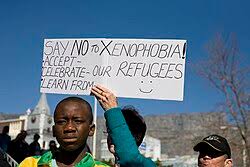
When Nigerians are attacked in South Africa, the story rarely stays local. It travels quickly from a burned shopfront or a viral video to Abuja’s diplomatic desks, talk radio, Parliament, and the timelines of millions who see the incident as part of a grim cycle: outrage, assurances, another attack, another communiqué.
That is why the Federal Government’s latest call for South Africa to take “concrete action” matters. The phrase sounds forceful, but it also invites a harder question: concrete in what sense? A statement of condemnation is not concrete. A promise to investigate is not concrete. Even an arrest, while necessary, may not be enough if the conditions that produce repeated xenophobic violence remain untouched.
Nigeria and South Africa are Africa’s two largest diplomatic heavyweights. Their rivalry and partnership shape the continent’s politics, business, and cultural imagination. Yet xenophobic attacks—often targeting African migrants, including Nigerians—have repeatedly strained the relationship. If Abuja wants more than another round of assurances, it must push for measurable protections, accountability, and a diplomatic framework that survives the news cycle.
Why This Keeps Becoming a Diplomatic Crisis
The Nigeria–South Africa relationship is unusually sensitive because it is both strategic and emotional.
On paper, the two countries need each other. South African companies have deep footprints in Nigeria’s telecoms, retail, banking, entertainment, and hospitality sectors. Nigerian artists, professionals, students, traders, and entrepreneurs are part of South Africa’s urban economy. At the continental level, both countries are central to the African Union, regional security debates, and the credibility of African-led diplomacy.
But the relationship also carries historical memory. Nigeria supported the anti-apartheid struggle, a fact often invoked in Nigerian public discourse whenever South Africa is accused of failing to protect Nigerians. That memory raises expectations: South Africa is not viewed as just another foreign country, but as a nation with a moral debt and a continental responsibility.
When attacks occur, they are interpreted through that lens. The issue becomes larger than crime. It becomes a test of whether African mobility is safe, whether African governments protect one another’s citizens, and whether pan-African rhetoric has meaning when migrants are under threat.
The 2019 attacks showed how quickly the matter can escalate. Nigeria recalled its high commissioner for consultations and helped evacuate citizens, while South African businesses in Nigeria faced backlash. The diplomatic damage went beyond the immediate violence: it exposed how fragile public trust had become.
Why Xenophobia Persists Despite Official Condemnations
South African leaders routinely condemn xenophobic attacks. The problem is that condemnation has not consistently translated into prevention, prosecution, or deterrence.
Several factors keep the pattern alive. First is economic frustration. In communities facing unemployment, poor services, housing pressure, and crime, migrants are often used as convenient scapegoats. The claim that foreigners “take jobs” or “control crime” is politically potent, even when it oversimplifies complex economic failures.
Second is weak local enforcement. Violence often begins with threats, intimidation, public agitation, or organised raids before it becomes headline-grabbing destruction. If police treat those early signs as community disputes rather than targeted violence, attackers learn that intimidation carries little cost.
Third is political rhetoric. Even when national leaders speak carefully, local political actors can exploit resentment toward foreign nationals. That rhetoric helps normalise the idea that migrants are a problem to be “removed,” not residents entitled to due process and protection.
Fourth is the informal nature of many migrant businesses. Nigerian and other African traders often operate in crowded urban markets, transport corridors, and low-income areas where policing is inconsistent and documentation disputes are common. That makes them vulnerable to extortion, mob action, and selective enforcement.
Human Rights Watch has documented how xenophobic violence in South Africa has included attacks on homes, shops, and individuals, as well as failures by authorities to hold perpetrators accountable. UN experts have similarly warned that xenophobic violence and discrimination in South Africa require stronger state action. The record suggests a gap not in awareness, but in implementation.
What “Concrete Action” Should Actually Mean
If Abuja is serious, it should define “concrete action” in terms that can be tracked. South Africa, in turn, should welcome clear benchmarks because vague diplomacy helps no one. At least five measures matter.
First, early-warning and rapid-response systems. Nigeria’s mission in South Africa and South African police authorities should maintain a joint incident desk for threats against Nigerian communities. This should include verified reporting channels, named liaison officers in hotspots, and escalation timelines. If traders in Johannesburg, Durban, Pretoria, or Cape Town report threats, the response should be measured in hours—not after property is burned.
Second, visible prosecutions. Arrests after attacks are not enough if cases disappear. South Africa should publish periodic updates on xenophobia-related cases: arrests, charges, prosecutions, convictions, and sentences. Public accountability is a deterrent. If mobs believe they can attack foreigners and blend back into the crowd, the cycle will continue.
Third, compensation and claims support. Many victims lose shops, inventory, vehicles, documents, and homes. Even when compensation is legally complex, governments can create structured claims support: documentation, police reports, insurance coordination, emergency relief, and legal aid. Nigeria should press for a formal victim-support mechanism, not just evacuation flights after the damage is done.
Fourth, disciplined public messaging. South African officials at national, provincial, and municipal levels must avoid language that blurs the line between immigration enforcement and collective blame. Immigration violations should be handled through law, not mob suspicion. Abuja should also speak responsibly, discouraging retaliatory attacks against South African businesses in Nigeria, which only widens the crisis and endangers innocent workers.
Fifth, a standing bilateral security mechanism. The issue should not be handled only when violence erupts. Nigeria and South Africa already have diplomatic channels, but xenophobia needs a standing working group involving foreign affairs officials, police, immigration authorities, community leaders, and consular staff. Its mandate should be narrow and practical: protect citizens, prevent escalation, track cases, and report progress.
What Diplomatic Pressure Can—and Cannot—Achieve
Nigeria has tools. It can summon diplomats, issue public protests, demand investigations, raise the matter at the African Union, and use the Nigeria–South Africa Bi-National Commission to place citizen protection high on the agenda. It can also improve consular registration so it knows where vulnerable Nigerians live and trade.
But there are limits. Abuja cannot police South African streets. It cannot compel local prosecutors to secure convictions. It also must avoid turning every criminal incident involving a Nigerian into a xenophobia case before facts are established. Credibility matters: the strongest diplomatic pressure is specific, evidence-based, and tied to realistic remedies.
Nigeria also has responsibilities at home. It must provide better consular services, discourage irregular migration, share intelligence on criminal networks where needed, and separate the defence of law-abiding citizens from blanket protection of anyone carrying a Nigerian passport. That distinction is important. Xenophobia is wrong, but host countries are still entitled to enforce immigration and criminal laws fairly.
The real test is whether both governments can move from performative outrage to institutional routine. That means records, deadlines, police contacts, case tracking, victim support, and consequences for officials who ignore warnings.
Conclusion: The Measure Is Prevention
“Concrete action” should not mean another polished statement after another attack. It should mean fewer attacks because threats are disrupted early. It should mean victims know whom to call. It should mean attackers face trial. It should mean Nigerians in South Africa are protected without turning South Africans in Nigeria into targets of retaliation.
Nigeria is right to demand more. South Africa is right to insist that criminality and migration pressures are complex. But complexity cannot become an excuse for repetition. The standard is simple: if the next flare-up finds both governments issuing the same statements, with the same promises and no measurable progress, then nothing concrete has happened at all.