How Nigerian Fans Are Rewiring Football Fandom
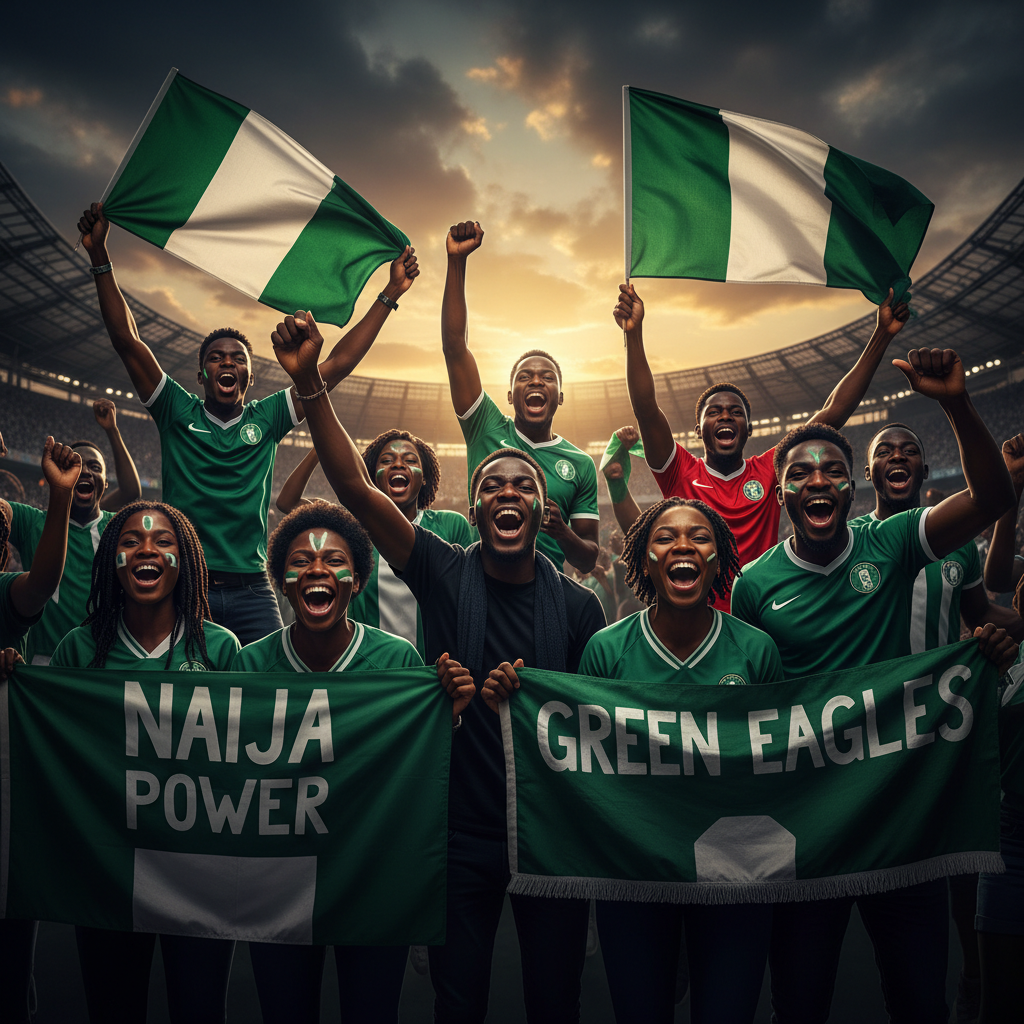
In a Lagos viewing centre on a Champions League night, the old question — “Which club do you support?” — no longer settles the conversation. One fan is watching Napoli because of Victor Osimhen. Another is checking Bayer Leverkusen highlights for Victor Boniface. Someone else is arguing about Bukayo Saka’s goal involvement, while a betting group on WhatsApp is waiting for team news from three different leagues.
The club scarf still matters. Manchester United, Arsenal, Chelsea, Barcelona and Real Madrid remain powerful identities in Nigerian football culture. But the centre of gravity is shifting. Increasingly, Nigerian fans are not only following clubs; they are tracking players, personalities, clips, injuries, transfers and statistics across platforms.
This is not a small change in taste. It is a rewiring of football fandom.
The old club map is still there — but it is no longer enough
For decades, Nigerian football fandom was shaped by broadcast access and European dominance. The Premier League’s arrival on television built deep local loyalties. A child in Ibadan could inherit Arsenal from an uncle, Manchester United from a neighbour, or Chelsea from a school debate that began with Didier Drogba and never ended.
Those attachments are still visible every weekend. Jerseys flood bars, barbershops and campuses. Club banter remains a national sport. A Manchester United defeat can still ruin a Sunday. Arsenal’s title race can still split an office.
But the modern fan has more entry points than the old club pipeline allowed. Today, a supporter can care about Fulham because Alex Iwobi is starting, Atalanta because Ademola Lookman is in form, Milan because Samuel Chukwueze came off the bench, or Leverkusen because Boniface is trending. The club may be the stage, but the player is often the reason Nigerians tune in.
Osimhen’s rise at Napoli made this especially clear. When Napoli won Serie A in 2023, many Nigerian fans celebrated it with the intensity usually reserved for their own clubs because a Nigerian striker had become the face of the story. His 2023 CAF African Player of the Year award only strengthened that personal attachment. Napoli gained attention in Nigeria, but Osimhen was the emotional gateway.
Clips have changed what fans reward
The short-form video era rewards moments, not ninety-minute loyalty. A striker’s pressing run, a nutmeg, a tunnel-cam handshake, a training-ground finish, an angry substitution reaction — all can travel farther than a full match.
That matters in Nigeria, where football conversation is heavily mobile-first. DataReportal’s 2024 Nigeria report estimated more than 100 million internet users in the country, with tens of millions active on social platforms. In that environment, fandom is shaped as much by what appears on TikTok, X, Instagram, YouTube Shorts and WhatsApp statuses as by what happens on SuperSport at kickoff.
A player can dominate the day without his club dominating the league. Lookman’s hat-trick for Atalanta in the 2024 Europa League final was not just an Italian football story; it was a Nigerian pride story, instantly clipped, captioned and circulated. Boniface’s goals and personality at Leverkusen became content. Osimhen’s mask, interviews and transfer rumours became a recurring social media franchise.
Clubs built fandom through seasons. Players now build it through moments — and platforms are designed to make those moments unavoidable.
Betting, fantasy and transfer talk have made players the unit of attention
Another major force is the growth of betting and fantasy football communities. Whether one likes it or not, these spaces have changed how fans talk. The question is no longer simply “Will Arsenal win?” It is “Will Saka score or assist?” “Will Osimhen have two shots on target?” “Is Boniface starting?” “Who is on penalties?”
That shift turns individual footballers into data points, emotional investments and weekly storylines. Lineups become breaking news. Injury updates become national concern. A manager’s rotation decision can provoke outrage from fans who do not support the club but have staked money, fantasy points or bragging rights on one player.
Transfer gossip has the same effect. When Osimhen is linked with Premier League clubs, Saudi clubs or a new contract, Nigerian fans debate it as if they are shareholders in his career. The club’s needs matter, but the player’s pathway matters more: Will he get service? Will the coach suit him? Will he win the Ballon d’Or? Will he become the most expensive African player ever?
This is player fandom in its most modern form: a mixture of national pride, career management, statistics, content and speculation.
Nigerian identity makes player fandom even stronger
Player-first fandom is global, but Nigeria adds its own fuel. Nigerians have always followed their people abroad with intensity, from Jay-Jay Okocha at Bolton to Nwankwo Kanu at Arsenal, John Mikel Obi at Chelsea and Odion Ighalo at Manchester United. The difference now is speed and scale.
A Nigerian player’s success abroad is immediately converted into collective validation. When Osimhen scores, it is not only Napoli’s goal. When Lookman delivers on a European stage, it is not only Atalanta’s trophy. When Saka shines for Arsenal, even with his England allegiance, Nigerian timelines still claim cultural proximity through heritage, childhood roots and name recognition.
This creates overlapping loyalties. A fan can support Chelsea, admire Saka, defend Osimhen, celebrate Lookman and still argue passionately about the Super Eagles. There is no contradiction for the modern supporter. Identity is layered.
It also explains why some European clubs suddenly become more visible in Nigerian discourse. Napoli, Leverkusen, Atalanta and Villarreal are not traditional mass-support clubs in Nigeria in the way Manchester United or Arsenal are. Yet Nigerian players can make them part of everyday conversation. The player becomes the distribution channel.
What clubs and media must understand
For clubs, the lesson is simple: Nigerian fans are not passive overseas audiences. They follow narratives closely and reward clubs that recognise their stars. A club that signs a Nigerian player is not just gaining a squad member; it may be gaining attention from one of football’s loudest digital markets.
But authenticity matters. Fans can tell the difference between real engagement and lazy flag-posting. Featuring Nigerian players in meaningful content, acknowledging national moments, and making highlights accessible can deepen connection. Ignoring the audience while expecting automatic loyalty will not work.
For Nigerian sports media, the opportunity is even bigger. Coverage can no longer be limited to match reports and transfer rumours. Fans want tactical context, contract explainers, injury timelines, squad politics, data breakdowns and career analysis. They want to know not only that a player scored, but what it means for his club role, national team form and next move.
There is also a responsibility. Player fandom can become toxic when every benching is treated as disrespect, every criticism as hatred, and every transfer rumour as fact. The best coverage should celebrate Nigerian excellence without turning football into permanent outrage.
Conclusion: the badge still matters, but the face matters more
Club loyalty is not disappearing in Nigeria. The old giants still command huge emotional territory. But the way fans arrive at football, discuss it and remain attached to it has changed.
The modern Nigerian supporter is a club fan, a national-team fan, a clip consumer, a fantasy manager, a transfer analyst and a player loyalist all at once. In that world, the badge still matters — but increasingly, it is the player’s face that opens the door.