Osun Decides: INEC, Police Face Trust Test
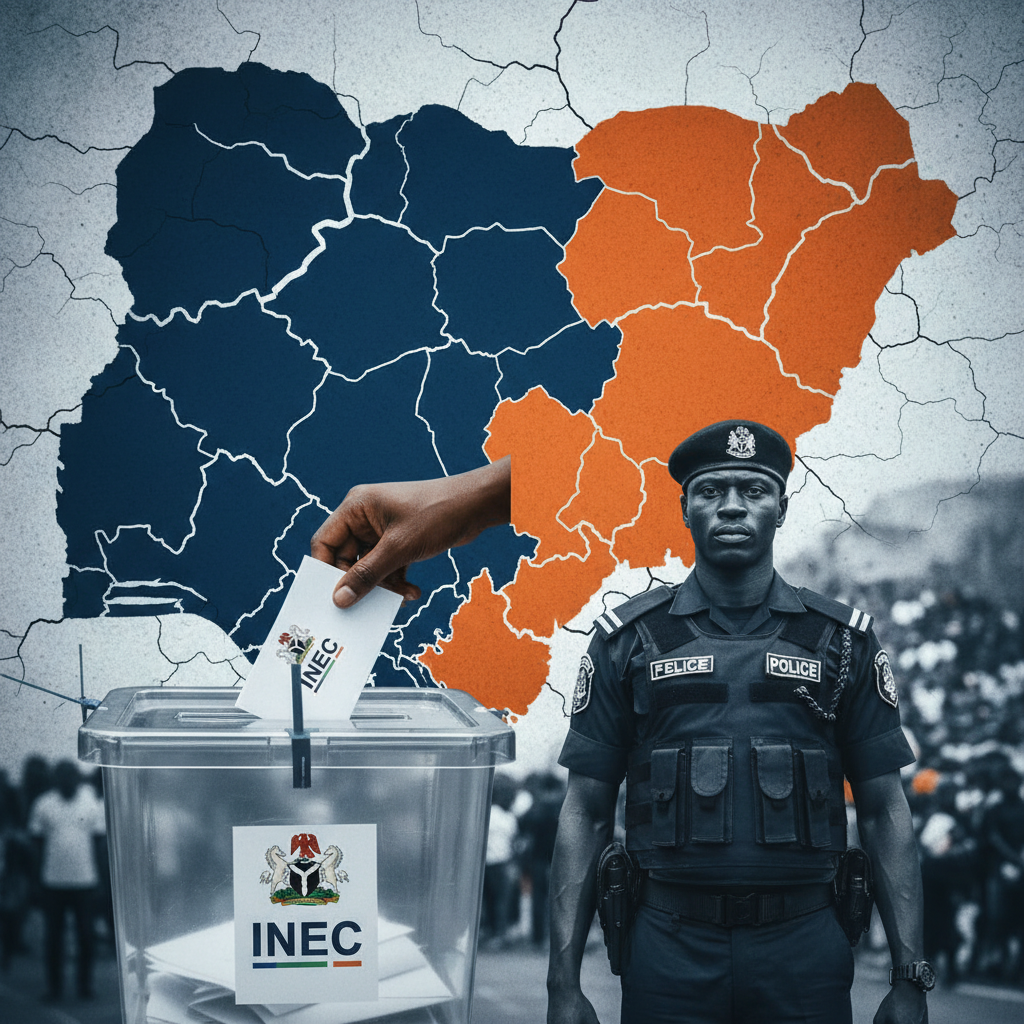
The first hours of voting in Osun have turned election day into more than a contest between parties. They have made it a live audit of public trust.
As accreditation and voting got underway across the state, early field reports pointed to a familiar mix of promise and tension: materials arriving on time in several polling units, strong voter turnout in urban and rural communities, and heightened security presence around voting areas. But the atmosphere sharpened after Governor Ademola Adeleke alleged that police officers tear-gassed voters — a claim that, whether confirmed or contested, immediately raised the stakes for security agencies already under pressure to prove neutrality.
For the Independent National Electoral Commission (INEC), #OsunDecides2026 is not just another off-cycle governorship election. It is a real-time stress test of logistics, technology, transparency and crowd management. For the police and other security agencies, it is a test of restraint.
A strong start for logistics — but expectations are higher now
The most encouraging early signal came from polling units where election materials, INEC officials and security personnel were reported to have arrived before or around the scheduled start of accreditation and voting. In a Nigerian election, that matters.
Late deployment has historically fed suspicion: voters arrive early, officials are absent, ballot papers are delayed, tempers rise, and political actors quickly frame the confusion as sabotage. In Osun today, reports of early setup in parts of Osogbo, Ede, Ilesa, Ife and other local government areas gave INEC a more stable opening than many feared.
The concrete indicators were visible: voters checking their names on registers, BVAS devices being positioned for accreditation, ballot boxes placed in public view, party agents taking their places, and security officers standing near — but not always inside — voting points. These are basic details, yet they are the foundation of electoral credibility.
INEC’s challenge is that a good first hour is not the same as a credible full day. The commission must maintain momentum through the late-morning surge, the afternoon queue pressure, collation, results upload and transmission of polling-unit outcomes. A smooth arrival of materials is only the first checkpoint.
The bigger question is whether the same consistency will hold across riverine, rural and politically sensitive communities where communication, transport and crowd control can become more difficult.
Turnout shows voters still believe the ballot matters
One of the most important stories from Osun is turnout. In several communities, voters came out early and in visible numbers, suggesting that despite years of distrust in institutions, many citizens still see the ballot as worth protecting.
That turnout carries political meaning. Osun has a recent history of competitive elections, narrow margins, legal battles and intense grassroots mobilisation. The state’s politics is personal, local and highly organised. Ward leaders matter. Family networks matter. Religious and professional associations matter. So do youth groups and market associations.
When voters form queues before accreditation begins, they are not merely performing civic duty. They are sending a message: they expect the process to count.
That expectation increases the burden on INEC. Voters who wait for hours are less tolerant of technical failure, poor communication or unexplained delays. If a BVAS device fails, officials must explain the remedial process clearly. If voting is delayed, the queue must be managed transparently. If materials are moved, party agents and observers must know why.
In a high-turnout election, silence from officials is dangerous. Clear communication is not a courtesy; it is a security tool.
Adeleke’s tear-gas allegation raises the security stakes
The most volatile development of the day is Governor Adeleke’s allegation that police tear-gassed voters. The claim cuts directly into one of the deepest anxieties around Nigerian elections: whether security personnel are present to protect voters or intimidate them.
At this stage, the allegation requires prompt verification. The police command and national security election desk should state clearly what happened, where it happened, which officers were deployed, whether tear gas was used, and under what circumstances. If the claim is false, the public deserves evidence. If it is true, the public deserves accountability.
Election security is not measured only by the number of officers deployed. It is measured by conduct. Officers must prevent ballot snatching, protect INEC staff, deter thuggery and keep access routes open. But they must also avoid unnecessary force, partisan body language and crowd-control tactics that frighten voters away from polling units.
Tear gas at or near a voting area is especially sensitive because its impact goes beyond the immediate crowd. It can suppress turnout, scatter queues, disrupt accreditation, expose elderly voters to health risks, and create a narrative that the process has been compromised. Even one confirmed incident can dominate the legitimacy debate.
That is why security agencies must treat Adeleke’s allegation not as routine political noise but as a credibility emergency. In an election environment, perception can harden faster than facts.
BVAS, uploads and collation will decide the credibility argument
The early phase of election day is about access: did voters meet officials, materials and security at the polling unit? The next phase is about verification: were voters accredited properly, did the figures match, and were results handled transparently?
This is where BVAS and INEC’s result management process become central. Voters and party agents will be watching for whether accreditation figures align with ballots cast. Observers will be monitoring whether polling-unit results are announced publicly before movement to collation centres. Citizens online will be watching the INEC Result Viewing portal for uploaded result sheets.
The lesson from recent Nigerian elections is clear: logistics can win the morning, but collation can lose the night.
If polling units run smoothly but ward or local government collation becomes chaotic, trust collapses. If results are delayed without explanation, rumours fill the gap. If uploaded documents are blurry, missing or inconsistent, political actors will exploit the uncertainty. If security forces restrict observers or journalists near collation centres, suspicion deepens.
INEC’s best defence is radical procedural discipline: announce results at polling units, preserve result sheets, allow accredited agents to observe, communicate delays, and correct errors transparently. The commission does not need drama. It needs boring competence.
The credibility test is bigger than Osun
Osun matters nationally because every off-cycle election is now treated as a rehearsal for Nigeria’s next major electoral cycle. Political parties study INEC’s weaknesses. Security agencies test deployment models. Civil society tracks patterns. Citizens decide whether the system is improving or merely surviving.
That is why today’s election is being watched beyond the state. A credible process will strengthen confidence that logistical planning, BVAS deployment and result transparency are becoming more reliable. A disputed process, especially one shaped by allegations of force against voters, will feed a broader narrative that institutions still cannot be trusted when power is at stake.
The early signs offer INEC an opportunity: build on timely deployment, keep polling units orderly, and ensure that collation is transparent. But the tear-gas allegation has placed security agencies under a harsh spotlight. Their response must be fast, factual and accountable.
Conclusion
Osun’s election day has begun with promise and pressure in equal measure. Early material arrival and strong turnout suggest voters are ready to participate. But Adeleke’s allegation of police tear-gassing voters has turned the day into a sharper test of institutional trust.
INEC can still define the election by competence. The police can still define their role by restraint. But from this point forward, every delay, every upload, every security decision and every collation-room argument will matter. In Osun, credibility is being counted alongside the votes.