Patrick Vieira’s Senegal Test: Can He Reset the Lions?
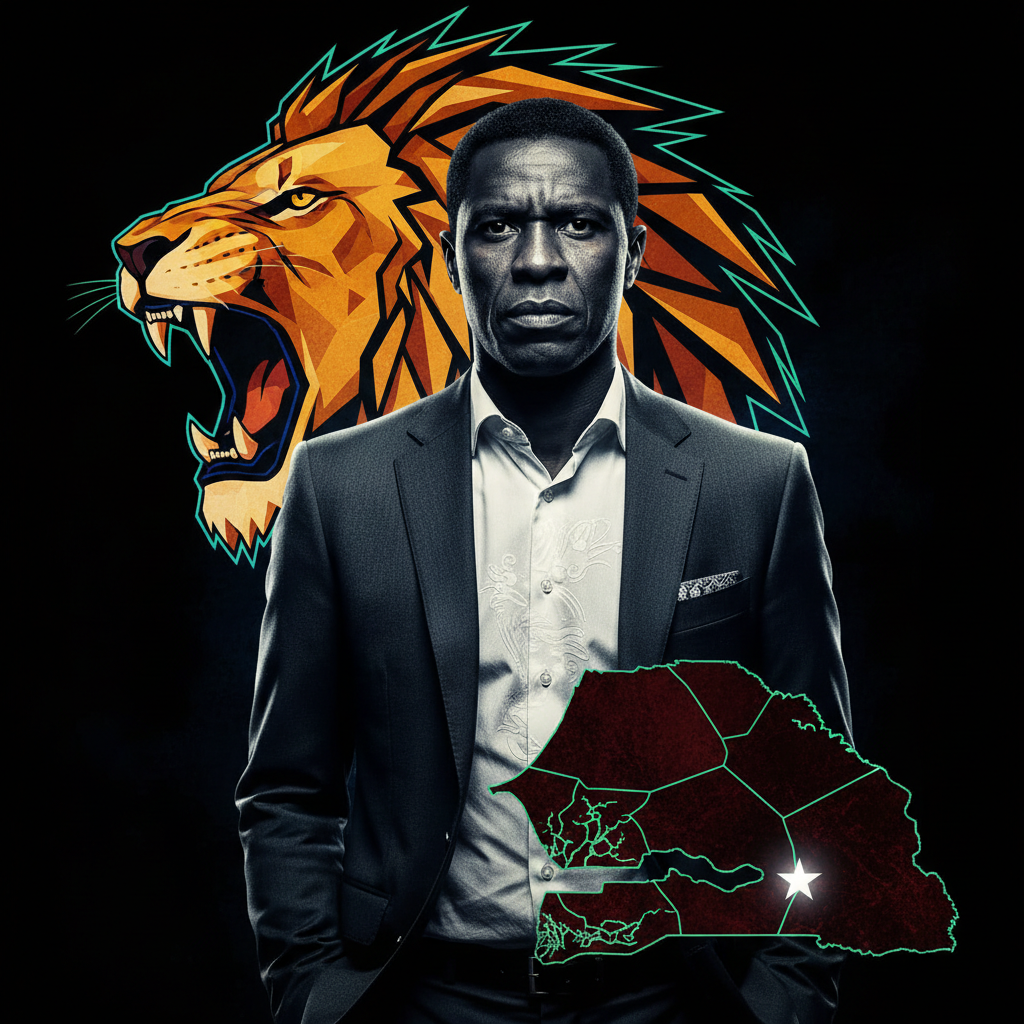
Patrick Vieira’s reported appointment as Senegal head coach would be one of the most intriguing managerial moves in African football: a Premier League icon, a World Cup winner, and a coach still searching for his defining chapter stepping into one of the continent’s most talent-rich jobs.
Senegal are not a rebuilding project in the traditional sense. This is not a squad short on pedigree, athleticism or European experience. The Teranga Lions have been African champions, World Cup regulars and a benchmark for modern national-team structure. But they are also at a crossroads: an elite group needs fresh tactical direction, a new emotional charge and a clear plan for another AFCON run.
If Vieira is the man, the question is not whether the name is big enough. It is whether the ideas are sharp enough.
A glamour appointment with real pressure attached
Vieira arrives with rare status. As a player, he captained Arsenal’s Invincibles, won the World Cup and European Championship with France, and built a reputation as one of the defining midfielders of his generation. That matters in a dressing room filled with players who have spent years competing in Europe’s top leagues.
But international management is not a nostalgia business. Senegal’s standards have changed. Winning the 2021 Africa Cup of Nations — their first continental title — permanently raised expectations. A quarter-final, a brave exit, or a “promising cycle” is no longer enough for a fanbase that has seen what the top of Africa looks like.
That is the tension at the heart of this appointment. Vieira brings authority, gravitas and instant global attention. He also brings a managerial CV that is mixed rather than conclusive. His work at New York City FC helped establish his coaching identity. At Nice, he showed flashes of structure and player development. At Crystal Palace, he modernised a side that had been drifting, trusting younger players and pushing the team toward a more proactive style before results turned.
Senegal do not need a celebrity ambassador. They need a coach who can turn a deep squad into a ruthless tournament machine.
The squad is loaded — but balance is the puzzle
The attraction of the Senegal job is obvious. Few African national teams can match the depth and variety available.
There is elite experience in defence and midfield, with names such as Kalidou Koulibaly, Idrissa Gueye and Édouard Mendy having already shaped the most successful era in Senegalese football. There is attacking star power through Sadio Mané, still the symbolic face of the team, and a younger generation led by players like Nicolas Jackson, Iliman Ndiaye, Ismaïla Sarr and Pape Matar Sarr.
That blend is powerful, but it also creates difficult choices. Does Vieira build around the older core that delivered Senegal’s first AFCON title? Or does he accelerate the transition toward a faster, more fluid front line? Can he keep Mané central without making the attack predictable? Can he use Pape Matar Sarr’s energy and ball-carrying as the bridge between midfield control and final-third chaos?
Senegal’s best sides have been physically imposing, defensively mature and devastating in transition. Vieira’s challenge would be to preserve that identity while adding more control in possession. Tournament football often punishes teams that rely too heavily on moments — a penalty, a set piece, a single counterattack. The best version of Senegal should be able to win ugly and dominate when the match demands it.
That is where Vieira’s midfield instincts could be valuable. His teams have often looked for compactness, vertical passing and athletic pressure. If he can translate that into a national-team setting, Senegal could become less dependent on individual inspiration and more consistent across seven-game tournament campaigns.
AFCON expectations: win now, not later
There is no soft landing here. Senegal are expected to challenge for the next AFCON, full stop.
That expectation is not arrogance; it is the product of recent history. Senegal have become a continental superpower, not merely a talented team. Their player pool, federation stability and recent winning culture put them in the same conversation as Morocco, Nigeria, Ivory Coast, Algeria and Egypt whenever a major African tournament begins.
For Vieira, the AFCON test would be immediate and unforgiving. Club management allows time for pattern-building, transfer windows and long-term correction. International football compresses everything. He may get only a handful of camps to install pressing triggers, defensive spacing, set-piece routines and attacking combinations.
That makes selection as important as tactics. International coaches must be decisive about hierarchy. Who starts at centre-forward? Who partners whom in midfield? Which full-backs provide width? Is Senegal’s best shape a 4-3-3, a 4-2-3-1, or a more flexible system that can become a back three in possession?
A coach with Vieira’s stature may help make hard calls. Big players can accept difficult decisions more easily when the manager has lived the elite environment himself. But reputation only carries a coach so far. In AFCON conditions — heat, travel, uneven pitches, hostile atmospheres and emotionally charged matches — adaptability is everything.
The best Senegal under Vieira would not be a replica of Arsenal, France or Crystal Palace. It would be a team built for African tournament realities: powerful at set pieces, calm without the ball, quick to punish mistakes and mature enough to manage momentum.
Why African football is pulling bigger names
Vieira’s reported move also speaks to a broader shift. African national-team jobs are no longer seen only as romantic side quests or late-career adventures. They are high-profile roles with elite players, global visibility and genuine competitive stakes.
Morocco’s 2022 World Cup semi-final run changed perceptions worldwide. It proved that African teams are not simply producing stars for European clubs; they can organise, strategise and beat global powers on the biggest stage. Senegal’s AFCON triumph did something similar within the continent, showing how infrastructure, continuity and elite-level talent can combine.
For managers, that is attractive. A coach taking over Senegal is not inheriting chaos. He is inheriting a brand, a pipeline and a squad capable of winning. Success can elevate a manager quickly. Failure, equally, is visible.
There is also a personal layer in Vieira’s case. Born in Senegal before representing France, he carries a connection that makes this more than a conventional appointment. That does not guarantee success, but it gives the job emotional resonance. For many supporters, the idea of Vieira leading the Teranga Lions would feel like a circle closing: a Senegal-born football giant returning to guide one of Africa’s flagship teams.
The key is to ensure the symbolism serves the football, not the other way around.
Conclusion: a reset with no room for theatre
Patrick Vieira to Senegal would be a headline appointment, but the real story begins after the cameras leave. He would inherit a squad good enough to win AFCON, experienced enough to expect clarity, and young enough to evolve.
The opportunity is enormous: reset the Teranga Lions, sharpen their attacking identity, manage a generational transition and keep Senegal at the top of African football. The risk is just as clear. A big name without a coherent tournament plan will not survive the weight of expectation.
Vieira knows what elite dressing rooms feel like. Now, if the reports are confirmed, he must prove he can build one from the touchline.