Petrol at ₦1,400: Nigeria’s New Fuel Shock
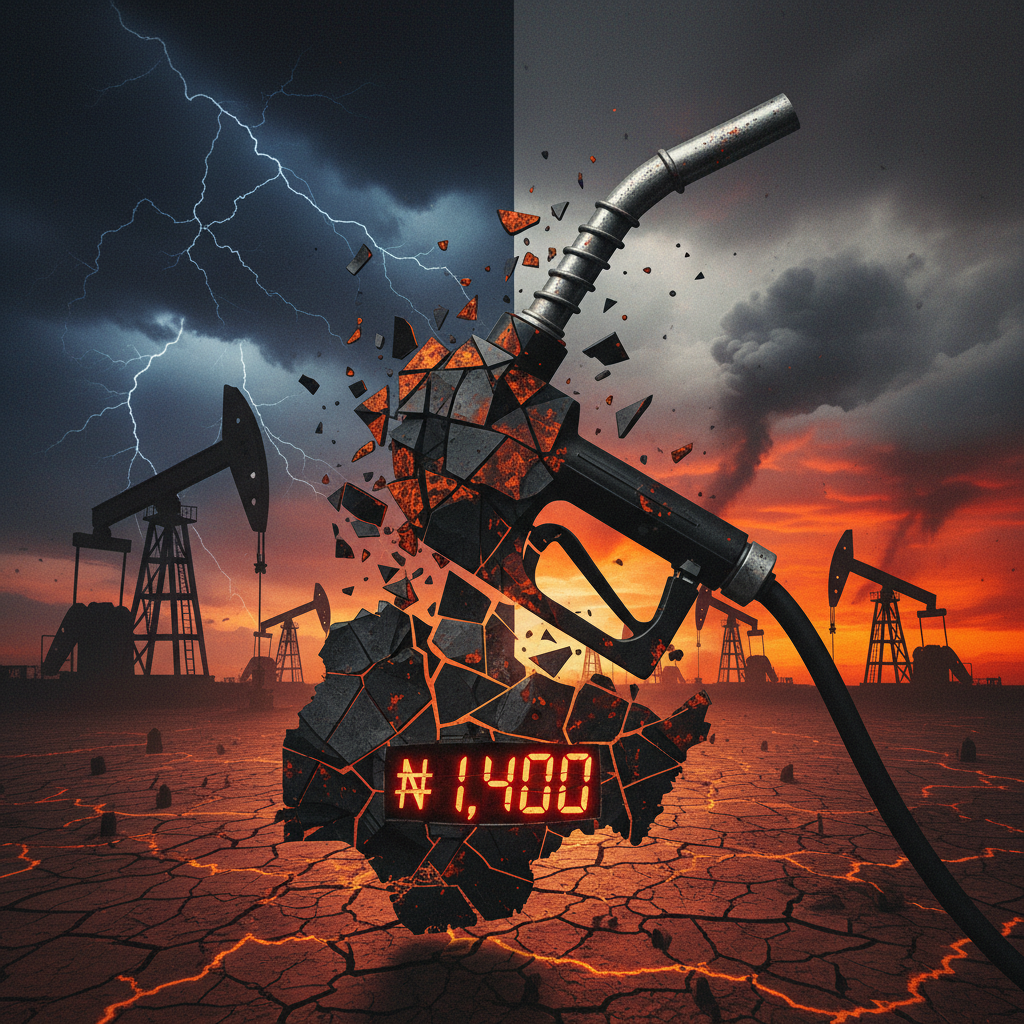
The latest petrol-price shock has landed with the force Nigerians know too well: first at the filling station, then at the bus stop, then inside the daily budget. Reports from fuel queues and independent marketers now point to petrol selling around ₦1,400 per litre in some locations — a price that turns routine movement into a negotiation and makes every generator hour feel like a business decision.
This is not just another number on a pump. Petrol is the unofficial operating system of urban Nigeria. It powers commuting, deliveries, school runs, market logistics, neighbourhood shops, salons, POS kiosks, cold rooms and the small generators that keep phones charged and fans turning when electricity fails. When petrol jumps, the cost does not stay at the station. It travels.
The pump price is becoming a household budget shock
At ₦1,400 per litre, even modest fuel use becomes painful. A commuter who spends ₦1,000 on a short trip today can wake up to a ₦1,500 or ₦2,000 fare tomorrow because transport operators are pricing in both fuel and uncertainty. A parent with two school-age children may face higher school-bus charges or extra cash for daily drop-offs. A worker living far from the office must now calculate whether showing up five days a week is financially sensible.
For many households, the squeeze is not theoretical. A 10-litre purchase — once a small emergency top-up — now costs ₦14,000. For a family running a small generator at night, that can be the difference between buying fuel and buying food in bulk. For households that already survived earlier price increases by cutting leisure, reducing trips and switching to cheaper meals, there are fewer adjustments left to make.
The pressure is also psychological. Nigerians have adapted repeatedly since the removal of petrol subsidies in 2023, absorbing new price points with a mix of anger, resignation and improvisation. But each new spike tests a fragile bargain: citizens accept short-term pain if they believe reforms will produce stability. When prices keep moving faster than wages, that belief becomes harder to sustain.
Transport fares are the first visible transmission belt
Public transport is where fuel shocks become public anger. Bus drivers, tricycle operators and motorcycle riders cannot easily absorb a petrol increase because fuel is their biggest daily input. If a danfo driver spends tens of thousands of naira filling up before the first passenger enters, fares must rise quickly or the vehicle stays parked.
That creates a chain reaction. A market trader pays more to move goods from the wholesale depot to the shop. A food vendor pays more for tomatoes, pepper, beans and cooking gas deliveries. A dispatch rider increases delivery charges or rejects low-margin trips. A commuter who previously used two buses may choose a longer walk plus one bus to save money. Offices see lateness rise. Informal workers lose jobs because they cannot afford the transport required to get to the worksite.
The National Bureau of Statistics has been tracking the rise in transport fares since subsidy removal, and the trend is clear: fuel costs filter quickly into intercity bus fares, intra-city fares, motorcycle fares and the cost of moving goods. What is happening now is a sharper version of that familiar pattern. The pump price moves; transport moves; everything else follows.
Small businesses are losing the margin battle
For small businesses, petrol at ₦1,400 is less a price and more a margin killer. Nigeria’s microbusinesses are built on thin daily spreads: buy, move, sell, restock. Any shock to transport or power costs cuts directly into survival.
Consider a neighbourhood barber who runs a generator because grid supply is unreliable. If fuel costs ₦14,000 for 10 litres, the barber must either raise haircut prices, reduce operating hours, or watch profit disappear. A frozen-food seller faces a harsher choice: keep freezers on with costly fuel, risk spoilage, or pass the cost to customers already buying less. A small bakery using petrol-powered equipment or paying higher delivery fees must decide whether to shrink loaf sizes, raise prices or cut staff shifts.
The same applies to digital-era microbusinesses. POS agents need electricity and movement. Online vendors depend on delivery riders. Phone repairers, printers, photographers and tailors all need power. Petrol is embedded in their pricing even when customers do not see it.
This is why fuel inflation becomes general inflation. A fuel increase does not merely raise one cost line. It forces thousands of small pricing decisions across the economy. Some are visible — higher transport fares, higher delivery charges, higher food prices. Others are hidden — smaller portions, shorter opening hours, slower service, reduced inventory, fewer apprentices and delayed expansion plans.
Reform credibility is now on the line
The federal government has argued that removing petrol subsidies was necessary to stop a costly fiscal drain and redirect public resources. Economically, the argument is serious. Subsidies consumed huge sums, distorted supply and encouraged smuggling. But reforms do not succeed on logic alone. They succeed when citizens can see a credible path from pain to improvement.
That path is what many households are struggling to identify. The promised benefits — a stronger naira, more investment, better infrastructure, targeted social support and more stable fuel supply — remain uneven in everyday life. Meanwhile, the costs arrive instantly and in cash.
Public patience is especially thin because fuel prices collide with food inflation, rent increases, school fees and weak wages. A worker who received no meaningful pay rise cannot reform his household budget indefinitely. A trader whose customers are buying less cannot keep increasing prices without losing sales. A transport operator cannot explain macroeconomic adjustment to passengers who simply do not have the fare.
This is the central political risk of the ₦1,400 petrol moment. The issue is no longer only whether subsidy removal was right or wrong. It is whether the government can manage the transition competently enough to prevent reform fatigue from becoming social unrest.
What to watch next
The immediate question is whether the ₦1,400 price becomes a temporary scarcity premium or the new market benchmark. If supply improves quickly, prices may ease in some locations. If distribution problems, exchange-rate pressure and landing costs persist, transporters and businesses will reset their prices upward again.
Three indicators matter now. First, fuel availability: long queues and station closures usually push consumers toward higher-priced independent or informal sellers. Second, the naira: petrol pricing is highly sensitive to foreign exchange because import and refining inputs are linked to dollar costs. Third, wages and relief: without targeted support, households will continue absorbing reform costs through reduced consumption.
Nigeria has been here before, but each round leaves less room for improvisation. Petrol at ₦1,400 is not just a pump-price story. It is a test of how long households can subsidise reform with their own shrinking incomes — and how quickly policymakers can turn economic theory into visible relief.
Conclusion
The new fuel shock is reshaping choices in real time: fewer trips, higher fares, tighter business margins and deeper frustration. Nigerians are not rejecting reform simply because it is difficult. They are asking a harder question: when does the pain start producing stability? Until that answer is visible at the pump, on the road and in the market, petrol will remain the most powerful barometer of public patience.