Your CV Needs Receipts: Proof-of-Work for Nigerian Jobs
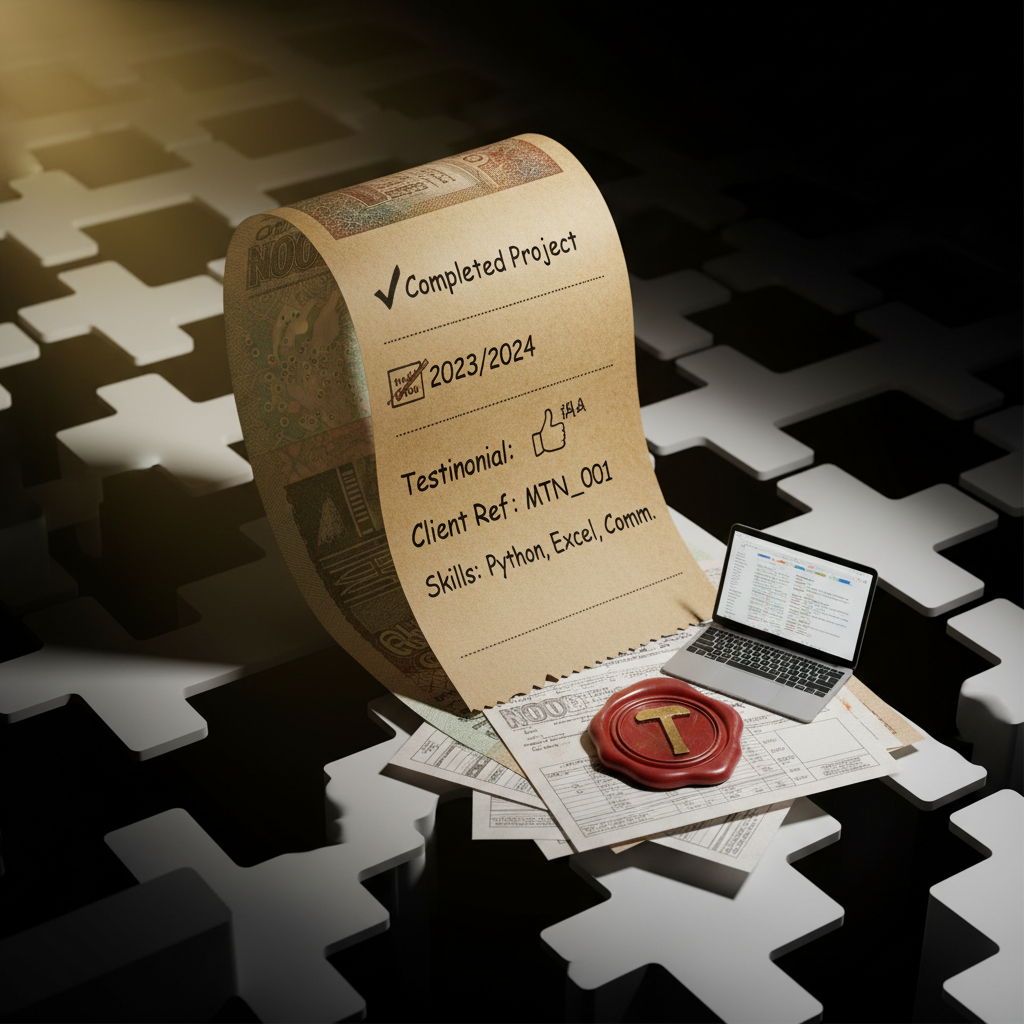
A Nigerian CV used to do one job: announce potential. These days, it has to do something harder: prove output.
That shift is not happening because recruiters suddenly hate CVs. It is happening because everyone is overwhelmed. Hiring teams are filtering hundreds of applications. Candidates are using AI to polish cover letters, rewrite achievements, and tailor résumés in minutes. Employers are rolling out productivity tools while also debating AI-use policies. The result is a noisy market where many applicants sound excellent on paper.
So the new edge is not a prettier CV template. It is a receipts folder: a proof-of-work portfolio that shows what you can actually produce.
For Nigerian professionals competing for roles in Lagos, Abuja, Port Harcourt, and remote teams abroad, this is becoming a serious career advantage.
Why the CV Is Losing Its Monopoly
A CV still matters. Recruiters need a summary of your experience, education, tools, and career direction. But the traditional CV has weaknesses that AI has made more obvious.
Anyone can now write: “Improved customer retention through data-driven engagement strategies.” That sentence may be true, exaggerated, or generated in 12 seconds. It sounds impressive, but it does not show the thinking, artefacts, or measurable output behind the claim.
Hiring teams are also becoming more skills-focused. Reports from organisations like the World Economic Forum and LinkedIn have repeatedly pointed to skills disruption and the growing importance of demonstrated ability. In practical terms, employers want to know: can this person do the work, adapt fast, and show evidence?
That matters especially in Nigeria’s job market, where candidates often face three overlapping challenges:
- High competition for credible entry-level and mid-level roles.
- Remote hiring processes where first impressions happen online.
- Recruiters using applicant tracking systems, assignments, referrals, and LinkedIn searches to shortlist faster.
In that environment, a CV tells people what you did. A proof-of-work portfolio shows them.
What Counts as a “Receipts Folder”?
A receipts folder is a curated collection of work evidence. It is not a random Google Drive dump. It is a clean, organised set of links, screenshots, documents, case studies, dashboards, decks, code, writing samples, campaign results, or project notes that prove your professional claims.
Think of it as a career evidence bank.
For example:
- A customer support professional could show a redacted escalation tracker, a sample response template, and a short case study on reducing complaint resolution time.
- A marketer could include campaign briefs, content calendars, ad creatives, performance screenshots, email subject line tests, and a post-campaign report.
- A product manager could share a product requirements document, user research summary, roadmap sample, wireframes, and metrics from a shipped feature.
- A data analyst could publish dashboards, SQL snippets, cleaned datasets, notebooks, and a plain-English explanation of business insights.
- A teacher or learning designer could show lesson plans, assessment rubrics, learner feedback, and before-and-after performance summaries.
- A developer could link to GitHub repositories, technical documentation, deployed apps, bug fixes, and architecture notes.
The strongest portfolios do not simply display final work. They explain the problem, your role, your process, the tools used, and the outcome. That context is what turns a screenshot into a career asset.
AI Has Raised the Bar for Evidence
AI tools are now part of everyday work. Microsoft’s Work Trend Index has documented how quickly employees are bringing AI into workflows, often faster than companies can formalise policies. GitHub has also published research showing how AI coding tools can affect developer productivity and satisfaction.
For job seekers, this creates a double-edged sword.
On one hand, AI can help you work faster: draft reports, summarise research, generate spreadsheet formulas, build first versions of presentations, or debug code. On the other hand, if everyone can use AI to make their applications sound polished, recruiters will look for signals that are harder to fake.
This is where proof-of-work becomes powerful.
Instead of saying, “I use AI productivity tools,” show a workflow. For instance:
- “I used ChatGPT to create first-draft customer survey themes, then manually coded responses into five recurring categories.”
- “I used Excel and Power Query to clean monthly sales data, then built a dashboard for management review.”
- “I used GitHub Copilot for boilerplate code, but wrote the authentication logic and tests manually.”
- “I used Notion AI to summarise meeting notes, then converted decisions into a project tracker with owners and deadlines.”
This kind of disclosure is mature. It tells an employer you are not pretending AI does the job for you. You are showing how you manage tools, judgement, quality, and accountability.
That matters because more workplaces are developing AI policies. Some companies permit AI for research and drafting but ban it for confidential data. Others require disclosure when AI is used. A portfolio that shows ethical, practical AI use can make you look more employable, not less.
How Nigerian Job Seekers Can Build One Without Overcomplicating It
You do not need a personal website on day one. Start with a simple structure.
Create a folder or page called “Work Samples” using Google Drive, Notion, Canva, GitHub, Behance, Medium, or a basic portfolio site. Then organise it by role or skill area. The key is clarity.
A good proof-of-work item should answer five questions:
- What was the problem?
- What did you do?
- What tools did you use?
- What changed because of the work?
- What would you improve next time?
For each project, write a short note of 150 to 300 words. Avoid vague claims. Use numbers where possible, but do not invent them. If you cannot share exact figures, use ranges or qualitative outcomes.
For example:
“Built a WhatsApp-based follow-up tracker for a small retail business. The owner was losing customer requests across chats. I created a Google Sheet with status labels, follow-up dates, and weekly summaries. Within three weeks, the team had a clearer view of pending orders and repeat customer questions.”
That is stronger than: “Excellent with operations and customer relationship management.”
If you are early in your career, create proof through self-initiated projects. Audit the Instagram content of three Nigerian SMEs and write improvement recommendations. Analyse public data on inflation, transport, or elections. Redesign a bank app onboarding flow as a UX case study. Build a simple expense tracker for NYSC members. Write a sales email sequence for a fictional logistics startup.
Spec work counts if it is labelled honestly. Do not pretend a personal project was client work. Recruiters respect initiative; they punish dishonesty.
Protect Confidentiality While Showing Competence
One concern is valid: not every receipt should be public.
If your work contains client names, internal revenue, customer data, strategy documents, or private screenshots, redact aggressively. Replace names with “Client A.” Blur emails and phone numbers. Recreate sensitive dashboards with dummy data. Ask permission before sharing live work from an employer.
A portfolio should prove judgement, not leak company information.
You can also maintain two versions: a public portfolio and a private interview folder. The public version shows enough to establish credibility. The private version, shared on request, can include deeper samples that are still redacted.
The best rule is simple: if sharing it would embarrass a former employer, expose a customer, or violate an agreement, do not share it.
Conclusion: Don’t Just Upgrade Your CV—Back It Up
The CV is not dead. But it is no longer enough on its own.
In a hiring market shaped by AI-written applications, productivity tools, and faster screening, Nigerian professionals need proof that travels with them. A receipts folder gives recruiters something concrete to trust. It also helps you understand your own value more clearly.
Before your next application, do not only ask, “Is my CV updated?” Ask a better question: “Where is the evidence?”
Because the candidates who can show the work will increasingly outrank those who only describe it.