Ronaldo’s Quiet Wedding, Family Empire
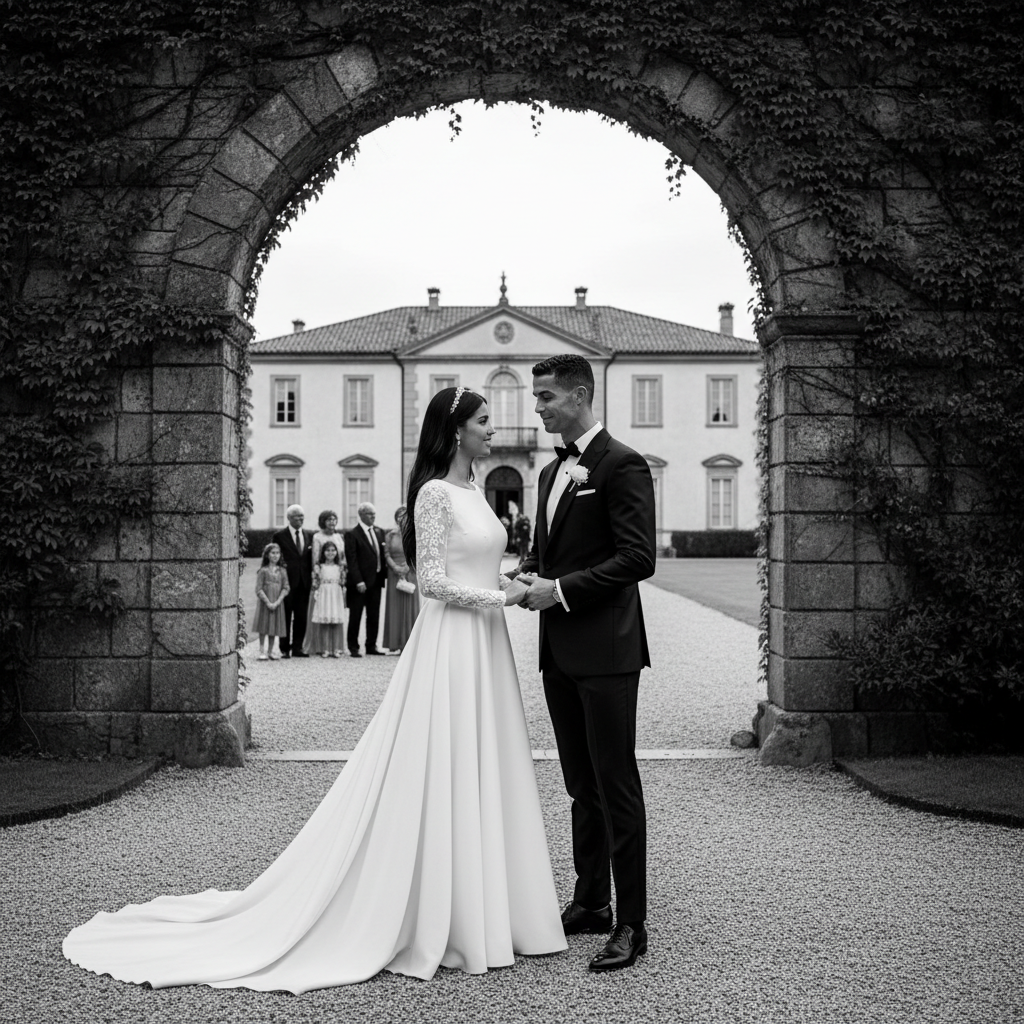
Cristiano Ronaldo has rarely done anything quietly. Goals, records, contracts, celebrations, watches, abs, airport arrivals: the Ronaldo universe is built for amplification. That is why reports of an intimate civil wedding to Georgina Rodriguez in Portugal land with such force. The ceremony may have been private, but the commercial meaning is anything but small.
If the reports are accurate, the marriage does more than formalize a long relationship. It turns one of sport’s most valuable personal brands into something more durable: a family empire with Ronaldo as the global football asset, Georgina as the lifestyle and fashion gateway, and their household as the emotional center of a media business that already reaches far beyond the pitch.
For years, Ronaldo has been a club, a country, a sponsor platform and a content machine. Now, the quietest chapter may be the one that gives the brand its most stable architecture.
From football icon to consumer platform
Ronaldo’s sporting greatness is the foundation, but the business built on top of it is what separates him from nearly every other athlete. The goals made him famous; the distribution made him unavoidable.
He has played for Manchester United, Real Madrid, Juventus, Al Nassr and Portugal. Each move expanded his audience into a new market. Madrid turned him into a Champions League superpower. Juventus gave him Italian fashion and heritage cachet. Al Nassr placed him at the center of Saudi Arabia’s sports-growth project, where football is not only entertainment but soft power, tourism and global repositioning.
His commercial portfolio has followed the same logic. The CR7 name has appeared across underwear, fragrance, footwear, hotels, gyms and digital products. Unlike a traditional endorsement model, where an athlete rents out fame to brands, Ronaldo has long pushed toward ownership of the customer relationship. CR7 is not just a signature. It is a repeatable retail label.
The scale is staggering. Forbes has repeatedly ranked Ronaldo among the world’s highest-paid athletes, with earnings powered by both salary and endorsements. His social reach is even more decisive. Ronaldo’s Instagram following is not merely large by athlete standards; it is one of the biggest direct-to-consumer media channels on earth.
That reach changes the economics of everything around him. A sponsor does not only buy a footballer. It buys access to a global audience that spans Europe, Latin America, the Middle East, Africa and Asia. Ronaldo is a walking broadcast network.
Marriage does not create that machine. But it can sharpen its next phase.
Georgina Rodriguez is not just “the partner”
The lazy reading of the Ronaldo-Georgina story is that she is an accessory to his fame. The market has already proved otherwise.
Georgina Rodriguez has built her own lane as a luxury-fashion personality, influencer and streaming-era celebrity. Netflix’s I Am Georgina transformed her from a figure known mainly through paparazzi and Instagram into a protagonist with a narrative: family, ambition, glamour, loss, motherhood, travel and proximity to elite sport.
That matters because modern celebrity brands are not built only on performance. They are built on intimacy. Fans want the match, but they also want the tunnel, the house, the holiday, the breakfast table, the birthday party and the behind-the-scenes vulnerability. Georgina supplies a different emotional register than Ronaldo’s competitive mythology.
Ronaldo’s brand says discipline, excellence, winning, body, legacy. Georgina’s says aspiration, luxury, domestic warmth, fashion and access. Together, they give the audience both the stadium and the living room.
That combination is powerful because it widens the commercial funnel. A football boot campaign speaks to one audience. A family holiday post, a red-carpet appearance, a Netflix episode or a jewelry moment speaks to another. The overlap is where the money lives: global fans who follow Ronaldo for sport but stay for the lifestyle ecosystem around him.
A civil wedding, precisely because it is restrained, plays into this perfectly. It does not need to be a royal spectacle. In fact, the restraint may make it more valuable. It signals maturity, control and permanence. In celebrity commerce, permanence is a premium asset.
Why the “family empire” model wins in modern sport
The athlete-as-family-brand model is not new. David and Victoria Beckham helped define it: football brilliance, pop-culture credibility, fashion, children, documentaries, property, nostalgia and global sponsorship all orbiting one household name. Lionel Messi’s brand, by contrast, has leaned into privacy, family stability and understated authenticity. Serena Williams built an empire that spans venture capital, fashion, media and motherhood.
Ronaldo and Georgina sit somewhere between those models. They have Beckham-level glamour, Messi-like family imagery at times, and a scale of social distribution that previous generations of athletes could not imagine.
The wedding reports are significant because family is one of the few brand assets that can outlast an athletic prime. Ronaldo will not play forever, even if he has spent two decades making age look negotiable. The next challenge is not whether he remains famous after retirement. He will. The challenge is whether his business empire can remain culturally active without weekly goals.
A formalized family structure helps answer that question.
It creates obvious lanes: documentaries, fashion collaborations, wellness ventures, hospitality, children’s products, luxury partnerships, philanthropy and possibly production ventures. It gives sponsors a more complete story to attach to. It also reduces the volatility of a brand built too heavily around match performance.
Consider the difference between a campaign selling “Ronaldo the goalscorer” and one selling “Ronaldo the global family man.” The first depends on form, selection and minutes. The second can continue through retirement, anniversaries, children growing up, business launches and carefully managed access to private life.
That is the empire logic: convert sporting fame into household mythology.
Privacy is the new luxury move
The reported intimacy of the ceremony is not a contradiction of the Ronaldo brand. It is an evolution of it.
At the highest end of celebrity, privacy itself has become a status symbol. Anyone can stage a public spectacle. Far fewer can make the world talk about an event they barely saw. A small civil ceremony in Portugal, if confirmed, would fit that logic: rooted, controlled, emotionally legible and commercially quiet without being commercially meaningless.
Portugal is also not incidental. Ronaldo’s origin story remains one of his most marketable assets: Madeira, sacrifice, family, hunger, ascent. However international his life has become, returning major personal milestones to Portugal reinforces the authenticity layer beneath the luxury.
That balance is essential. The Ronaldo-Georgina universe is filled with yachts, diamonds, private jets and designer wardrobes, but it cannot survive on spectacle alone. The family story gives it softness. Portugal gives it roots. Football gives it credibility. Social media gives it reach.
Put together, the marriage becomes more than a romantic milestone. It is a brand event precisely because it does not look like one.
The post-playing future is already here
Ronaldo’s competitive obsession has delayed the normal athlete-life timeline. Most players of his generation have already moved fully into punditry, ownership, coaching, ambassadorship or retirement content. Ronaldo is still a player, still a draw, still a commercial engine in real time.
But the architecture of his post-playing career is visible.
He does not need to become a coach to remain central to football. He can be a club investor, academy builder, media producer, wellness mogul, luxury hospitality figure and global ambassador. Georgina, meanwhile, can remain central to the lifestyle wing of the empire: fashion weeks, streaming, beauty, family content and high-end partnerships.
The key will be control. The strongest celebrity families do not merely chase attention; they ration it. They know when to open the door and when to close it. Ronaldo and Georgina’s greatest commercial advantage may be that they already understand the value of selective visibility. The public gets enough to feel close, but not enough to own the story.
That is how a personal brand becomes a dynasty.
Conclusion
Ronaldo’s legacy was already secure before any wedding report: the goals, the trophies, the records, the impossible longevity. But legacy in modern sport is no longer measured only by what happens inside stadiums.
If Cristiano Ronaldo and Georgina Rodriguez have indeed married quietly in Portugal, the story is not just that football’s most famous man made a private commitment. It is that one of sport’s most powerful commercial partnerships may have entered its most durable phase.
The ceremony was reportedly intimate. The empire it strengthens is global.