Sony’s Vinyl and Merch Boom Shows Music’s New Money
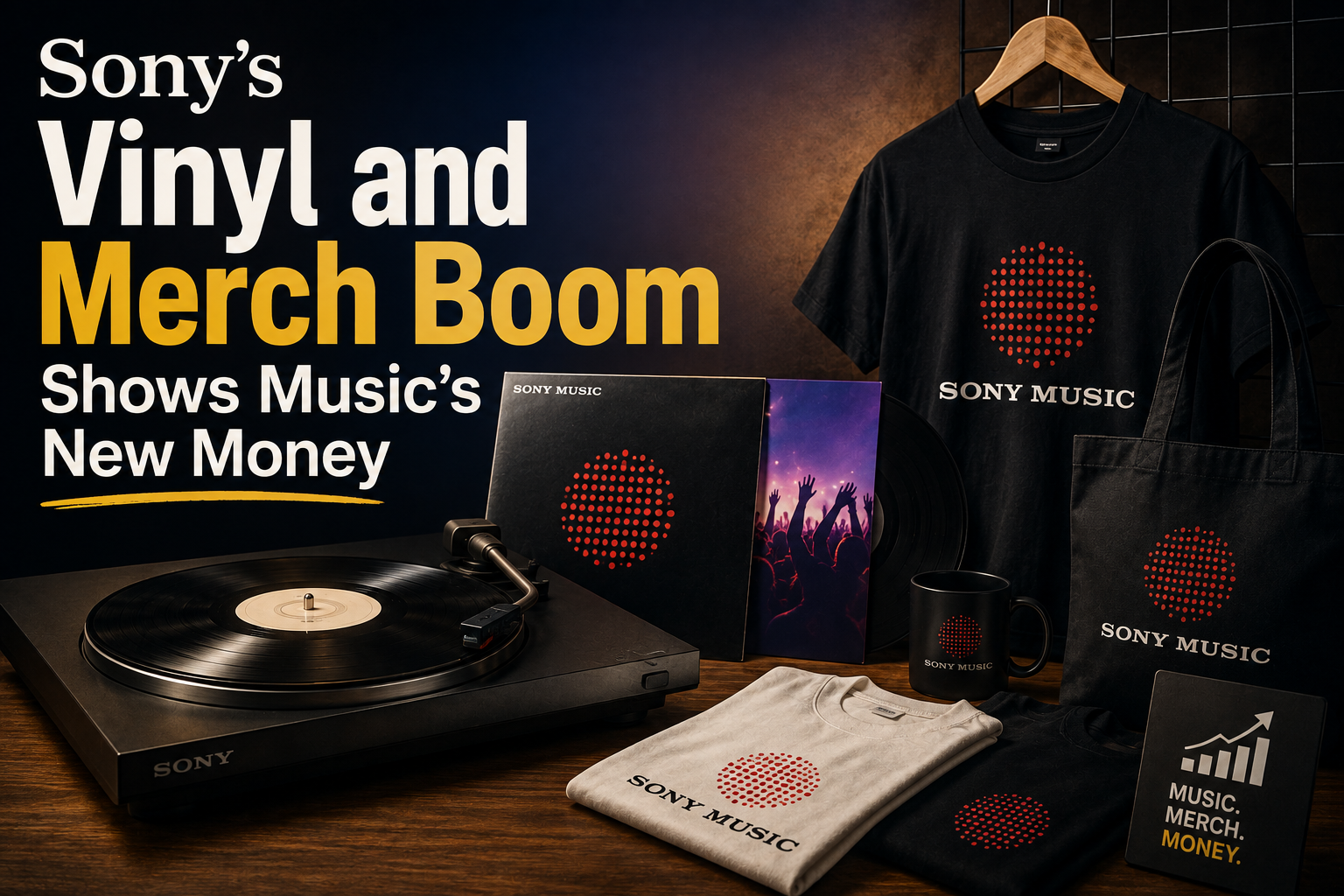
The music business used to have an easy headline: streaming won. It rescued recorded music from piracy, put catalogs back into growth and made every phone a jukebox. But Sony’s latest numbers tell a more interesting story. As Billboard reported, Sony’s global music revenue topped $3.53 billion, with vinyl, live activity and merch among the standout growth engines.
That does not mean streaming is fading. It means streaming is no longer the whole plan.
The smartest artists and labels are now chasing a broader prize: fan spending. Not casual listening, not background streams, not algorithmic discovery alone — but the high-intent purchases that prove a listener has become a customer. Vinyl variants, tour merch, deluxe box sets, pop-up shops, VIP packages and direct-to-fan stores are becoming central to music strategy because they monetize devotion in a way a monthly subscription cannot.
Sony’s Quarter Shows the New Shape of Music Money
Sony’s music operation is big enough that its results function like a weather report for the industry. The company spans recorded music, publishing and adjacent entertainment businesses, so its revenue is not a pure read on label income. Still, the direction is unmistakable: the strongest music companies are no longer built around one lane.
Streaming remains the base layer. It delivers global scale, recurring revenue and catalog durability. A hit single can travel from São Paulo to Seoul in hours; an old catalog track can revive through TikTok and instantly generate new streams. That machinery is indispensable.
But the ceiling of streaming is different from the ceiling of fandom. A fan can listen to an album 50 times and still contribute only a small slice of a subscription pool. That same fan might spend $35 on a vinyl edition, $45 on a hoodie, $120 on a concert ticket and another $25 at the merch table. For the artist and label, those purchases are not just more lucrative — they are also more revealing. They show who the committed fans are, where they live and what they are willing to buy.
That is why Sony’s vinyl and merch momentum matters. It suggests the industry’s next growth phase is not merely “more streams.” It is more ways to turn attention into ownership, identity and experience.
Vinyl Is No Longer Nostalgia — It’s a Superfan Product
Vinyl’s comeback is often described as a retro trend, but that undersells what is happening. For Gen Z and millennial fans, vinyl is less about returning to the past than making music tangible again. A record is a collectible, a room decoration, a status signal and a closer relationship with an album.
Taylor Swift has made this playbook visible at stadium scale: multiple vinyl colorways, alternate covers, signed editions and timed drops that transform an album release into a retail event. K-pop labels have perfected an even more elaborate version with photobooks, random photocards and collectible packaging. Olivia Rodrigo, Billie Eilish, Beyoncé and countless indie acts have all used physical formats not simply as distribution, but as storytelling.
The economics help explain the obsession. A vinyl LP sold directly through an artist store can capture more value than a stream and can arrive bundled with data — email addresses, purchase history, geography — that platforms rarely hand over in full. Even when retail partners take a cut, physical sales create a different kind of margin and a different kind of fan signal.
There are constraints. Vinyl manufacturing can be slow, costs can be high, and environmental concerns have pushed some artists toward recycled materials or reduced packaging. But the demand is real. The RIAA’s format data has shown physical music, led by vinyl, remaining a meaningful part of U.S. recorded music revenue after years of presumed decline. The lesson is not that every artist needs five variants. It is that fans will pay for artifacts when the artifact feels connected to a cultural moment.
Merch and Touring Turn Songs Into Identity
Merch is where music becomes wardrobe. A tour hoodie is not just cotton; it is proof of attendance, membership and taste. A limited drop is not only inventory; it is a signal that the fan was there, online or in person, before it sold out.
That is why tour merchandise has become a strategic revenue line instead of an afterthought. Stadium acts can generate massive nightly merch grosses. Mid-level artists can use merch to make touring more viable when transportation, crew, lodging and venue costs are rising. Even emerging artists can build meaningful income from small runs of shirts, hats, posters and zines if the product feels specific rather than generic.
The concert boom strengthens the loop. Live Nation’s recent investor reports have repeatedly pointed to durable demand for live events, and that appetite feeds merchandise sales. Fans who will pay premium prices to attend a show are also primed to buy something that extends the experience after the encore.
The strongest examples are not simply logos slapped onto blank garments. Travis Scott built festival and streetwear aesthetics into his music economy. Tyler, the Creator turned Golf Wang into a parallel creative universe. Metallica sells archival boxes and lifestyle products to a fan base that spans generations. K-pop groups treat light sticks, apparel and collectibles as part of the live ritual itself.
Merch works because it solves a problem streaming cannot: it gives fandom a visible form.
Why Labels Are Chasing Fan Spending Beyond Platforms
The streaming era gave labels scale, but it also concentrated consumer relationships inside platforms. Spotify, Apple Music, YouTube and Amazon know a huge amount about listener behavior. Labels and artists receive useful analytics, but they do not fully own the customer relationship.
Direct-to-consumer commerce changes that. When a fan buys a vinyl edition or hoodie from an artist store, the transaction creates data and a channel for the next campaign. That matters for preorders, tour routing, limited drops, fan-club access and anniversary releases. It also matters when algorithmic attention becomes unpredictable.
This is the strategic shift behind the “superfan” conversation. The industry has spent years optimizing for reach: playlist placement, short-form virality, global release timing. Now it is optimizing for depth. Who will buy the deluxe edition? Who wants early ticket access? Who will subscribe to a fan community? Who will travel for a show?
For labels, that spending diversifies risk. For artists, it can create income that feels more connected to their actual audience. For fans, it can make music feel less disposable — if the products are thoughtful and not exploitative.
The New Rule: Streams Start the Relationship
Streaming still matters enormously. It is where songs are discovered, where catalogs earn, and where global audiences gather. But the industry’s most ambitious players now treat a stream as the beginning of the relationship, not the end of it.
A listener becomes a follower. A follower becomes a ticket buyer. A ticket buyer becomes a merch customer. A merch customer becomes a collector. The business grows when each step feels authentic to the artist’s world.
Sony’s $3.53 billion moment is a reminder that music’s future is not one format or one platform. It is a stack: streaming for scale, vinyl for ownership, live for experience, merch for identity and direct-to-fan commerce for loyalty.
Conclusion
The old question was: how many streams did it do? The better question now is: how much real fandom did it create?
Sony’s vinyl, live and merch surge points to an industry learning that attention is valuable, but commitment is worth more. Streaming may still power the machine. The growth story, increasingly, is what happens after a fan presses play.