UEFA’s Boycott Threat Is Bigger Than FIFA: The Battle for Football’s Future The threat
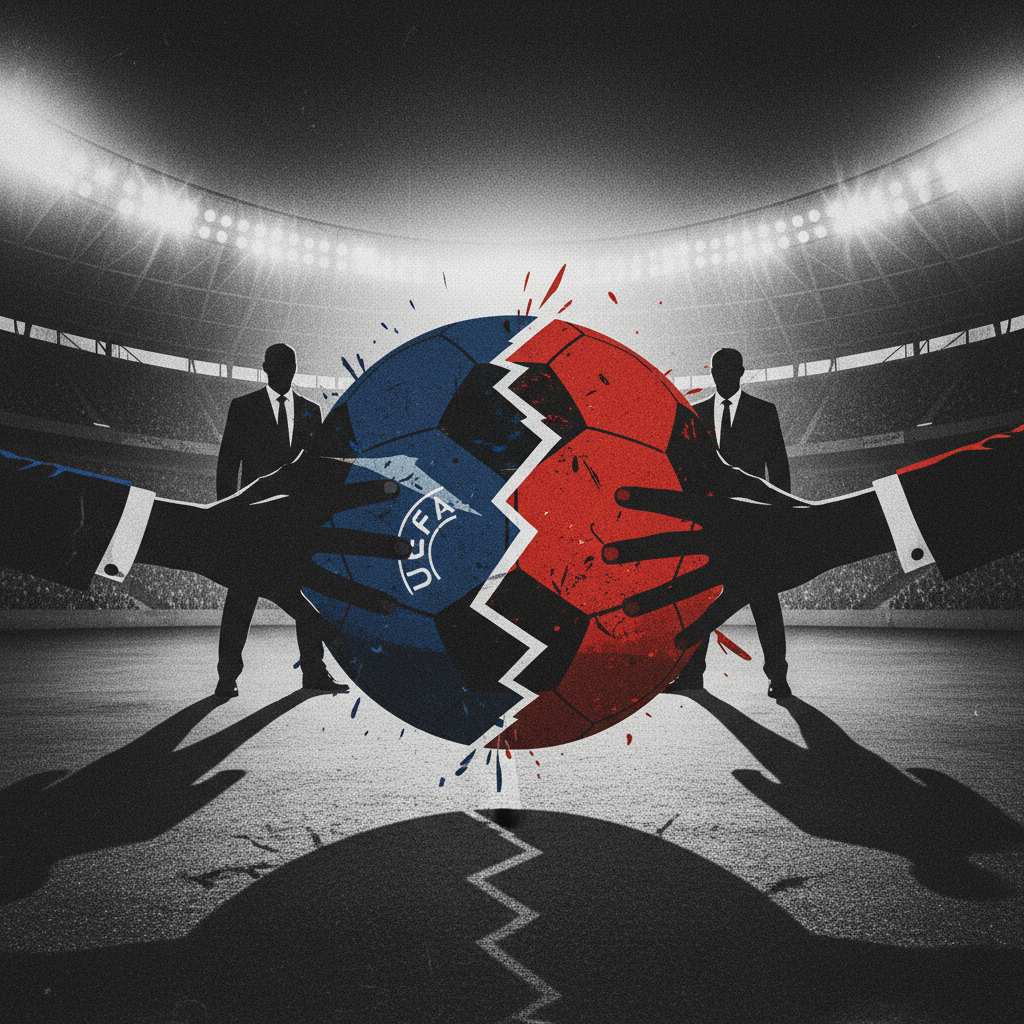
The threat of a UEFA boycott is easy to frame as another skirmish between Zurich and Nyon. It is bigger than that: it is a warning flare from European football that FIFA’s control of the global game is no longer accepted as automatic.
The real fight is not one tournament or one president. It is who gets to decide how much football is played, when it is played and who pays the political price.
The Boycott Threat Was a Governance Alarm
BBC Sport’s coverage of UEFA’s resistance to FIFA’s calendar ambitions captured the rawest version of the dispute: if world football’s governing body pushes too far, Europe has the money, clubs and broadcast leverage to say no.
UEFA president Aleksander Ceferin’s warning that Europe could boycott a biennial World Cup, also reported by Reuters, was not just rhetoric about one proposal.
It was a statement about legitimacy. FIFA can organise World Cups, approve calendars and distribute development money, but the modern game depends on players employed by clubs, leagues and associations that do not see themselves as passive suppliers.
That is why the English FA’s decision not to support Gianni Infantino’s re-election as FIFA president mattered, even when the election itself was not in doubt. As Reuters reported, the FA’s stance was symbolic, but symbolism is currency in football politics.
Infantino still retained overwhelming global support, particularly among associations outside Europe that value FIFA funding, access and political recognition. But the FA’s move showed that even major national associations are willing to use public dissent when private influence fails.
The Calendar Is the Battlefield
The most important governance fight in football is no longer only about elections, ethics codes or committee seats. It is about the international match calendar, because the calendar decides the balance of power between FIFA, confederations, leagues, clubs, players and national teams.
FIFA’s council has already approved international match calendars for 2025–2030, setting the official windows in which national teams can call up players. The announcement on FIFA’s own site framed the process as a matter of global coordination, but every window is also a negotiation over commercial space, player fatigue and institutional control.
For UEFA, the danger is straightforward. A bigger or more frequent FIFA competition can squeeze the European club season, undermine the Champions League, and reduce the oxygen available for domestic leagues and national competitions.
For FIFA, the argument runs the other way. A truly global governing body cannot allow Europe’s club economy to dictate the ambitions of the rest of the world, especially when many associations rely on FIFA tournaments and distributions to grow the game.
That is the tension behind almost every modern dispute:
• World Cups: FIFA wants maximum global reach and revenue from its flagship event.
• Club competitions: UEFA and Europe’s clubs want to protect the Champions League’s primacy.
• Player workload: Unions and coaches warn that the schedule is already beyond sustainable limits.
• Broadcast markets: More tournaments mean more inventory, but not necessarily more attention.
• National associations: Smaller federations want access; richer ones want influence.
The calendar is not a diary. It is the constitution of football’s money machine.
Why National Associations Still Matter
It is tempting to assume that the real power now sits only with FIFA, UEFA and elite clubs. Yet the FA’s withdrawal of support for Infantino showed that national associations still possess a form of leverage that is easy to underestimate.
They vote in FIFA elections, nominate officials, host matches, license competitions and represent the national-team tradition that gives international football its emotional force. They may not always be able to block a powerful president, but they can raise the cost of consensus.
That matters because FIFA’s political model depends on broad legitimacy. Infantino’s strength has come from building support across confederations through expanded competitions, increased funding and a message that football’s wealth should not remain concentrated in Europe.
UEFA’s strength comes from a different source: the continent’s clubs, commercial markets, infrastructure and competitive depth. When Europe hints at boycott, it is implicitly saying that FIFA’s product loses enormous value without European participation.
The FA sits in an awkward but revealing position between these worlds. England is not UEFA itself, not a club league, and not FIFA’s opposition, but it is one of football’s most commercially important national bodies. When it breaks ranks, it signals that the governance argument has moved from back rooms into public accountability.
Infantino’s Majority Meets UEFA’s Leverage
The central paradox of world football is that FIFA can be politically strong while still being structurally dependent on actors who dislike its direction.
Infantino can win elections comfortably because every member association has a vote, and many federations view FIFA as more responsive to their needs than the European establishment.
UEFA, meanwhile, cannot outvote the world on its own. But it can make implementation painful, because the sport’s richest labour market and most powerful clubs are within its orbit.
That is why boycott talk is so potent. It is not necessarily a plan to walk away tomorrow; it is a reminder that formal authority and practical authority are not the same thing.
FIFA’s statutes present a clear hierarchy, with the world governing body at the top of international football. In practice, the system works only when confederations, associations, leagues and clubs accept the terms of cooperation.
The danger for FIFA is overreach. If it treats calendar expansion as a technical decision rather than a political bargain, it risks creating a coalition of opponents who may disagree on many things but agree that Zurich has taken too much.
The danger for UEFA is looking self-interested. European football’s wealth gives it leverage, but also makes it vulnerable to the charge that it is protecting privilege while claiming to defend the game.
What Comes Next
The next phase of this fight is unlikely to be a clean break. Football governance usually moves through pressure, compromise, pilot proposals and carefully worded statements that leave every side claiming victory.
But the direction of travel is clear. FIFA will continue looking for ways to make its competitions bigger, more frequent or more valuable. UEFA will continue defending the commercial centrality of European football, while national associations will pick their moments to dissent or align.
The unresolved question is whether players and fans will become more than talking points. Calendar expansion is often justified in the language of development, but the physical burden falls on players and the attention burden falls on supporters asked to treat every new event as essential.
If UEFA’s boycott threat did anything, it clarified the stakes. World football is not governed by a single command chain; it is governed by a fragile bargain among institutions with different incentives.
The Bottom Line
UEFA’s boycott threat and the FA’s refusal to back Infantino were not isolated protests. They were signs that football’s governing compact is under strain as FIFA seeks more control over the calendar and the money attached to it.
The fight is not simply Europe versus the world, or reform versus resistance. It is a contest over who has the authority to shape the future of football, and whether that authority comes from votes, revenue, tradition or the ability to walk away.
Sources
Reuters – UEFA threaten World Cup boycott over biennial proposal – Ceferin
https://www.reuters.com/lifestyle/sports/uefa-threaten-world-cup-boycott-over-biennial-proposal-ceferin-2021-09-09/
Reuters – FA will not support Infantino re-election as FIFA president
https://www.reuters.com/sports/soccer/fa-will-not-support-infantino-re-election-fifa-president-2023-03-15/
FIFA – International match calendars for the period 2025–2030 approved by FIFA Council
https://inside.fifa.com/about-fifa/organisation/news/international-match-calendars-for-the-period-2025-2030-approved-by-fifa-council
FIFA – FIFA Statutes 2024
https://digitalhub.fifa.com/m/696c4c1319a6fc3a/original/FIFA-Statutes-2024.pdf