What If Mourinho Had Replaced Ferguson at United?
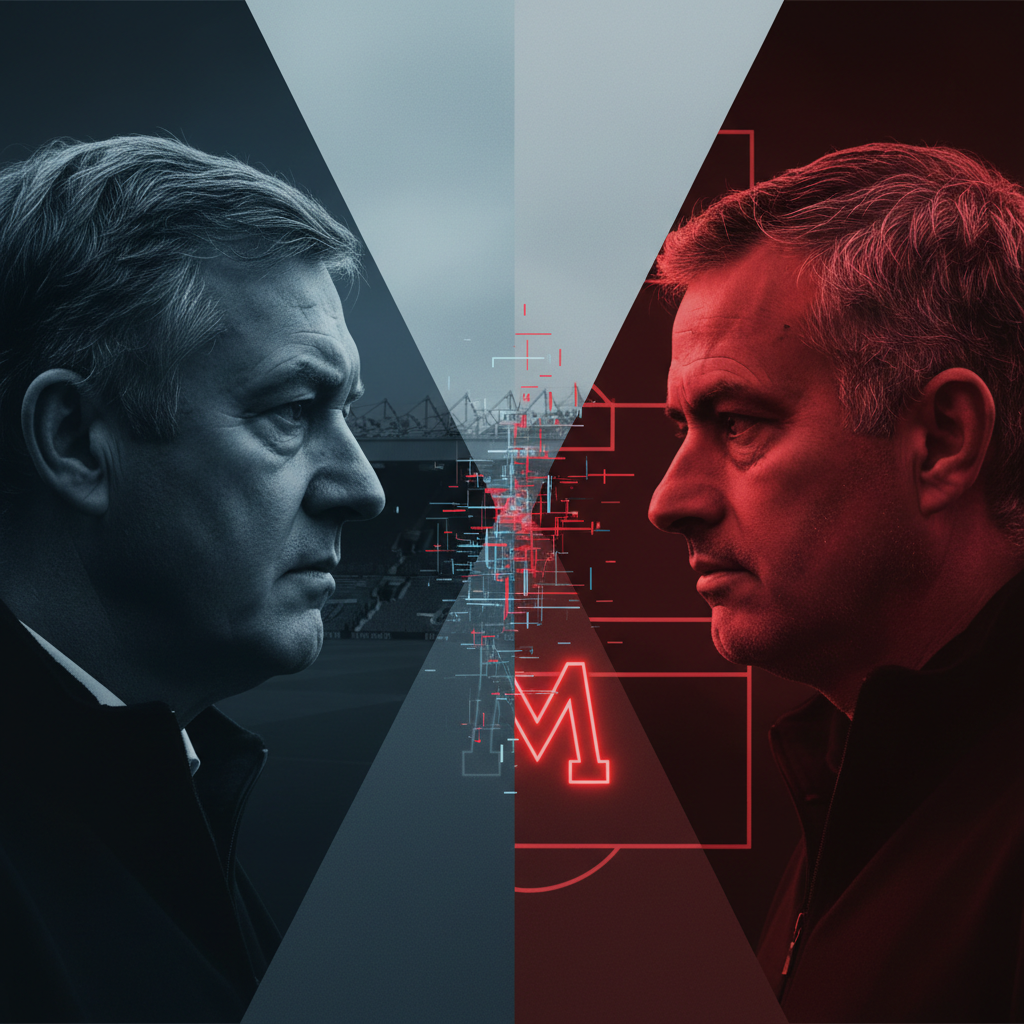
Jose Mourinho’s suggestion that he had agreed to succeed Sir Alex Ferguson at Manchester United does more than reopen an old gossip file. It invites a sharper question: would United’s post-2013 drift have been avoided, or merely detonated sooner under a more combustible manager?
The irresistible counterfactual is not whether Mourinho was qualified. It is whether United were ready for what hiring him would have meant.
The job Mourinho never got
Ferguson’s retirement in 2013 was not just the end of a reign; it was the removal of the operating system that had held Manchester United together for more than a quarter of a century. When the club confirmed David Moyes as his successor, the decision was framed around continuity, temperament and domestic credibility rather than instant star power, as United’s own announcement of Moyes’ appointment made clear.
Mourinho, by contrast, represented rupture dressed as certainty. He had just left Real Madrid after three volcanic seasons, still carrying the aura of Porto, Chelsea and Inter Milan, and he returned to Stamford Bridge that summer in a move confirmed by BBC Sport. If he truly believed Old Trafford was within reach, the fork in the road was enormous.
United did not choose the obvious serial winner. They chose the manager Ferguson had publicly endorsed, at the very moment the club was losing not only its greatest coach but its chief recruiter, culture-setter and crisis manager. That combination made the succession uniquely fragile.
What Mourinho would have fixed immediately
The argument for Mourinho in 2013 is straightforward: he would not have been intimidated by the room. A dressing room containing Rio Ferdinand, Nemanja Vidic, Patrice Evra, Wayne Rooney, Robin van Persie, Michael Carrick and Ryan Giggs did not need a manager learning the emotional scale of Old Trafford in real time.
Mourinho’s greatest short-term gift has always been compression. He narrows the mission, identifies the opposition, protects the penalty box and convinces players that winning ugly is not a compromise but a virtue. In the first year after Ferguson, that might have mattered more than style.
United’s 2012-13 title winners were experienced, ruthless and aging. Moyes inherited champions but quickly looked like a man trying to renovate a moving train; Mourinho would more likely have treated the squad as a final-cycle group built for one more charge.
There are obvious areas where he could have made an instant difference:
Authority: Mourinho’s medals would have bought him credibility with senior players from day one.
Recruitment: He would have demanded a more forceful summer window than United ultimately delivered.
Tactics: United would likely have become more compact, more transition-heavy and harder to play through.
Rooney: Mourinho had long admired him and may have made him a central political project.
Europe: His knockout instincts would have given United a clearer Champions League identity.
That does not guarantee a title. Manchester City and Chelsea were strengthening, Liverpool were about to surge under Brendan Rodgers, and United’s midfield decline was real. But Mourinho would almost certainly have prevented the sense of immediate institutional freefall.
The price of choosing certainty
The problem is that Mourinho’s certainty always comes with an invoice. At Chelsea, Inter and Real Madrid, his best work was intense, clarifying and short-lived. The question for United in 2013 is whether that was a flaw or exactly what the post-Ferguson moment required.
Hiring Mourinho would have meant admitting that continuity was impossible. It would also have meant giving an outsider with a powerful ego the keys to a club still psychologically defined by Ferguson. That tension could have been productive for 18 months and corrosive after that.
United’s actual path proved that the club had deeper structural issues than the manager’s office. The recruitment model was muddled, the executive football expertise was thin, and the squad had been allowed to age in several positions at once. Mourinho might have masked those problems better than Moyes, but he could not have made them disappear.
His likely transfer demands would have been revealing. Instead of Marouane Fellaini arriving late as the symbolic first signing of the new era, Mourinho would have wanted ready-made power: a holding midfielder, a dominant centre-back, perhaps a wide forward with defensive obedience. The club would have been forced to decide immediately whether it was still a Ferguson-style dynasty or a modern superclub built around managerial cycles.
That decision was coming anyway. Mourinho would simply have dragged it into the open.
How the alternate timeline plays out
The optimistic version is seductive. Mourinho arrives in July 2013, persuades Rooney to stay, leans on Van Persie, builds around Carrick, and squeezes one last elite season out of the old defence. United finish in the top two, maybe win a domestic cup, and the language around the club changes from decline to reload.
In that timeline, the Moyes season never becomes the trauma that shaped a decade. United do not spend years trying to restore authority because authority never visibly collapses. The share price, the dressing room and the fan base all absorb Ferguson’s exit with less panic.
But the darker version is just as plausible. Mourinho clashes with club executives over recruitment, senior players over status, and eventually the ghost of Ferguson over what United are supposed to be. By 2015, the football is functional, the trophies may exist, but the atmosphere is heavy.
That is close to what happened when Mourinho eventually did get the job in 2016. United announced him as manager with the full weight of his résumé behind him, and he delivered the League Cup and Europa League in his first season, as the club recorded in its confirmation of his appointment. Yet the spell also ended in familiar friction, with performances, recruitment disputes and mood all deteriorating.
The key difference is timing. In 2016, Mourinho inherited a club already bruised by Moyes and Louis van Gaal, with confidence eroded and the squad reassembled at great expense. In 2013, he would have inherited champions. That is not a small distinction; it is the heart of the counterfactual.
The legacy question
Ferguson’s departure, reported at the time as a seismic moment by outlets including The Guardian, created a succession problem no manager could solve neatly. The club needed to replace a genius while pretending it was merely replacing a head coach.
Mourinho would have destroyed that illusion instantly. He would not have been a custodian, and he would not have sold himself as a humble continuation of the Ferguson era. He would have made Manchester United about Jose Mourinho, which is both the reason he might have worked and the reason it might have burned.
There is also a cultural tension that should not be dismissed. United supporters tolerated pragmatism under Ferguson because it existed inside a broader tradition of adventure, youth and late surges. Mourinho’s pragmatism is colder, more transactional and more openly suspicious of chaos.
Had he won quickly, none of that would have mattered much. Clubs are rarely philosophical when the trophy cabinet is moving. But if the football had tightened without the titles arriving, the backlash would have been ferocious.
The bottom line
Mourinho replacing Ferguson in 2013 would probably have made United better in the short term and less confused in the immediate aftermath. He had the presence, competitive instincts and tactical clarity that the club badly lacked once Ferguson left.
But it would not have been a clean rescue. It would have been a faster, louder, more successful version of United’s reckoning with life after Ferguson, with the same structural questions waiting beneath the silverware chase. The alternate timeline is tempting because Mourinho might have delayed the fall; it is fascinating because he might also have made the crash impossible to ignore.