Xavi’s Dutch Leap Ends a 48-Year Coaching Pattern
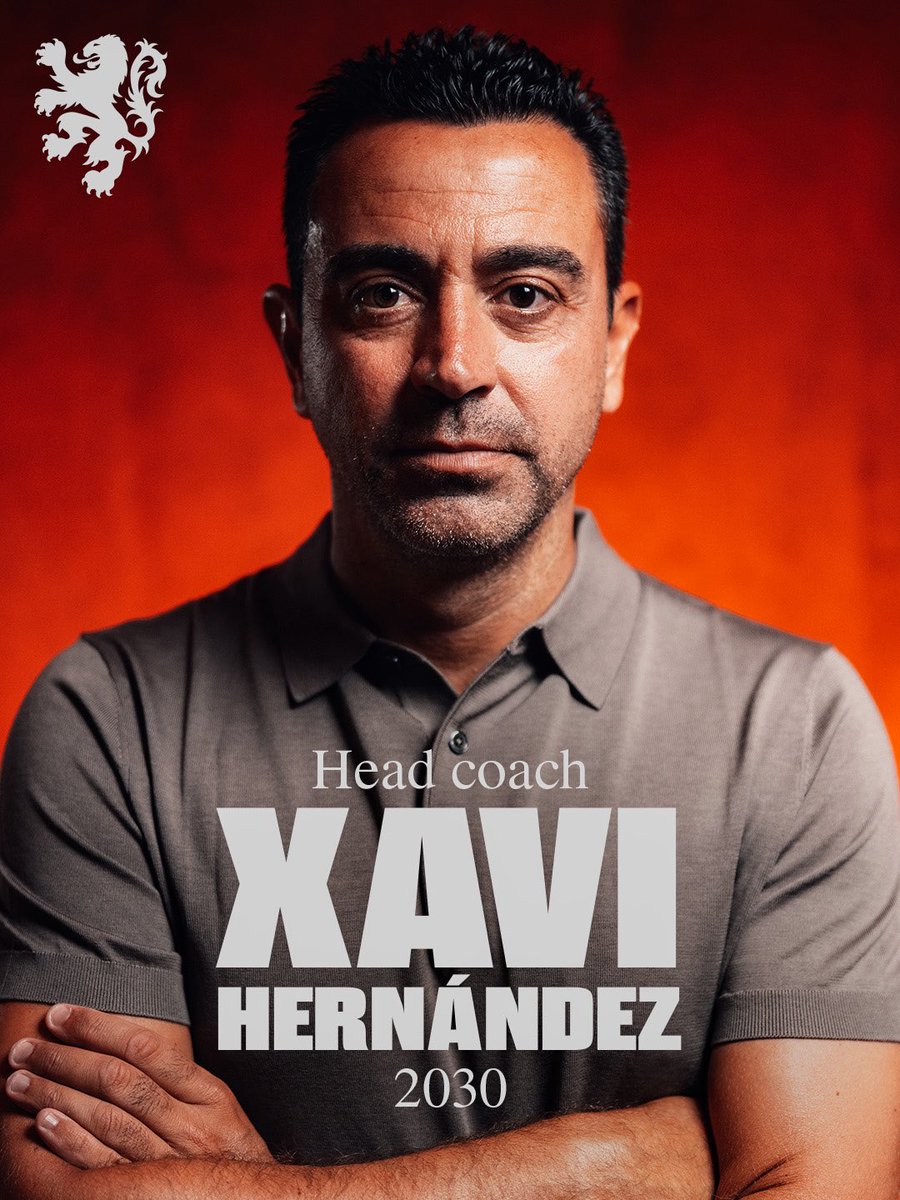
For almost half a century, the Netherlands did not just hire national coaches. It hired mirrors.
Rinus Michels, Leo Beenhakker, Guus Hiddink, Louis van Gaal, Frank Rijkaard, Marco van Basten, Dick Advocaat, Ronald Koeman: the names changed, the passport rarely did. Oranje has long treated the dugout as an extension of its football culture, not merely a technical post. The coach was expected to understand the language, the academies, the tactical arguments, the old wounds and the sacred texts of Dutch football.
That is why the report that Xavi has been appointed Netherlands head coach lands as more than a personnel change. It is a cultural rupture. A Spaniard taking charge of one of the most identity-driven national teams in the sport breaks a pattern that stretches back to Ernst Happel, the Austrian who led the Dutch at the 1978 World Cup.
This is not simply the Netherlands hiring a famous former midfielder. It is Oranje admitting that its idea can now be stewarded by an outsider.
The 48-year rule hiding in plain sight
The Netherlands have never been isolationist in football. Dutch ideas have travelled everywhere: Barcelona, Ajax’s global academy network, Bayern Munich, Manchester United, South Africa, Australia, the United States. Dutch coaches have exported pressing, positional play, academy structure and an almost theological belief in the ball.
But the national team itself has remained strikingly inward-looking. Since Happel’s 1978 side reached the World Cup final, the Oranje job has largely belonged to Dutchmen. That continuity was not accidental. The national team was treated as a vessel for a domestic football argument: how bold should the Netherlands be, how pure should the 4-3-3 remain, how much pragmatism is acceptable before the shirt loses its meaning?
Van Gaal’s 2014 World Cup team is the perfect example. He moved away from the classic Dutch 4-3-3 into a back-three system, partly because Kevin Strootman’s injury changed the midfield balance. It was pragmatic, even un-Dutch to some critics, but Van Gaal could sell it because he was Van Gaal: Ajax-trained, Dutch-made, fluent in the internal logic of the debate.
When Frank de Boer used a 5-3-2 at Euro 2020, the resistance was immediate. The issue was not only results. It was symbolism. Dutch fans have often tolerated tactical compromise only when they believe the coach has earned the right to reinterpret the tradition.
Xavi, by contrast, arrives without that native immunity. His appointment forces the question Dutch football has avoided for decades: is Oranje’s identity a passport, or a set of principles?
Why Oranje has always hired from within
The Netherlands are not just another talented European side. They are one of football’s great idea teams. Total Football was never merely a formation; it was a worldview. Space mattered. Interchange mattered. Technical courage mattered. The player was not a specialist locked into a lane, but an intelligent participant in a collective mechanism.
That heritage created enormous pride, but also pressure. Every Dutch national coach has had to negotiate with the ghosts of 1974 and 1988. Michels’ influence, Johan Cruyff’s evangelism, Ajax’s academy culture and the Barcelona connection all fed the expectation that the Netherlands should win beautifully or, at the very least, lose with conviction.
Hiring Dutch helped maintain that continuity. A Dutch coach understood that the job involved more than selecting Virgil van Dijk, Frenkie de Jong, Xavi Simons and Cody Gakpo. It meant answering a national question: what should Dutch football look like now?
That is why foreign coaches were rare. It was not because outsiders lacked quality. It was because the role carried cultural weight. The KNVB was not simply choosing a manager; it was choosing an interpreter of national identity.
Xavi’s reported arrival changes the interpreter without necessarily changing the language.
Why Xavi is different — and not alien
On paper, Xavi is foreign. In football terms, he is almost family.
No modern club absorbed Dutch influence more deeply than Barcelona. Cruyff remade Barça’s sporting imagination, and the club became the grand European laboratory for positional play. Xavi was one of its purest products: a midfielder who turned scanning, angles and tempo into an art form.
That matters. A random elite foreign coach would feel like a break. Xavi feels more like a branch from the same tree returning by another route. He grew up inside a Cruyffian football culture that was heavily shaped by Dutch thought, then helped define Spain’s golden era with a possession game that shared Dutch principles but added Spanish rhythm, patience and technical density.
As a coach, he is not a blank symbol. At Al Sadd, he worked in a possession-heavy structure. At Barcelona, he won La Liga in 2022-23 with a side that was not just aesthetic but defensively strong and emotionally hardened. That point is important. The caricature of Xavi as a pure idealist misses the way his best Barça side often won through control, rest defence and game management rather than endless attacking romance.
For the Netherlands, that blend could be attractive. Oranje have elite defenders, ball-playing midfielders and wide forwards who can hurt teams in transition. They also have a recurring problem: turning identity into tournament efficiency. Xavi’s challenge would be to make Dutch possession less ceremonial and more decisive.
Cultural risk, tactical upside
The risk is obvious. A national team is not a club. Xavi cannot drill automatisms every day for months. He cannot buy the missing profile in midfield or spend a transfer window fixing the full-back balance. International football rewards clarity, emotional authority and fast tactical teaching.
He would also inherit a demanding public. Dutch football debate is famously direct. If the team keeps the ball without penetration, he will hear about it. If he compromises too much, he will hear about that too. A Spanish coach telling the Netherlands how to play Dutch football is a headline waiting to happen after the first bad Nations League performance.
But the upside is equally clear. Xavi could refresh a team that has sometimes looked caught between eras: proud of its possession heritage, yet often most dangerous when breaking quickly through runners like Gakpo, Donyell Malen or Jeremie Frimpong. The key would not be importing Spain 2010 or Barcelona 2011. It would be building a modern Oranje: aggressive counter-pressing, cleaner occupation of midfield spaces, full-backs used with purpose, and a structure that lets Frenkie de Jong dictate without carrying the entire creative burden.
The appointment also sends a message beyond tactics. It says Dutch football is confident enough to let an outsider hold the keys. That is not surrender. It is maturity.
Conclusion: identity can travel
Xavi’s reported Netherlands appointment breaks a 48-year coaching pattern because it challenges the old assumption that only a Dutchman can protect the Dutch idea.
The irony is that Xavi’s football education was shaped by one of the Netherlands’ greatest exports. If he succeeds, it will not mean Oranje have abandoned their identity. It will mean that identity has become broad enough, influential enough and resilient enough to be led by someone who inherited it from abroad.
For a national team built on ideas, that may be the boldest idea of all.